CapitalConakry
LanguagesFrench , Pular, Maninka, Susu, various indigenous languages
CurrencyGuinean francs
Governmentpresidential republic
Bamwor Indexes
Guinea — Q1 2026
IBEUBamwor Urban Scale Index
13.42%
Rank #131 of 237
View full ranking →
IBCPBamwor Population Concentration Index
30.90%
Rank #111 of 237
View full ranking →
IBDABamwor Settlement Density Index
27.71per 1K km²
Rank #179 of 241
View full ranking →
IBCXBamwor Country Complexity Index
62.48/100
Rank #102 of 234
View full ranking →
IBEEBamwor Economic Stability Index
82.68/100
Rank #167 of 220
View full ranking →
IBFMBamwor Military Strength Index
49.94/100
Rank #71 of 124
View full ranking →
IBDIBamwor Digital Infrastructure Index
43.08/100
Rank #182 of 206
View full ranking →
IBEDBamwor Education Index
30.05/100
Rank #110 of 119
View full ranking →
IBSABamwor Healthcare Index
52.23/100
Rank #195 of 218
View full ranking →
Guinea Intelligence Report
Download PDF with 20+ statistics, rankings & proprietary indices
Introduction
Background
The profound Muslim legacy of Guinea was introduced through the adjacent Almoravid Empire during the 11th century. As the Almoravid influence waned, Guinea found itself on the periphery of numerous African kingdoms, all vying for control over the region. In the 13th century, the Mali Empire assumed dominance over Guinea and fostered the further development of its burgeoning Muslim faith. Following the decline of the West African empires, various smaller kingdoms assumed authority over Guinea. The 18th century saw the emergence of an Islamic state established by Fulani Muslims in central Guinea, notable for one of the earliest instances of a written constitution and a system of alternating leadership. European traders made their initial foray into the region in the 16th century, while the French established their colonial authority in the 19th century.
Guinea gained its independence from France in 1958. Sekou TOURE became the inaugural president following independence; he instituted a dictatorial regime that lasted until his death in 1984, after which General Lansana CONTE orchestrated a coup to take control of the government. CONTE also created an authoritarian regime and manipulated presidential elections until his passing in 2008, leading to Captain Moussa Dadis CAMARA's military coup, during which he seized power and suspended the constitution. In 2009, an assassination attempt left CAMARA injured, resulting in his exile to Burkina Faso. The nation conducted its first free and fair presidential and legislative elections in 2010 and 2013, respectively. Alpha CONDE emerged victorious in the 2010 and 2015 presidential elections, with his first cabinet marking the first all-civilian government in the annals of Guinean history. In 2020, CONDE secured a third term following a revision of term limits. In 2021, Col Mamady DOUMBOUYA executed another successful military coup, forming the National Committee for Reconciliation and Development (CNRD), suspending the constitution, and dissolving both the government and legislature. DOUMBOUYA was inaugurated as transition president and appointed Mohamed BEAVOGUI as transition prime minister. The National Transition Council (CNT), which serves as the legislative body during the transition, was established in 2022 and comprises appointed members representing a wide array of Guinean society.
Geography
Area
land
245,717 sq km
water
140 sq km
total
245,857 sq km
Climate
characterized by a hot and humid climate; a monsoonal rainy season occurring from June to November with prevailing southwesterly winds; a dry season from December to May featuring northeasterly harmattan winds
Terrain
predominantly a flat coastal plain, transitioning to hilly and mountainous regions inland
Land use
other
6.5% (2023 est.)
forest
20.3% (2023 est.)
agricultural land
73.2% (2023 est.)
agricultural land: arable land
arable land: 24.4% (2023 est.)
agricultural land: permanent crops
permanent crops: 5.3% (2023 est.)
agricultural land: permanent pasture
permanent pasture: 43.5% (2023 est.)
Location
Located in Western Africa, along the North Atlantic Ocean, situated between Guinea-Bissau and Sierra Leone
Coastline
320 km
Elevation
lowest point
Atlantic Ocean 0 m
highest point
Mont Nimba 1,752 m
mean elevation
472 m
Irrigated land
949 sq km (2017)
Map references
Africa
Land boundaries
total
4,046 km
border countries
Côte d'Ivoire 816 km; Guinea-Bissau 421 km; Liberia 590 km; Mali 1062 km; Senegal 363 km; Sierra Leone 794 km
Maritime claims
territorial sea
12 nm
exclusive economic zone
200 nm
Natural hazards
the dry season may witness hot, dry, and dusty harmattan haze that can impair visibility
Geography - note
the Niger River and its significant tributary, the Milo River, originate in the Guinean highlands
Natural resources
bauxite, iron ore, diamonds, gold, uranium, hydropower, fish, salt
Area - comparative
slightly smaller than the state of Oregon; just over twice the size of Pennsylvania
Geographic coordinates
11 00 N, 10 00 W
Population distribution
the regions with the highest population density are found in the west and south; the interior exhibits sparse population as indicated in the population distribution map
Major watersheds (area sq km)
Atlantic Ocean drainage
Niger (2,261,741 sq km), Senegal (456,397 sq km)
Major rivers (by length in km)
Niger river source (shared with Mali, and Nigeria [m]) - 4,200 km; Gambie (Gambia) river source (shared with Senegal and The Gambia [m]) - 1,094 km
note: [s] following the country name denotes river source; [m] following the country name denotes river mouth
People & Society
Literacy
male
54.4% (2018 est.)
female
27.7% (2018 est.)
total population
39.6% (2018 est.)
Languages
French (official), Pular, Maninka, Susu, various indigenous languages
Religions
Muslim 85.2%, Christian 13.4%, animist 0.2%, none 1.2% (2018 estimate)
Sex ratio
at birth
1.03 male(s)/female
0-14 years
1.02 male(s)/female
15-64 years
1 male(s)/female
total population
1 male(s)/female (2024 est.)
65 years and over
0.83 male(s)/female
Birth rate
35.04 births/1,000 population (2025 est.)
Death rate
7.69 deaths/1,000 population (2025 est.)
Median age
male
19.2 years
total
19.5 years (2025 est.)
female
19.6 years
Population
male
7,179,661
total
14,374,590 (2025 est.)
female
7,194,929
Nationality
noun
Guinean(s)
adjective
Guinean
Urbanization
urban population
38.1% of total population (2023)
rate of urbanization
3.64% annual rate of change (2020-25 est.)
Age structure
0-14 years
40.9% (male 2,884,146/female 2,835,794)
15-64 years
55.1% (male 3,846,852/female 3,856,366)
65 years and over
4% (2024 est.) (male 254,608/female 308,413)
Ethnic groups
Fulani (Peuhl) 33.4%, Malinke 29.4%, Susu 21.2%, Guerze 7.8%, Kissi 6.2%, Toma 1.6%, other/foreign 0.4% (2018 estimate)
Child marriage
men married by age 18
1.9% (2018)
women married by age 15
17% (2018)
women married by age 18
46.5% (2018)
Dependency ratios
total dependency ratio
81.5 (2025 est.)
youth dependency ratio
74.1 (2025 est.)
potential support ratio
13.6 (2025 est.)
elderly dependency ratio
7.4 (2025 est.)
Physician density
0.21 physicians/1,000 population (2022)
Health expenditure
Health expenditure (as % of GDP)
3.8% of GDP (2021)
Health expenditure (as % of national budget)
5% of national budget (2022 est.)
Net migration rate
0 migrant(s)/1,000 population (2025 est.)
Total fertility rate
4.75 children born/woman (2025 est.)
Drinking water source
improved: rural
rural: 59% of population (2022 est.)
improved: total
total: 71.5% of population (2022 est.)
improved: urban
urban: 92% of population (2022 est.)
unimproved: rural
rural: 41% of population (2022 est.)
unimproved: total
total: 28.5% of population (2022 est.)
unimproved: urban
urban: 8% of population (2022 est.)
Education expenditure
Education expenditure (% GDP)
1.7% of GDP (2023 est.)
Education expenditure (% national budget)
9.2% national budget (2025 est.)
Infant mortality rate
male
51.6 deaths/1,000 live births
total
45.8 deaths/1,000 live births (2025 est.)
female
42.3 deaths/1,000 live births
Population growth rate
2.74% (2025 est.)
Gross reproduction rate
2.34 (2025 est.)
Population distribution
the most densely populated regions are located in the west and south; the interior is lightly populated, as illustrated in this population distribution map
Life expectancy at birth
male
62.7 years
female
66.6 years
total population
64.6 years (2024 est.)
Maternal mortality ratio
494 deaths/100,000 live births (2023 est.)
Sanitation facility access
improved: rural
rural: 39.4% of population (2022 est.)
improved: total
total: 60.6% of population (2022 est.)
improved: urban
urban: 95.6% of population (2022 est.)
unimproved: rural
rural: 60.6% of population (2022 est.)
unimproved: total
total: 39.4% of population (2022 est.)
unimproved: urban
urban: 4.4% of population (2022 est.)
Alcohol consumption per capita
beer
0.29 liters of pure alcohol (2019 est.)
wine
0.01 liters of pure alcohol (2019 est.)
total
0.33 liters of pure alcohol (2019 est.)
spirits
0.03 liters of pure alcohol (2019 est.)
other alcohols
0 liters of pure alcohol (2019 est.)
Major urban areas - population
2.111 million CONAKRY (capital) (2023)
Obesity - adult prevalence rate
7.7% (2016)
Mother's mean age at first birth
19.9 years (2018 est.)
Currently married women (ages 15-49)
70.9% (2018 est.)
Children under the age of 5 years underweight
15% (2022 est.)
School life expectancy (primary to tertiary education)
male
9 years (2021 est.)
total
9 years (2021 est.)
female
8 years (2021 est.)
Environment
Climate
typically characterized by high temperatures and humidity; a monsoon-like rainy season from June to November driven by southwesterly winds; a dry season from December to May influenced by northeasterly harmattan winds
Land use
other
6.5% (2023 est.)
forest
20.3% (2023 est.)
agricultural land
73.2% (2023 est.)
agricultural land: arable land
arable land: 24.4% (2023 est.)
agricultural land: permanent crops
permanent crops: 5.3% (2023 est.)
agricultural land: permanent pasture
permanent pasture: 43.5% (2023 est.)
Urbanization
urban population
38.1% of total population (2023)
rate of urbanization
3.64% annual rate of change (2020-25 est.)
Waste and recycling
municipal solid waste generated annually
596,900 tons (2024 est.)
percent of municipal solid waste recycled
23.9% (2022 est.)
Environmental issues
deforestation; insufficient access to clean drinking water; desertification; contamination and erosion of soil; overfishing; overpopulation in forested areas; inadequate mining practices; pollution of water sources; improper disposal of waste
Total water withdrawal
municipal
230 million cubic meters (2022 est.)
industrial
60 million cubic meters (2022 est.)
agricultural
600 million cubic meters (2022 est.)
Carbon dioxide emissions
total emissions
4.505 million metric tonnes of CO2 (2023 est.)
from coal and metallurgical coke
1,000 metric tonnes of CO2 (2023 est.)
from petroleum and other liquids
4.504 million metric tonnes of CO2 (2023 est.)
Particulate matter emissions
34.2 micrograms per cubic meter (2019 est.)
Total renewable water resources
226 billion cubic meters (2022 est.)
International environmental agreements
party to
Biodiversity, Climate Change, Climate Change-Kyoto Protocol, Climate Change-Paris Agreement, Comprehensive Nuclear Test Ban, Desertification, Endangered Species, Hazardous Wastes, Law of the Sea, Ozone Layer Protection, Ship Pollution, Wetlands, Whaling
signed, but not ratified
none of the selected agreements
Government
Flag
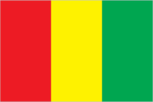
description: three equal vertical stripes of red (on the left), yellow, and green
meaning: red signifies the sacrifices made by the people for freedom and labor; yellow represents the sun, the earth's wealth, and justice; green symbolizes the nation's flora and solidarity
history: incorporates the colors associated with the Pan-African movement
Capital
name
Conakry
etymology
the term originates from konakri, a word in Susu that translates to "over the water," indicating the city's position on a peninsula; it was initially the name of a local village
time difference
UTC 0 (5 hours ahead of Washington, DC, during Standard Time)
geographic coordinates
9 30 N, 13 42 W
Suffrage
18 years of age; universal
Citizenship
citizenship by birth
no
citizenship by descent only
at least one parent must be a citizen of Guinea
dual citizenship recognized
no
residency requirement for naturalization
na
Constitution
history
previously in 1958, 1990; followed by 2010 and a referendum in 2020, which was halted on 5 September 2021 due to a coup d'état; on 27 September, the Transitional Charter was published, which replaces the constitution until a new one is adopted
Country name
former
French Guinea
etymology
the nation derives its name from the Guinea region of West Africa, located along the Gulf of Guinea, with the name itself stemming from the Tuareg term aginaw, meaning "black people"
local long form
République de Guinée
local short form
Guinée
conventional long form
Republic of Guinea
conventional short form
Guinea
Independence
2 October 1958 (from France)
Legal system
civil law system modeled on the French legal framework
Government type
presidential republic
Judicial branch
highest court(s)
Supreme Court or Cour Suprême (composed of an Administrative Chamber and Civil, Penal, and Social Chambers; includes the first president, two chamber presidents, ten councilors, the solicitor general, and national assembly deputies); Constitutional Court - suspended as of 5 September 2021
subordinate courts
Court of Appeal or Cour d'Appel; High Court of Justice or Cour d'Assises; Court of Account (Court of Auditors); Courts of First Instance (Tribunal de Première Instance); labor court; military tribunal; justices of the peace; specialized courts
judge selection and term of office
the first president of the Supreme Court is appointed by the national president after consulting with the National Assembly; other justices are appointed by presidential decree; they serve nine-year terms until reaching the age of 65
Executive branch
cabinet
formerly the Council of Ministers appointed by the president
chief of state
President Col. Mamady DOUMBOUYA (since 17 January 2026)
election results
2025: Mamady DOUMBOUYA was elected president in the first round; vote percentage - Mamady DOUMBOUYA (Independent) 86.7%, Abdoulaye Yero BALDE (DFG) 6.5%, others 7%
2020: Alpha CONDE was reelected president in the first round; vote percentage - Alpha CONDE (RPG) 59.5%, Cellou Dalein DIALLO (UFDG) 33.5%, others 7%
head of government
Prime Minister Amadou Oury BAH (since 27 February 2024)
most recent election date
28 December 2025
election/appointment process
the president is elected directly by an absolute-majority popular vote in two rounds, if necessary, serving a single seven-year term, while the prime minister is appointed by the president
National holiday
Independence Day, 2 October (1958)
National color(s)
red, yellow, green
National heritage
total World Heritage Sites
1 (natural)
selected World Heritage Site locales
Mount Nimba Strict Nature Reserve
Political parties
African Congress for Democracy and Renewal or CADRE
Alliance for National Renewal or ARN
Alliance for National Renewal or ARENA
Bloc Liberal or BL
Citizen Generation or GECI
Citizen Party for the Defense of Collective Interests or PCDIC
Democratic Alliance for Renewal or ADR
Democratic National Movement or MND
Democratic Union for Renewal and Progress or UDRP
Democratic Union of Guinea or UDG
Democratic People's Movement of Guinea or MPDG
Democratic Workers' Party of Guinea or PDTG
Front for the National Alliance or FAN
Generation for Reconciliation Union and Prosperity or GRUP
Guinea for Democracy and Balance or GDE
Guinean Party for Peaceful Coexistence and Development or PGCD
Guinean Party for Solidarity and Democracy or PGSD
Guinean Union for Democracy and Development or UGDD
Guinean Rally for Development or RGD
Guinean Rally for Unity and Development or RGUD
Guinean Renaissance Party or PGR
Modern Guinea
Movement for Solidarity and Development or MSD
National Committee for Reconciliation and Development
National Front for Development or FND
National Union for Prosperity or UNP
National Party for Hope and Development or PEDN
New Democratic Forces or NFD
New Generation for the Republic or NGR
New Guinea or NG
New Political Generation or NGP
Party for Progress and Change or PPC
Party of Citizen Action through Labor or PACT
Party of Democrats for Hope or PADES
Party of Freedom and Progress or PLP
Party of Hope for National Development or PEDN
Rally for Renaissance and Development or RRD
Rally for the Guinean People or RPG
Rally for the Integrated Development of Guinea or RDIG
Rally for the Republic or RPR
Union of Democratic Forces of Guinea or UFDG
Union for Progress and Renewal or UPR
Union for the Defense of Republican Interests or UDIR
Union for the Progress of Guinea or UPG
Union of Democratic Forces or UFD a or UFDG
Union of Democrats for the Renaissance of Guinea or UDRG
Union of Republican Forces or UFR
Unity and Progress Party or PUP
Legislative branch
number of seats
81 (all appointed)
electoral system
mixed system
legislature name
Transitional National Council (Conseil national de transition)
scope of elections
full renewal
legislative structure
unicameral
most recent election date
1/22/2022
expected date of next election
December 2025
percentage of women in chamber
29.6%
National anthem(s)
title
"Liberté" (Liberty)
history
adopted 1958
lyrics/music
unknown/Fodeba KEITA
National symbol(s)
elephant
Administrative divisions
7 administrative regions (régions administratives, singular - région administrative) and 1 governorate (gouvenorat)*; Boke, Conakry*, Faranah, Kankan, Kindia, Labe, Mamou, N'Zerekore
Diplomatic representation in the US
FAX
[1] (202) 986-3800
chancery
2112 Leroy Place NW, Washington, DC 20008
telephone
[1] (202) 986-4300
consulate(s)
Los Angelos
chief of mission
Ambassador Fatoumata KABA (since 19 April 2023)
email address and website
http://guineaembassyusa.org/en/welcome-to-the-embassy-of-guinea-washington-usa/
Diplomatic representation from the US
FAX
[224] 65-10-42-97
embassy
Transversale No. 2, Centre Administratif de Koloma, Commune de Ratoma, Conakry
telephone
[224] 65-10-40-00
mailing address
2110 Conakry Place, Washington DC 20521-2110
chief of mission
Ambassador (vacant); Chargé d’Affaires Mary E. DASCHBACH (since 15 July 2025)
email address and website
[email protected]
https://gn.usembassy.gov/
International organization participation
ACP, AfDB, EITI (compliant country), FAO, G-77, IBRD, ICAO, ICCt, ICRM, IDA, IDB, IFAD, IFC, IFRCS, ILO, IMF, IMO, Interpol, IOC, IOM, IPU, ISO (correspondent), ITSO, ITU, ITUC (NGOs), MIGA, MINURSO, MONUSCO, NAM, OIC, OIF, OPCW, UN, UNCTAD, UNESCO, UNHCR, UNIDO, UNISFA, UNMISS, UNOCI, UNWTO, UPU, WCO, WFTU (NGOs), WHO, WIPO, WMO, WTO
International law organization participation
accepts compulsory ICJ jurisdiction with reservations; accepts ICCt jurisdiction
Economy
Budget
revenues
$1.949 billion (2019 est.)
expenditures
$2.014 billion (2019 est.)
Exports
Exports 2021
$10.266 billion (2021 est.)
Exports 2022
$8.898 billion (2022 est.)
Exports 2023
$12.008 billion (2023 est.)
Imports
Imports 2021
$5.353 billion (2021 est.)
Imports 2022
$5.749 billion (2022 est.)
Imports 2023
$8.365 billion (2023 est.)
Industries
bauxite, gold, diamonds, iron ore; light manufacturing, agricultural processing
Labor force
4.534 million (2024 est.)
Public debt
Public debt 2016
41.8% of GDP (2016 est.)
Remittances
Remittances 2021
2% of GDP (2021 est.)
Remittances 2022
2.6% of GDP (2022 est.)
Remittances 2023
2.2% of GDP (2023 est.)
Exchange rates
Currency
Guinean francs (GNF) per US dollar -
Exchange rates 2016
8,967.927 (2016 est.)
Exchange rates 2017
9,088.319 (2017 est.)
Exchange rates 2018
9,011.134 (2018 est.)
Exchange rates 2019
9,183.876 (2019 est.)
Exchange rates 2020
9,565.082 (2020 est.)
Debt - external
Debt - external 2023
$3.764 billion (2023 est.)
Economic overview
a developing but mainly agrarian economy in West Africa; significant mining industry; enhancing fiscal and debt situations before the onset of COVID-19; economy becoming more susceptible to climate change; gradual infrastructure development; disparities in gender wealth and human capital
Unemployment rate
Unemployment rate 2022
5.3% (2022 est.)
Unemployment rate 2023
5.3% (2023 est.)
Unemployment rate 2024
5.3% (2024 est.)
Exports - partners
UAE 50%, China 36%, India 8%, Switzerland 1%, Spain 1% (2023)
Imports - partners
China 39%, India 9%, Netherlands 7%, Belgium 6%, UAE 4% (2023)
Real GDP per capita
Real GDP per capita 2022
$3,800 (2022 est.)
Real GDP per capita 2023
$3,900 (2023 est.)
Real GDP per capita 2024
$4,000 (2024 est.)
Real GDP growth rate
Real GDP growth rate 2022
4% (2022 est.)
Real GDP growth rate 2023
5.5% (2023 est.)
Real GDP growth rate 2024
5.7% (2024 est.)
Agricultural products
rice, cassava, maize, groundnuts, oil palm fruit, plantains, potatoes, fonio, yams, sweet potatoes (2023)
Exports - commodities
gold, aluminum ore, cocoa beans, crude petroleum, coconuts/brazil nuts/cashews (2023)
Imports - commodities
refined petroleum, rice, garments, construction vehicles, cars (2023)
Current account balance
Current account balance 2021
$4.639 billion (2021 est.)
Current account balance 2022
$3.35 billion (2022 est.)
Current account balance 2023
$2.288 billion (2023 est.)
GDP (official exchange rate)
$25.334 billion (2024 est.)
GDP - composition, by end use
household consumption
67.4% (2024 est.)
government consumption
13.4% (2024 est.)
investment in inventories
-0.9% (2024 est.)
investment in fixed capital
32.1% (2024 est.)
exports of goods and services
44% (2024 est.)
imports of goods and services
-56.1% (2024 est.)
Population below poverty line
43.7% (2018 est.)
Inflation rate (consumer prices)
Inflation rate (consumer prices) 2022
10.5% (2022 est.)
Inflation rate (consumer prices) 2023
7.8% (2023 est.)
Inflation rate (consumer prices) 2024
8.1% (2024 est.)
Industrial production growth rate
7.1% (2024 est.)
Real GDP (purchasing power parity)
Real GDP (purchasing power parity) 2022
$53.297 billion (2022 est.)
Real GDP (purchasing power parity) 2023
$56.251 billion (2023 est.)
Real GDP (purchasing power parity) 2024
$59.439 billion (2024 est.)
Youth unemployment rate (ages 15-24)
male
6.2% (2024 est.)
total
7.1% (2024 est.)
female
8% (2024 est.)
Reserves of foreign exchange and gold
Reserves of foreign exchange and gold 2021
$2.183 billion (2021 est.)
Reserves of foreign exchange and gold 2022
$2.11 billion (2022 est.)
Reserves of foreign exchange and gold 2023
$1.887 billion (2023 est.)
GDP - composition, by sector of origin
industry
25.3% (2024 est.)
services
37.5% (2024 est.)
agriculture
29.6% (2024 est.)
Household income or consumption by percentage share
lowest 10%
3.5% (2018 est.)
highest 10%
23.1% (2018 est.)
Gini Index coefficient - distribution of family income
Gini Index coefficient - distribution of family income 2018
29.6 (2018 est.)
Energy
Coal
imports
400 metric tons (2023 est.)
Petroleum
refined petroleum consumption
32,000 bbl/day (2023 est.)
Electricity
consumption
3.624 billion kWh (2023 est.)
installed generating capacity
1.06 million kW (2023 est.)
transmission/distribution losses
424.356 million kWh (2023 est.)
Electricity access
electrification - rural areas
21.3%
electrification - urban areas
91%
electrification - total population
47.7% (2022 est.)
Energy consumption per capita
Total energy consumption per capita 2023
5.235 million Btu/person (2023 est.)
Electricity generation sources
solar
0.6% of total installed capacity (2023 est.)
fossil fuels
25.3% of total installed capacity (2023 est.)
hydroelectricity
74.1% of total installed capacity (2023 est.)
Communications
Internet users
percent of population
27% (2023 est.)
Broadcast media
The state exerts authority over broadcast media; there is one government-operated television station; state-operated radio has multiple stations serving rural regions; around twelve privately-owned television stations exist; numerous privately owned radio stations are predominantly based in Conakry, along with approximately twelve community radio stations; foreign television content is accessible through satellite and cable subscription services (2022)
Internet country code
.gn
Telephones - fixed lines
total subscriptions
0 (2022 est.)
subscriptions per 100 inhabitants
(2022 est.) less than 1
Telephones - mobile cellular
total subscriptions
15.3 million (2022 est.)
subscriptions per 100 inhabitants
109 (2022 est.)
Broadband - fixed subscriptions
total
1,000 (2022 est.)
subscriptions per 100 inhabitants
(2022 est.) less than 1
Transportation
Ports
large
0
small
0
medium
1
key ports
Benti, Conakry, Kamsar, Victoria
very small
3
total ports
4 (2024)
ports with oil terminals
2
Airports
16 (2025)
Railways
total
1,086 km (2017)
narrow gauge
807 km (2017) 1.000-m gauge
standard gauge
279 km (2017) 1.435-m gauge
Heliports
1 (2025)
Merchant marine
total
2 (2023)
by type
other 2
Civil aircraft registration country code prefix
3X
Military & Security
Military - note
The military of Guinea is tasked with safeguarding the nation’s territory and also assumes certain roles in domestic security; it has a historical precedent of engaging in the repression of public demonstrations. In 2021, the special forces of the Army executed a coup d'état against the government. Since then, the military-led administration has faced allegations regarding its suppression of dissent, media freedom, and political opposition. A significant priority for the Guinean military is border security, especially concerning a territorial conflict with Sierra Leone that has its origins in 2001 (2025).
Military expenditures
Military Expenditures 2020
1.4% of GDP (2020 est.)
Military Expenditures 2021
1.5% of GDP (2021 est.)
Military Expenditures 2022
1.8% of GDP (2022 est.)
Military Expenditures 2023
2.1% of GDP (2023 est.)
Military Expenditures 2024
2.1% of GDP (2024 est.)
Military and security forces
Guinean (or National) Armed Forces (Forces Armées Guinéennes): Army, Air Force, Navy, National Gendarmerie
Ministry of Security: National Police (2025)
Military service age and obligation
Individuals must be 18 years old to voluntarily enlist or be selectively conscripted; service duration ranges from 9 to 12 months (2025).
Military equipment inventories and acquisitions
The arsenal of the Guinean military predominantly comprises outdated Soviet-era weapons and equipment, supplemented by limited quantities of secondhand arms acquired from China, France, Russia, and South Africa (2025).
Military and security service personnel strengths
estimated 10-12,000 active Armed Forces (2025)
Transnational Issues
Refugees and internally displaced persons
IDPs
5,160 (2024 est.)
refugees
2,343 (2024 est.)