CapitalPorto-Novo (constitutional capital)
LanguagesA total of 55 languages are spoken
CurrencyCommunaute Financiere Africaine francs
Governmentpresidential republic
Bamwor Indexes
Benin — Q1 2026
IBEUBamwor Urban Scale Index
4.47%
Rank #217 of 237
View full ranking →
IBCPBamwor Population Concentration Index
12.10%
Rank #205 of 237
View full ranking →
IBDABamwor Settlement Density Index
33.37per 1K km²
Rank #173 of 241
View full ranking →
IBCXBamwor Country Complexity Index
62.15/100
Rank #108 of 234
View full ranking →
IBEEBamwor Economic Stability Index
83.46/100
Rank #161 of 220
View full ranking →
IBDIBamwor Digital Infrastructure Index
41.30/100
Rank #183 of 206
View full ranking →
IBEDBamwor Education Index
35.43/100
Rank #109 of 119
View full ranking →
IBSABamwor Healthcare Index
50.75/100
Rank #199 of 218
View full ranking →
Benin Intelligence Report
Download PDF with 20+ statistics, rankings & proprietary indices
Introduction
Background
Present-day Benin is comprised of about 42 ethnic groups, including the Yoruba in the southeast, who migrated from what is now Nigeria in the 12th century; the Dendi in the north-central area, who came from Mali in the 16th century; the Bariba and the Fula in the northeast; the Ottamari in the Atakora mountains; the Fon in the area around Abomey in the south-central area; and the Mina, Xueda, and Aja, who came from Togo, on the coast. The Kingdom of Dahomey emerged on the Abomey plateau in the 17th century and was a regional power for much of the 18th and 19th centuries. The growth of Dahomey coincided with the growth of the Atlantic slave trade, and it became known as a major source of enslaved people. France began to control the coastal areas of Dahomey in the second half of the 19th century; the entire kingdom was conquered by 1894. French Dahomey achieved independence in 1960, and it changed its name to the Republic of Benin in 1975.
A succession of military governments ended in 1972 with the rise to power of Mathieu KEREKOU and a Marxist-Leninist government. A move to representative government began in 1989. Two years later, free elections ushered in former Prime Minister Nicephore SOGLO as president, marking the first successful transfer of power in Africa from a dictatorship to a democracy. KEREKOU returned to power after elections in 1996 and 2001. He stepped down in 2006 and was succeeded by Thomas YAYI Boni, a political outsider and independent, who won a second term in 2011. Patrice TALON, a wealthy businessman, took office in 2016; the space for pluralism, dissent, and free expression has narrowed under his administration. TALON won a second term in 2021.
Geography
Area
land
110,622 sq km
water
2,000 sq km
total
112,622 sq km
Climate
tropical climate; characterized by heat and humidity in the southern region; semiarid conditions in the northern part
Terrain
predominantly a flat to gently rolling plain, with some hills and low mountain ranges
Land use
other
29.7% (2023 est.)
forest
28.5% (2023 est.)
agricultural land
41.8% (2023 est.)
agricultural land: arable land
arable land: 31.4% (2023 est.)
agricultural land: permanent crops
permanent crops: 5.5% (2023 est.)
agricultural land: permanent pasture
permanent pasture: 4.9% (2023 est.)
Location
Situated in Western Africa, adjacent to the Bight of Benin, nestled between Nigeria and Togo
Coastline
121 km
Elevation
lowest point
Atlantic Ocean 0 m
highest point
an unnamed elevation of 675 meters, located 2.5 kilometers southeast of Kotopounga
mean elevation
273 m
Irrigated land
530 sq km (2019)
Map references
Africa
Land boundaries
total
2,123 km
border countries
Burkina Faso 386 kilometers; Niger 277 kilometers; Nigeria 809 kilometers; Togo 651 kilometers
Maritime claims
territorial sea
200 nm; note: the US does not recognize this claim
continental shelf
200 nm
exclusive fishing zone
200 nm
Natural hazards
the harmattan wind, which is hot, dry, and dusty, may influence the northern region from December through March
Geography - note
the presence of sandbanks renders access to a coast devoid of natural harbors, river mouths, or islands quite challenging
Natural resources
minor offshore oil reserves, limestone, marble, and timber resources
Area - comparative
marginally smaller than the state of Pennsylvania
Geographic coordinates
9 30 N, 2 15 E
Population distribution
the majority of the population is concentrated in the southern region, with the greatest density found in the cities along the Atlantic coastline; the northern areas remain largely uninhabited, with higher populations noted in the western regions, as depicted in this population distribution map
Major watersheds (area sq km)
Atlantic Ocean drainage
Niger (2,261,741 sq km), Volta (410,991 sq km)
People & Society
Literacy
male
62.6% (2022 est.)
female
41.5% (2022 est.)
total population
51.4% (2022 est.)
Languages
A total of 55 languages are spoken; French serves as the official language, while Fon (a Gbe language), Yom (a Gur language), and Yoruba are the principal indigenous languages in the southern region. In the north, there are approximately half a dozen languages of regional significance, such as Bariba and Fulfulde.
Religions
Muslim 27.7%, Roman Catholic 25.5%, Protestant 13.5% (Celestial 6.7%, Methodist 3.4%, other Protestant 3.4%), Vodoun 11.6%, other Christian 9.5%, other traditional religions 2.6%, other 2.6%, none 5.8% (2013 est.)
Sex ratio
at birth
1.05 male(s)/female
0-14 years
1.02 male(s)/female
15-64 years
0.94 male(s)/female
total population
0.97 male(s)/female (2024 est.)
65 years and over
0.84 male(s)/female
Birth rate
39.82 births/1,000 population (2025 est.)
Death rate
7.45 deaths/1,000 population (2025 est.)
Median age
male
16.6 years
total
17.2 years (2025 est.)
female
17.7 years
Population
male
7,500,771
total
15,186,090 (2025 est.)
female
7,685,319
Nationality
noun
Beninese (singular and plural)
adjective
Beninese
Tobacco use
male
8.3% (2025 est.)
total
4.8% (2025 est.)
female
1.5% (2025 est.)
Urbanization
urban population
50.1% of total population (2023)
rate of urbanization
3.74% annual rate of change (2020-25 est.)
Age structure
0-14 years
45.3% (male 3,360,027/female 3,294,201)
15-64 years
52.2% (male 3,727,040/female 3,951,786)
65 years and over
2.5% (2024 est.) (male 166,191/female 197,807)
Ethnic groups
Fon and related 38.4%, Adja and related 15.1%, Yoruba and related 12%, Bariba and related 9.6%, Fulani and related 8.6%, Ottamari and related 6.1%, Yoa-Lokpa and related 4.3%, Dendi and related 2.9%, other 0.9%, foreigner 1.9% (2013 est.)
Child marriage
men married by age 18
4.6% (2022)
women married by age 15
5.9% (2022)
women married by age 18
27.5% (2022)
Dependency ratios
total dependency ratio
91.1 (2025 est.)
youth dependency ratio
86.3 (2025 est.)
potential support ratio
21 (2025 est.)
elderly dependency ratio
4.8 (2025 est.)
Physician density
0.22 physicians/1,000 population (2023)
Health expenditure
Health expenditure (as % of GDP)
2.6% of GDP (2021)
Health expenditure (as % of national budget)
2.6% of national budget (2022 est.)
Net migration rate
0.22 migrant(s)/1,000 population (2025 est.)
Hospital bed density
0.4 beds/1,000 population (2021 est.)
Total fertility rate
5.3 children born/woman (2025 est.)
Drinking water source
improved: rural
rural: 60.8% of population (2022 est.)
improved: total
total: 67.4% of population (2022 est.)
improved: urban
urban: 74.1% of population (2022 est.)
unimproved: rural
rural: 39.2% of population (2022 est.)
unimproved: total
total: 32.6% of population (2022 est.)
unimproved: urban
urban: 25.9% of population (2022 est.)
Education expenditure
Education expenditure (% GDP)
3.2% of GDP (2023 est.)
Education expenditure (% national budget)
18% national budget (2025 est.)
Infant mortality rate
male
57.8 deaths/1,000 live births
total
51.6 deaths/1,000 live births (2025 est.)
female
47.8 deaths/1,000 live births
Population growth rate
3.26% (2025 est.)
Gross reproduction rate
2.59 (2025 est.)
Population distribution
The majority of the population is situated in the southern part of the country, with the densest population found in urban areas along the Atlantic coastline; the northern regions tend to be less populated, although there are higher densities of inhabitants in the western areas, as illustrated in the accompanying population distribution map.
Life expectancy at birth
male
61.1 years
female
65 years
total population
63 years (2024 est.)
Maternal mortality ratio
518 deaths/100,000 live births (2023 est.)
Sanitation facility access
improved: rural
rural: 20.8% of population (2022 est.)
improved: total
total: 39.5% of population (2022 est.)
improved: urban
urban: 58.5% of population (2022 est.)
unimproved: rural
rural: 79.2% of population (2022 est.)
unimproved: total
total: 60.5% of population (2022 est.)
unimproved: urban
urban: 41.5% of population (2022 est.)
Alcohol consumption per capita
beer
0.81 liters of pure alcohol (2019 est.)
wine
0.02 liters of pure alcohol (2019 est.)
total
1.25 liters of pure alcohol (2019 est.)
spirits
0.2 liters of pure alcohol (2019 est.)
other alcohols
0.22 liters of pure alcohol (2019 est.)
Major urban areas - population
PORTO-NOVO (the capital) has a population of 285,000 (2018); Abomey-Calavi has 1.253 million residents, while COTONOU (the governmental seat) has 722,000 inhabitants (2022).
Obesity - adult prevalence rate
9.6% (2016)
Mother's mean age at first birth
20.5 years (2017/18 est.)
Currently married women (ages 15-49)
65.7% (2022 est.)
Children under the age of 5 years underweight
19.6% (2021 est.)
School life expectancy (primary to tertiary education)
male
11 years (2022 est.)
total
10 years (2022 est.)
female
9 years (2022 est.)
Environment
Climate
tropical; warm and humid in the southern regions; semiarid conditions in the northern areas
Land use
other
29.7% (2023 est.)
forest
28.5% (2023 est.)
agricultural land
41.8% (2023 est.)
agricultural land: arable land
arable land: 31.4% (2023 est.)
agricultural land: permanent crops
permanent crops: 5.5% (2023 est.)
agricultural land: permanent pasture
permanent pasture: 4.9% (2023 est.)
Urbanization
urban population
50.1% of total population (2023)
rate of urbanization
3.74% annual rate of change (2020-25 est.)
Methane emissions
other
43.5 kt (2019-2021 est.)
waste
34.3 kt (2019-2021 est.)
energy
63.4 kt (2022-2024 est.)
agriculture
106.1 kt (2019-2021 est.)
Waste and recycling
municipal solid waste generated annually
685,900 tons (2024 est.)
percent of municipal solid waste recycled
56.9% (2022 est.)
Environmental issues
insufficient availability of drinking water; contamination of water sources; illegal hunting; loss of forests; degradation of land into desert; prolonged dry spells
Total water withdrawal
municipal
145 million cubic meters (2022 est.)
industrial
30 million cubic meters (2022 est.)
agricultural
59 million cubic meters (2022 est.)
Carbon dioxide emissions
total emissions
5.948 million metric tonnes of CO2 (2023 est.)
from consumed natural gas
306,000 metric tonnes of CO2 (2023 est.)
from coal and metallurgical coke
379,000 metric tonnes of CO2 (2023 est.)
from petroleum and other liquids
5.263 million metric tonnes of CO2 (2023 est.)
Particulate matter emissions
32.6 micrograms per cubic meter (2019 est.)
Total renewable water resources
26.39 billion cubic meters (2022 est.)
International environmental agreements
party to
Biodiversity, Climate Change, Climate Change-Kyoto Protocol, Climate Change-Paris Agreement, Comprehensive Nuclear Test Ban, Desertification, Endangered Species, Environmental Modification, Hazardous Wastes, Law of the Sea, Marine Dumping-London Convention, Nuclear Test Ban, Ozone Layer Protection, Ship Pollution, Tropical Timber 2006, Wetlands, Whaling
signed, but not ratified
none of the selected agreements
Government
Flag
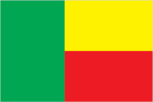
description: two horizontal bands of equal width, with yellow at the top and red at the bottom, alongside a vertical green band on the left side
meaning: green symbolizes hope and renewal, yellow represents wealth, and red signifies bravery
history: incorporates colors from the Pan-African movement
Capital
name
Porto-Novo (constitutional capital); Cotonou (government seat)
etymology
the term Porto-Novo translates from Portuguese as "new port"; Cotonou translates to "mouth of the river of death" in the indigenous Fon language
time difference
UTC+1 (6 hours ahead of Washington, DC during Standard Time)
geographic coordinates
6 29 N, 2 37 E
Suffrage
18 years of age; universal
Citizenship
citizenship by birth
no
citizenship by descent only
at least one parent must be a citizen of Benin
dual citizenship recognized
yes
residency requirement for naturalization
10 years
Constitution
history
previously used in 1946, 1958 (prior to independence); most recently adopted by referendum on 2 December 1990, promulgated on 11 December 1990
amendment process
proposed simultaneously by the president of the republic (following a decision in the Council of Ministers) and the National Assembly; any draft or proposal requires a minimum of three-fourths majority from the Assembly's members for consideration; passage is subject to approval by a referendum unless it receives at least four-fifths majority support from the Assembly; constitutional provisions concerning territorial sovereignty, the republican government structure, and the secular nature of Benin are not subject to amendment
Country name
former
Dahomey, People's Republic of Benin
etymology
the current designation derives from a local ethnic group known as the Bini, whose name may be connected to the Arabic term bani, meaning "sons;" the prior name, Dahomey, originates from a historic kingdom in the region called Dan Homé
local long form
République du Benin
local short form
Benin
conventional long form
Republic of Benin
conventional short form
Benin
Independence
1 August 1960 (from France)
Legal system
a civil law system largely influenced by the French legal framework, supplemented by some customary law
Government type
presidential republic
Judicial branch
highest court(s)
Supreme Court or Cour Supreme (comprises the chief justice and 16 justices divided into an administrative division, a judicial chamber, and a chamber of accounts); Constitutional Court or Cour Constitutionnelle (includes 7 members, one of whom serves as president of the court); High Court of Justice (consists of the Constitutional Court members, 6 members appointed by the National Assembly, and the Supreme Court president)
subordinate courts
Court of Appeal or Cour d'Appel; Court for the Repression of Economic and Terrorism Infractions (CRIET) or Cour de Répression des Infractions Economiques et du Terrorisme; district courts; village courts; Assize courts
judge selection and term of office
the Supreme Court president and judges are appointed by the president of the republic based on recommendations from the National Assembly; judges serve single renewable terms of 5 years; Constitutional Court members are appointed with 4 by the National Assembly and 3 by the president of the republic; appointments are for single renewable terms of 5 years; other members of the High Court of Justice are elected by the National Assembly; member tenure NA
Executive branch
cabinet
Council of Ministers appointed by the president
chief of state
President Patrice TALON (since 6 April 2016)
election results
2021: Patrice TALON reelected president in the ; percent of vote - Patrice TALON (independent) 86.3%, Alassane SOUMANOU (FCBE) 11.4%, Corentin KOHOUE (The Democrats) 2.3%
2016: Patrice TALON elected president in second round; percent of vote in first round - Lionel ZINSOU (FCBE) 28.4%, Patrice TALON (independent) 24.8%, Sebastien AJAVON (independent) 23%, Abdoulaye Bio TCHANE (ABT) 8.8%, Pascal KOUPAKI (NC) 5.9%, other 9.1%; percent of vote in second round - Patrice TALON 65.4%, Lionel ZINSOU 34.6%
head of government
President Patrice TALON (since 6 April 2016)
most recent election date
11 April 2021
election/appointment process
the president is elected directly through an absolute-majority popular vote, possibly in 2 rounds, for a term of 5 years (eligible for one additional term)
expected date of next election
12 April 2026
National holiday
Independence Day, 1 August (1960)
National color(s)
green, yellow, red
National heritage
total World Heritage Sites
3 (2 cultural, 1 natural)
selected World Heritage Site locales
Royal Palaces of Abomey (c); W-Arly-Pendjari Complex (n); Koutammakou, the Land of the Batammariba (c)
Political parties
African Movement for Development and Progress or MADEP
Benin Renaissance or RB
Cowrie Force for an Emerging Benin or FCBE
Democratic Renewal Party or PRD
Progressive Union for Renewal
Republican Bloc
Sun Alliance or AS
The Democrats
Union Makes the Nation or UN (includes PRD, MADEP)
Legislative branch
term in office
4 years
number of seats
109 (all directly elected)
electoral system
proportional representation
legislature name
National Assembly (Assemblée nationale)
scope of elections
full renewal
legislative structure
unicameral
most recent election date
1/8/2023
expected date of next election
January 2026
percentage of women in chamber
26.6%
parties elected and seats per party
Progressive Union for Renewal (53); Republican Block (BR) (28); Democrats (28)
National anthem(s)
title
"L'Aube Nouvelle" (The Dawn of a New Day)
history
adopted 1960
lyrics/music
Gilbert Jean DAGNON
National symbol(s)
leopard
Administrative divisions
12 departments; Alibori, Atacora, Atlantique, Borgou, Collines, Couffo, Donga, Littoral, Mono, Oueme, Plateau, Zou
Diplomatic representation in the US
FAX
[1] (202) 265-1996
chancery
2124 Kalorama Road NW, Washington, DC 20008
telephone
[1] (202) 232-6656
chief of mission
Ambassador Agniola AHOUANMENOU (since 24 July 2025)
email address and website
[email protected]
https://beninembassy.us/
Diplomatic representation from the US
FAX
[229] 21-30-03-84
embassy
01BP 2012, Cotonou
telephone
[229] 21-36-75-00
mailing address
2120 Cotonou Place, Washington DC 20521-2120
chief of mission
Ambassador Brian SHUKAN (since 5 May 2022)
email address and website
[email protected]
https://bj.usembassy.gov/
International organization participation
ACP, AfDB, AU, CD, ECOWAS, Entente, FAO, FZ, G-77, IAEA, IBRD, ICAO, ICCt, ICRM, IDA, IDB, IFAD, IFC, IFRCS, ILO, IMF, IMO, Interpol, IOC, IOM, IPU, ISO, ITSO, ITU, ITUC (NGOs), MIGA, MNJTF, MONUSCO, NAM, OAS (observer), OIC, OIF, OPCW, PCA, UN, UNAMID, UNCTAD, UNESCO, UNHCR, UNHRC, UNIDO, UNISFA, UNMIL, UNMISS, UNOCI, UNOOSA, UNWTO, UPU, WADB (regional), WAEMU, WCO, WFTU (NGOs), WHO, WIPO, WMO, WTO
International law organization participation
has not presented a declaration of ICJ jurisdiction; accepts ICCt jurisdiction
Economy
Budget
revenues
$2.024 billion (2019 est.)
expenditures
$2.101 billion (2019 est.)
Exports
Exports 2021
$4.154 billion (2021 est.)
Exports 2022
$4.271 billion (2022 est.)
Exports 2023
$4.511 billion (2023 est.)
Imports
Imports 2021
$4.925 billion (2021 est.)
Imports 2022
$5.296 billion (2022 est.)
Imports 2023
$6.189 billion (2023 est.)
Industries
textiles, food processing, building materials, cement
Labor force
6.397 million (2024 est.)
Public debt
Public debt 2016
49.7% of GDP (2016 est.)
Remittances
Remittances 2021
1.3% of GDP (2021 est.)
Remittances 2022
1.4% of GDP (2022 est.)
Remittances 2023
1.7% of GDP (2023 est.)
Exchange rates
Currency
Communaute Financiere Africaine francs (XOF) per US dollar -
Exchange rates 2020
574.295 (2020 est.)
Exchange rates 2021
554.608 (2021 est.)
Exchange rates 2022
622.912 (2022 est.)
Exchange rates 2023
606.655 (2023 est.)
Exchange rates 2024
606.345 (2024 est.)
Debt - external
Debt - external 2023
$6.309 billion (2023 est.)
Economic overview
sustained economic expansion; marginal decline in but still prevalent poverty; strong trade connections with Nigeria; exporter of cotton; effects of COVID-19 have resulted in capital flight and border restrictions; member of WAEMU with a currency linked to the euro; recent reductions in fiscal deficits and debt
Unemployment rate
Unemployment rate 2022
1.7% (2022 est.)
Unemployment rate 2023
1.7% (2023 est.)
Unemployment rate 2024
1.8% (2024 est.)
Exports - partners
UAE 42%, Bangladesh 20%, India 11%, China 5%, Togo 3% (2023)
Imports - partners
China 21%, India 15%, USA 6%, France 6%, Nigeria 4% (2023)
Real GDP per capita
Real GDP per capita 2022
$3,600 (2022 est.)
Real GDP per capita 2023
$3,700 (2023 est.)
Real GDP per capita 2024
$3,900 (2024 est.)
Real GDP growth rate
Real GDP growth rate 2022
6.3% (2022 est.)
Real GDP growth rate 2023
6.4% (2023 est.)
Real GDP growth rate 2024
7.5% (2024 est.)
Agricultural products
cassava, yams, maize, oil palm fruit, cotton, soybeans, rice, pineapples, tomatoes, chillies/peppers (2023)
Exports - commodities
gold, cotton, coconuts/brazil nuts/cashews, soybeans, wood (2023)
Imports - commodities
rice, refined petroleum, palm oil, poultry, cars (2023)
Current account balance
Current account balance 2021
-$734.659 million (2021 est.)
Current account balance 2022
-$991.005 million (2022 est.)
Current account balance 2023
-$1.609 billion (2023 est.)
GDP (official exchange rate)
$21.483 billion (2024 est.)
GDP - composition, by end use
household consumption
58.9% (2024 est.)
government consumption
9% (2024 est.)
investment in inventories
0.4% (2024 est.)
investment in fixed capital
34.7% (2024 est.)
exports of goods and services
18.8% (2024 est.)
imports of goods and services
-21.8% (2024 est.)
Population below poverty line
38.5% (2018 est.)
Inflation rate (consumer prices)
Inflation rate (consumer prices) 2022
1.4% (2022 est.)
Inflation rate (consumer prices) 2023
2.7% (2023 est.)
Inflation rate (consumer prices) 2024
1.2% (2024 est.)
Industrial production growth rate
9.7% (2024 est.)
Real GDP (purchasing power parity)
Real GDP (purchasing power parity) 2022
$49.374 billion (2022 est.)
Real GDP (purchasing power parity) 2023
$52.51 billion (2023 est.)
Real GDP (purchasing power parity) 2024
$56.424 billion (2024 est.)
Youth unemployment rate (ages 15-24)
male
3.6% (2024 est.)
total
3.3% (2024 est.)
female
2.9% (2024 est.)
GDP - composition, by sector of origin
industry
17.4% (2024 est.)
services
48.9% (2024 est.)
agriculture
24.2% (2024 est.)
Household income or consumption by percentage share
lowest 10%
3.1% (2021 est.)
highest 10%
27.2% (2021 est.)
Gini Index coefficient - distribution of family income
Gini Index coefficient - distribution of family income 2021
34.4 (2021 est.)
Energy
Coal
imports
164,000 metric tons (2023 est.)
consumption
164,000 metric tons (2023 est.)
Petroleum
crude oil estimated reserves
8 million barrels (2021 est.)
refined petroleum consumption
40,000 bbl/day (2023 est.)
Electricity
exports
2 million kWh (2023 est.)
imports
844.888 million kWh (2023 est.)
consumption
1.459 billion kWh (2023 est.)
installed generating capacity
505,000 kW (2023 est.)
transmission/distribution losses
385 million kWh (2023 est.)
Natural gas
imports
157.25 million cubic meters (2023 est.)
consumption
157.25 million cubic meters (2023 est.)
proven reserves
1.133 billion cubic meters (2021 est.)
Electricity access
electrification - rural areas
45.5%
electrification - urban areas
71.1%
electrification - total population
56.5% (2022 est.)
Energy consumption per capita
Total energy consumption per capita 2023
6.472 million Btu/person (2023 est.)
Electricity generation sources
solar
3.3% of total installed capacity (2023 est.)
fossil fuels
96.7% of total installed capacity (2023 est.)
Communications
Internet users
percent of population
32% (2023 est.)
Broadcast media
The government-operated Office de Radiodiffusion et de Télévision du Bénin (ORTB) manages a television station with extensive coverage; numerous privately owned television stations transmit from Cotonou; satellite television subscription services are offered; the state-owned radio, which falls under ORTB's jurisdiction, consists of a national station along with several regional stations; there is a significant presence of privately owned radio stations; broadcasts from a limited number of international broadcasters can be received on FM in Cotonou (2019)
Internet country code
.bj
Telephones - fixed lines
total subscriptions
1,350 (2024 est.)
subscriptions per 100 inhabitants
(2024 est.) less than 1
Telephones - mobile cellular
total subscriptions
18.2 million (2024 est.)
subscriptions per 100 inhabitants
126 (2024 est.)
Broadband - fixed subscriptions
total
24,000 (2023 est.)
subscriptions per 100 inhabitants
(2023 est.) less than 1
Transportation
Ports
large
0
small
0
medium
1
key ports
Cotonou
very small
0
total ports
1 (2024)
ports with oil terminals
1
Airports
10 (2025)
Railways
total
438 km (2014)
narrow gauge
438 km (2014) 1.000-m gauge
Merchant marine
total
6 (2023)
by type
other 6
Civil aircraft registration country code prefix
TY
Military & Security
Military - note
The Beninese Armed Forces (FAB) hold the responsibility for protecting the nation from external threats and may also be called upon to aid in preserving public order and internal security as dictated by the president of the nation; additionally, they may engage in projects aimed at economic development.
A significant priority for Benin's security forces is to combat infiltrations by terrorist organizations associated with al-Qa'ida and the Islamic State of Iraq and ash-Sham (ISIS), which are operating in close proximity to northern Benin, particularly in Burkina Faso and Niger. In 2022, the Benin Government declared that it was "at war" following a series of attacks from these groups. Subsequently, President TALON committed to expanding the military, modernizing its equipment, and establishing forward operating bases. Since 2022, the military has also deployed thousands of additional personnel to the northern region to enhance border security. Furthermore, the FAB is involved in the Multinational Joint Task Force (MNJTF) aimed at combating Boko Haram and ISIS-West Africa in the vicinity of the Lake Chad Basin and along Nigeria’s northeastern frontier (2025).
Military expenditures
Military Expenditures 2020
0.5% of GDP (2020 est.)
Military Expenditures 2021
0.7% of GDP (2021 est.)
Military Expenditures 2022
0.7% of GDP (2022 est.)
Military Expenditures 2023
0.5% of GDP (2023 est.)
Military Expenditures 2024
0.7% of GDP (2024 est.)
Military and security forces
Beninese Armed Forces (Forces Armees Beninoises, FAB; also known as Benin Defense Forces): comprising the Army, Air Force, National Navy, and National Guard (also referred to as the Republican Guard).
Ministry of Interior and Public Security: the Republican Police (Police Republicaine, DGPR) (2025).
Military service age and obligation
Individuals aged 18-30 are eligible for voluntary and selective compulsory military service for both men and women; the duration of compulsory service is set at 18 months (2025).
Military equipment inventories and acquisitions
The military is outfitted with a combination of older, secondhand equipment and limited quantities of newer gear sourced from various suppliers, including China, France, Germany, South Africa, the former Soviet Union, Spain, and the United States (2025).
Military and security service personnel strengths
The estimated number of active duty personnel in the Armed Forces, including the National Guard, is between 10,000 and 12,000 (2025).
Terrorism
Terrorist group(s)
Jama’at Nusrat al Islam wal Muslimeen (JNIM); Islamic State in the Greater Sahara (ISIS-GS); Boko Haram
Transnational Issues
Refugees and internally displaced persons
IDPs
12,501 (2024 est.)
refugees
23,225 (2024 est.)