CapitalHanoi (Ha Noi)
LanguagesVietnamese
Currencydong
Governmentstate led by the communist party
Bamwor Indexes
Vietnam — Q1 2026
IBEUBamwor Urban Scale Index
13.12%
Rank #132 of 237
View full ranking →
IBCPBamwor Population Concentration Index
25.84%
Rank #133 of 237
View full ranking →
IBDABamwor Settlement Density Index
126.64per 1K km²
Rank #109 of 241
View full ranking →
IBCXBamwor Country Complexity Index
75.94/100
Rank #16 of 234
View full ranking →
IBEEBamwor Economic Stability Index
87.71/100
Rank #99 of 220
View full ranking →
IBDIBamwor Digital Infrastructure Index
73.09/100
Rank #107 of 206
View full ranking →
IBEDBamwor Education Index
75.07/100
Rank #38 of 119
View full ranking →
IBSABamwor Healthcare Index
71.26/100
Rank #90 of 218
View full ranking →
Vietnam Intelligence Report
Download PDF with 20+ statistics, rankings & proprietary indices
Introduction
Background
Vietnam's early history included periods of occupation by outside forces and eventual power consolidation under Vietnamese dynastic families. A succession of Han Chinese emperors ruled the area, which was centered on the Red River Valley, until approximately the 10th century. The Ly Dynasty (11th-13th century) created the first independent Vietnamese state, which was known as Dai Viet, and established their capital at Thang Long (Hanoi). Under the Tran Dynasty (13th-15th century), TRAN Hung Dao, one of Vietnam’s national heroes, led Dai Viet forces to fight off Mongol invaders in 1279. After a brief Chinese occupation in the early 1400s, Vietnamese resistance leader LE Thai To made himself emperor and established the Le Dynasty, which lasted until the late 18th century despite decades of political turmoil, civil war, and division. During this period, Dai Viet expanded southward to the Central Highlands and Mekong Delta, reaching the approximate boundaries of modern-day Vietnam by the 1750s. Dai Viet suffered additional civil war and division in the latter half of the 18th century, but it was reunited and renamed Vietnam under Emperor NGUYEN Phuc Anh (aka Gia Long) in 1802.
France began its conquest of Vietnam in 1858 and made Vietnam part of French Indochina in 1887. Vietnam declared independence after World War II, but the French continued to rule until communist forces under Ho Chi MINH defeated them in 1954. Under the Geneva Accords of 1954, Vietnam was divided into the communist North and anti-communist South. Fighting erupted between the two governments shortly afterwards with the North supporting communist rebels in the South and eventually committing thousands of combat troops. The US provided to the South significant economic and military assistance, including large numbers of US military forces, which reached a peak strength of over 500,000 troops in 1968. US combat forces were withdrawn following a cease-fire agreement in 1973. Two years later, North Vietnamese forces overran the South, reuniting the country under communist rule. The conflict, known as the Second Indochina War (1955-1975), devastated Vietnam, spilled over into the neighboring countries of Cambodia and Laos, and is estimated to have resulted in the deaths of up to 3 million Vietnamese civilians and soldiers. It also caused more than 58,000 US combat and non-combat deaths and created deep domestic divisions in the US.
Despite the return of peace, the country experienced little economic growth for over a decade because of its diplomatic isolation, leadership policies, and the persecution and mass exodus of citizens, many of them successful South Vietnamese merchants. However, since the enactment of Vietnam's "doi moi" (renovation) policy in 1986, the economy has seen strong growth, particularly in agricultural and industrial production, construction, exports, foreign investment, and tourism. Nevertheless, the Communist Party maintains tight political and social control of the country, and Vietnam faces many related challenges, such as rising income inequality and corruption.
Geography
Area
land
310,070 sq km
water
21,140 sq km
total
331,210 sq km
Climate
the southern region experiences a tropical climate, whereas the northern area has a monsoonal climate characterized by a hot, rainy period from May to September and a warm, dry phase from October to March
Terrain
the geographical features include a low, flat delta in both the southern and northern regions, central highlands, and hilly, mountainous terrain in the extreme north and northwest
Land use
other
13.7% (2023 est.)
forest
47% (2023 est.)
agricultural land
39.2% (2023 est.)
agricultural land: arable land
arable land: 21.5% (2023 est.)
agricultural land: permanent crops
permanent crops: 15.7% (2023 est.)
agricultural land: permanent pasture
permanent pasture: 2% (2023 est.)
Location
located in Southeast Asia, the country is bordered by the Gulf of Thailand, Gulf of Tonkin, and the South China Sea, as well as neighboring China, Laos, and Cambodia
Coastline
3,444 km (excludes islands)
Elevation
lowest point
South China Sea 0 m
highest point
Fan Si Pan 3,144 m
mean elevation
398 m
Irrigated land
46,000 sq km (2012)
Map references
Southeast Asia
Land boundaries
total
4,616 km
border countries
Cambodia 1,158 km; China 1,297 km; Laos 2,161 km
Maritime claims
contiguous zone
24 nm
territorial sea
12 nm
continental shelf
200 nm or to the edge of the continental margin
exclusive economic zone
200 nm
Natural hazards
typhoons occur sporadically from May to January, leading to significant flooding, particularly in the Mekong River delta
Geography - note
note 1: stretching 1,650 km (1,025 mi) from north to south, the nation's narrowest point measures only 50 km (31 mi) wide
note 2: Son Doong, located in Phong Nha-Ke Bang National Park, holds the title of the world's largest cave (by greatest cross-sectional area) and is recognized as the largest known cave passage globally by volume, containing 38.5 million cubic meters (approximately 1.35 billion cubic feet); it connects to Thoong cave, pending official recognition, which would add another 1.6 million cubic meters; its immense size houses its own jungle, an underground river, and a localized weather system, with clouds forming within the cave and escaping from its exits
Natural resources
resources include antimony, phosphates, coal, manganese, rare earth elements, bauxite, chromate, offshore oil and gas reserves, timber, hydropower, and arable land
Area - comparative
approximately three times larger than Tennessee; slightly exceeds the size of New Mexico
Geographic coordinates
16 10 N, 107 50 E
Population distribution
despite having one of the highest population densities worldwide, the distribution of the population is uneven; the highest concentrations are found along the South China Sea and Gulf of Tonkin, particularly in the Mekong Delta in the south and the Red River Valley in the north
Major watersheds (area sq km)
Pacific Ocean drainage
Mekong (805,604 sq km)
Major rivers (by length in km)
the Sông Tiên Giang (Mekong) river mouth (shared with China [s], Burma, Laos, Thailand, Cambodia) measures 4,350 km; the Pearl river source (shared with China [m]) extends 2,200 km; the Red river mouth (shared with China [s]) is 1,149 km long
note: [s] following a country name denotes river source; [m] following a country name denotes river mouth
People & Society
Literacy
male
97.2% (2022 est.)
female
95.1% (2022 est.)
total population
96.1% (2022 est.)
Languages
Languages
Vietnamese (official); English (commonly as a second language); some French, Chinese, and Khmer; languages from mountainous regions (including Mon-Khmer and Malayo-Polynesian)
major-language sample(s)
Dữ kiện thế giới, là nguồn thông tin cơ bản không thể thiếu. (Vietnamese)
The World Factbook, the indispensable source for basic information.
Religions
Catholic 6.1%, Buddhist 5.8%, Protestant 1%, other 0.8%, none 86.3% (2019 estimate)
Sex ratio
at birth
1.1 male(s)/female
0-14 years
1.12 male(s)/female
15-64 years
1.02 male(s)/female
total population
1.01 male(s)/female (2024 est.)
65 years and over
0.69 male(s)/female
Birth rate
14.58 births/1,000 population (2025 est.)
Death rate
5.81 deaths/1,000 population (2025 est.)
Median age
male
32 years
total
33.5 years (2025 est.)
female
34.2 years
Population
male
53,597,784
total
106,688,169 (2025 est.)
female
53,090,385
Nationality
noun
Vietnamese (singular and plural)
adjective
Vietnamese
Tobacco use
male
43.1% (2025 est.)
total
22% (2025 est.)
female
2.1% (2025 est.)
Urbanization
urban population
39.5% of total population (2023)
rate of urbanization
2.7% annual rate of change (2020-25 est.)
Age structure
0-14 years
23.2% (male 12,953,719/female 11,579,690)
15-64 years
68.5% (male 36,591,845/female 35,887,201)
65 years and over
8.3% (2024 est.) (male 3,563,611/female 5,182,909)
Ethnic groups
Kinh (Viet) 85.3%, Tay 1.9%, Thai 1.9%, Muong 1.5%, Khmer 1.4%, Mong 1.4%, Nung 1.1%, other 5.5% (2019 estimate)
Child marriage
men married by age 18
1.9% (2021)
women married by age 15
1.1% (2021)
women married by age 18
14.6% (2021)
Dependency ratios
total dependency ratio
46.4 (2025 est.)
youth dependency ratio
33.6 (2025 est.)
potential support ratio
7.8 (2025 est.)
elderly dependency ratio
12.8 (2025 est.)
Physician density
1.11 physicians/1,000 population (2021)
Health expenditure
Health expenditure (as % of GDP)
4.6% of GDP (2021)
Health expenditure (as % of national budget)
10.7% of national budget (2022 est.)
Net migration rate
-0.21 migrant(s)/1,000 population (2025 est.)
Hospital bed density
2.6 beds/1,000 population (2017 est.)
Total fertility rate
2.01 children born/woman (2025 est.)
Drinking water source
improved: rural
rural: 97.2% of population (2022 est.)
improved: total
total: 98% of population (2022 est.)
improved: urban
urban: 99.1% of population (2022 est.)
unimproved: rural
rural: 2.8% of population (2022 est.)
unimproved: total
total: 2% of population (2022 est.)
unimproved: urban
urban: 0.9% of population (2022 est.)
Education expenditure
Education expenditure (% GDP)
2.9% of GDP (2022 est.)
Education expenditure (% national budget)
15.4% national budget (2022 est.)
Infant mortality rate
male
14.4 deaths/1,000 live births
total
13.8 deaths/1,000 live births (2025 est.)
female
13.7 deaths/1,000 live births
Population growth rate
0.86% (2025 est.)
Gross reproduction rate
0.96 (2025 est.)
Population distribution
despite having one of the highest population densities globally, the population distribution is uneven; the most significant clustering occurs along the South China Sea and Gulf of Tonkin, with the largest populations found in the Mekong Delta (to the south) and the Red River Valley (to the north)
Life expectancy at birth
male
73.5 years
female
78.9 years
total population
76.1 years (2024 est.)
Maternal mortality ratio
48 deaths/100,000 live births (2023 est.)
Sanitation facility access
improved: rural
rural: 90.9% of population (2022 est.)
improved: total
total: 94.4% of population (2022 est.)
improved: urban
urban: 99.9% of population (2022 est.)
unimproved: rural
rural: 9.1% of population (2022 est.)
unimproved: total
total: 5.6% of population (2022 est.)
unimproved: urban
urban: 0.1% of population (2022 est.)
Alcohol consumption per capita
beer
3.18 liters of pure alcohol (2019 est.)
wine
0.02 liters of pure alcohol (2019 est.)
total
3.41 liters of pure alcohol (2019 est.)
spirits
0.21 liters of pure alcohol (2019 est.)
other alcohols
0 liters of pure alcohol (2019 est.)
Major urban areas - population
9.321 million Ho Chi Minh City, 5.253 million HANOI (capital), 1.865 million Can Tho, 1.423 million Hai Phong, 1.221 million Da Nang, 1.111 million Bien Hoa (2023)
Obesity - adult prevalence rate
2.1% (2016)
Currently married women (ages 15-49)
72.8% (2021 est.)
Children under the age of 5 years underweight
9.7% (2023 est.)
School life expectancy (primary to tertiary education)
male
15 years (2022 est.)
total
14 years (2022 est.)
female
14 years (2022 est.)
Environment
Climate
The southern region experiences a tropical climate, while the northern area has a monsoonal climate characterized by a hot and rainy season from May to September and a warm, dry season from October to March.
Geoparks
global geoparks and regional networks
Dak Nong; Dong Van Karst Plateau; Lang Son; Non nuoc Cao Bang (2025)
total global geoparks and regional networks
4 (2025)
Land use
other
13.7% (2023 est.)
forest
47% (2023 est.)
agricultural land
39.2% (2023 est.)
agricultural land: arable land
arable land: 21.5% (2023 est.)
agricultural land: permanent crops
permanent crops: 15.7% (2023 est.)
agricultural land: permanent pasture
permanent pasture: 2% (2023 est.)
Urbanization
urban population
39.5% of total population (2023)
rate of urbanization
2.7% annual rate of change (2020-25 est.)
Methane emissions
other
40.4 kt (2019-2021 est.)
waste
683.4 kt (2019-2021 est.)
energy
806.7 kt (2022-2024 est.)
agriculture
2,146.3 kt (2019-2021 est.)
Waste and recycling
municipal solid waste generated annually
9.57 million tons (2024 est.)
percent of municipal solid waste recycled
46% (2022 est.)
Environmental issues
Issues such as deforestation and soil degradation due to logging and slash-and-burn agricultural practices; water pollution; overfishing; and groundwater contamination which restricts access to drinkable water; as well as air pollution.
Total water withdrawal
municipal
1.206 billion cubic meters (2022 est.)
industrial
3.074 billion cubic meters (2022 est.)
agricultural
77.75 billion cubic meters (2022 est.)
Carbon dioxide emissions
total emissions
305.404 million metric tonnes of CO2 (2023 est.)
from consumed natural gas
14.52 million metric tonnes of CO2 (2023 est.)
from coal and metallurgical coke
218.502 million metric tonnes of CO2 (2023 est.)
from petroleum and other liquids
72.383 million metric tonnes of CO2 (2023 est.)
Particulate matter emissions
20.9 micrograms per cubic meter (2019 est.)
Total renewable water resources
884.12 billion cubic meters (2022 est.)
International environmental agreements
party to
Biodiversity, Climate Change, Climate Change-Kyoto Protocol, Climate Change-Paris Agreement, Comprehensive Nuclear Test Ban, Desertification, Endangered Species, Environmental Modification, Hazardous Wastes, Law of the Sea, Ozone Layer Protection, Ship Pollution, Tropical Timber 2006, Wetlands
signed, but not ratified
none of the selected agreements
Government
Flag
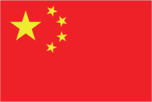
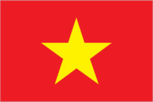
description: a red background featuring a five-pointed yellow star at its center
meaning: the red color symbolizes revolution and bloodshed, while the five-pointed star represents the five segments of the populace – peasants, workers, intellectuals, traders, and soldiers – united to establish socialism
Capital
name
Hanoi (Ha Noi)
etymology
the name translates to "inside the river," derived from the Vietnamese terms ha (river) and noi (inside), alluding to its position within a bend of the Red River
time difference
UTC+7 (12 hours ahead of Washington, DC, during Standard Time)
geographic coordinates
21 02 N, 105 51 E
Suffrage
18 years of age; universal
Citizenship
citizenship by birth
no
citizenship by descent only
at least one parent must be a citizen of Vietnam
dual citizenship recognized
no
residency requirement for naturalization
5 years
Constitution
history
multiple prior versions; the most recent was adopted on 28 November 2013, taking effect on 1 January 2014
amendment process
can be proposed by the president, the Standing Committee of the National Assembly, or by at least two-thirds of the National Assembly members; a motion to draft an amendment requires a minimum two-thirds majority approval from the Assembly membership, after which a constitutional drafting committee is formed to create a draft and gather public feedback; passage necessitates at least a two-thirds majority in the Assembly; the Assembly may choose to hold a referendum
Country name
former
Democratic Republic of Vietnam (North Vietnam), Republic of Vietnam (South Vietnam)
etymology
the name means "Viet south;" Viet is an ethnic designation of uncertain origin that dates back to ancient eras, while nam (south) indicates the geographical position of the country
abbreviation
SRV
local long form
Cong Hoa Xa Hoi Chu Nghia Viet Nam
local short form
Viet Nam
conventional long form
Socialist Republic of Vietnam
conventional short form
Vietnam
Independence
2 September 1945 (from France)
Legal system
civil law framework influenced by European systems
Government type
state led by the communist party
Judicial branch
highest court(s)
Supreme People's Court (consists of the chief justice and 13 judges)
subordinate courts
High Courts (covering administrative, civil, criminal, economic, labor, family, and juvenile matters); provincial courts; district courts; Military Court
judge selection and term of office
the chief justice is elected by the National Assembly upon the president's recommendation for a renewable 5-year term; the deputy chief justice is appointed by the president from among the judges for a 5-year term; judges are appointed by the president and must be confirmed by the National Assembly for 5-year terms
Executive branch
cabinet
the Cabinet is proposed by the prime minister, confirmed by the National Assembly, and appointed by the president
chief of state
President Luong CUONG (since 21 Oct 2024)
head of government
Prime Minister Pham Minh CHINH (since 26 July 2021)
election/appointment process
the president is indirectly elected by the National Assembly from its members for a single term of 5 years; the prime minister is nominated by the president and confirmed by the National Assembly; deputy prime ministers are appointed by the president and confirmed by the National Assembly
National holiday
Independence Day (National Day), celebrated on 2 September (1945)
National color(s)
red, yellow
National heritage
total World Heritage Sites
9 (6 cultural, 2 natural, 1 mixed)
selected World Heritage Site locales
Complex of Hué Monuments (c); Ha Long Bay (n); Hoi An Ancient Town (c); My Son Sanctuary (c); Phong Nha-Ke Bang National Park (n); Imperial Citadel of Thang Long - Hanoi (c); Citadel of the Ho Dynasty (c); Trang An Landscape Complex (m); Yen Tu-Vinh Nghiem-Con Son, Kiep Bac Complex of Monuments and Landscapes (c)
Political parties
Communist Party of Vietnam or CPV
Legislative branch
term in office
5 years
number of seats
500 (all directly elected)
electoral system
plurality/majority
legislature name
National Assembly (Quoc-Hoi)
scope of elections
full renewal
legislative structure
unicameral
most recent election date
5/23/2021
expected date of next election
March 2026
percentage of women in chamber
31.4%
parties elected and seats per party
Communist Party (485); Other (14)
National anthem(s)
title
"Tien quan ca" (The Song of the Marching Troops)
history
was adopted as the national anthem of the Democratic Republic of Vietnam in 1945; it became the national anthem of the unified Socialist Republic of Vietnam in 1976; only the first verse is officially utilized as the anthem
lyrics/music
Nguyen Van CAO
National symbol(s)
a five-pointed yellow star on a red backdrop, along with a lotus blossom
Administrative divisions
comprising 58 provinces (tinh, both singular and plural) and 5 municipalities (thanh pho, both singular and plural)
provinces: An Giang, Bac Giang, Bac Kan, Bac Lieu, Bac Ninh, Ba Ria-Vung Tau, Ben Tre, Binh Dinh, Binh Duong, Binh Phuoc, Binh Thuan, Ca Mau, Cao Bang, Dak Lak, Dak Nong, Dien Bien, Dong Nai, Dong Thap, Gia Lai, Ha Giang, Ha Nam, Ha Tinh, Hai Duong, Hau Giang, Hoa Binh, Hung Yen, Khanh Hoa, Kien Giang, Kon Tum, Lai Chau, Lam Dong, Lang Son, Lao Cai, Long An, Nam Dinh, Nghe An, Ninh Binh, Ninh Thuan, Phu Tho, Phu Yen, Quang Binh, Quang Nam, Quang Ngai, Quang Ninh, Quang Tri, Soc Trang, Son La, Tay Ninh, Thai Binh, Thai Nguyen, Thanh Hoa, Thua Thien-Hue, Tien Giang, Tra Vinh, Tuyen Quang, Vinh Long, Vinh Phuc, Yen Bai
municipalities: Can Tho, Da Nang, Ha Noi (Hanoi), Hai Phong, Ho Chi Minh City (Saigon)
Diplomatic representation in the US
FAX
[1] (202) 861-0917
chancery
1233 20th Street NW, Suite 400, Washington, DC 20036
telephone
[1] (202) 861-0737
consulate(s)
New York
chief of mission
Ambassador Nguyen Quoc DZUNG (since 19 April 2022)
consulate(s) general
Houston, San Francisco
email address and website
[email protected]
http://vietnamembassy-usa.org/
Diplomatic representation from the US
FAX
[84] (24) 3850-5010
embassy
7 Lang Ha Street, Hanoi
telephone
[84] (24) 3850-5000
mailing address
4550 Hanoi Place, Washington, DC 20521-4550
chief of mission
Ambassador Marc KNAPPER (since 11 February 2022)
consulate(s) general
Ho Chi Minh City
email address and website
[email protected]
https://vn.usembassy.gov/
International organization participation
ADB, APEC, ARF, ASEAN, CICA, CP, EAS, FAO, G-77, IAEA, IBRD, ICAO, ICC (NGOs), ICRM, IDA, IFAD, IFC, IFRCS, ILO, IMF, IMO, IMSO, Interpol, IOC, IOM, IPU, ISO, ITSO, ITU, MIGA, NAM, OIF, OPCW, PCA, UN, UNCTAD, UNESCO, UNHRC, UNIDO, UNOOSA, UNWTO, UPU, WCO, WFTU (NGOs), WHO, WIPO, WMO, WTO (2024)
International law organization participation
has not presented a declaration of jurisdiction to the ICJ; is a non-party state to the ICCt
Economy
Budget
revenues
$68.818 billion (2022 est.)
expenditures
$83.707 billion (2022 est.)
Exports
Exports 2022
$385.241 billion (2022 est.)
Exports 2023
$374.986 billion (2023 est.)
Exports 2024
$429.383 billion (2024 est.)
Imports
Imports 2022
$369.746 billion (2022 est.)
Imports 2023
$339.785 billion (2023 est.)
Imports 2024
$398.672 billion (2024 est.)
Industries
food processing, textiles, footwear, machinery manufacturing; mining, coal, steel production; cement, chemical fertilizers, glass, tires, petroleum, mobile phones
Labor force
57.133 million (2024 est.)
Public debt
Public debt 2017
58.5% of GDP (2017 est.)
Remittances
Remittances 2021
3.5% of GDP (2021 est.)
Remittances 2022
3.2% of GDP (2022 est.)
Remittances 2023
3.2% of GDP (2023 est.)
Exchange rates
Currency
dong (VND) per US dollar -
Exchange rates 2020
23,208.368 (2020 est.)
Exchange rates 2021
23,159.783 (2021 est.)
Exchange rates 2022
23,271.212 (2022 est.)
Exchange rates 2023
23,787.319 (2023 est.)
Exchange rates 2024
24,164.886 (2024 est.)
Debt - external
Debt - external 2023
$34.426 billion (2023 est.)
Economic overview
a lower middle-income socialist economy in East Asia; has experienced rapid economic growth following the Đổi Mới reforms; marked by strong investment and productivity increases; serves as a hub for tourism and manufacturing; a signatory of the TPP; poverty reduction efforts are notable except for ethnic minorities; faces systemic corruption issues
Unemployment rate
Unemployment rate 2022
1.6% (2022 est.)
Unemployment rate 2023
1.7% (2023 est.)
Unemployment rate 2024
1.5% (2024 est.)
Exports - partners
USA 28%, China 20%, Japan 6%, Hong Kong 4%, Germany 3% (2023)
Imports - partners
China 49%, Singapore 6%, Japan 6%, Hong Kong 5%, Taiwan 4% (2023)
Real GDP per capita
Real GDP per capita 2022
$13,000 (2022 est.)
Real GDP per capita 2023
$13,500 (2023 est.)
Real GDP per capita 2024
$14,400 (2024 est.)
Real GDP growth rate
Real GDP growth rate 2022
8.5% (2022 est.)
Real GDP growth rate 2023
5.1% (2023 est.)
Real GDP growth rate 2024
7.1% (2024 est.)
Agricultural products
rice, vegetables, sugarcane, cassava, maize, pork, fruits, bananas, coconuts, coffee (2023)
Exports - commodities
broadcasting equipment, textiles, integrated circuits, machine components, footwear (2023)
Imports - commodities
integrated circuits, broadcasting equipment, fabric, plastics, telephones (2023)
Current account balance
Current account balance 2022
$1.402 billion (2022 est.)
Current account balance 2023
$25.793 billion (2023 est.)
Current account balance 2024
$28.047 billion (2024 est.)
GDP (official exchange rate)
$476.388 billion (2024 est.)
GDP - composition, by end use
household consumption
54.3% (2023 est.)
government consumption
8.8% (2023 est.)
investment in inventories
1.5% (2023 est.)
investment in fixed capital
30.1% (2023 est.)
exports of goods and services
86.5% (2023 est.)
imports of goods and services
-78.4% (2023 est.)
Population below poverty line
4.3% (2022 est.)
Average household expenditures
on food
34.9% of household expenditures (2023 est.)
on alcohol and tobacco
1.9% of household expenditures (2023 est.)
Inflation rate (consumer prices)
Inflation rate (consumer prices) 2022
3.2% (2022 est.)
Inflation rate (consumer prices) 2023
3.3% (2023 est.)
Inflation rate (consumer prices) 2024
3.6% (2024 est.)
Industrial production growth rate
8.2% (2024 est.)
Real GDP (purchasing power parity)
Real GDP (purchasing power parity) 2022
$1.294 trillion (2022 est.)
Real GDP (purchasing power parity) 2023
$1.359 trillion (2023 est.)
Real GDP (purchasing power parity) 2024
$1.456 trillion (2024 est.)
Youth unemployment rate (ages 15-24)
male
7% (2024 est.)
total
6.8% (2024 est.)
female
6.6% (2024 est.)
Reserves of foreign exchange and gold
Reserves of foreign exchange and gold 2022
$86.54 billion (2022 est.)
Reserves of foreign exchange and gold 2023
$92.238 billion (2023 est.)
Reserves of foreign exchange and gold 2024
$83.082 billion (2024 est.)
GDP - composition, by sector of origin
industry
37.6% (2024 est.)
services
42.4% (2024 est.)
agriculture
11.9% (2024 est.)
Household income or consumption by percentage share
lowest 10%
2.6% (2022 est.)
highest 10%
28.1% (2022 est.)
Gini Index coefficient - distribution of family income
Gini Index coefficient - distribution of family income 2022
36.1 (2022 est.)
Energy
Coal
exports
815,000 metric tons (2023 est.)
imports
43.637 million metric tons (2023 est.)
production
51.519 million metric tons (2023 est.)
consumption
96.099 million metric tons (2023 est.)
proven reserves
3.116 billion metric tons (2023 est.)
Petroleum
total petroleum production
187,000 bbl/day (2023 est.)
crude oil estimated reserves
4.4 billion barrels (2021 est.)
refined petroleum consumption
544,000 bbl/day (2023 est.)
Electricity
exports
933.237 million kWh (2023 est.)
imports
3.106 billion kWh (2023 est.)
consumption
277.501 billion kWh (2023 est.)
installed generating capacity
85.725 million kW (2023 est.)
transmission/distribution losses
18.197 billion kWh (2023 est.)
Natural gas
production
7.48 billion cubic meters (2023 est.)
consumption
7.48 billion cubic meters (2023 est.)
proven reserves
699.426 billion cubic meters (2021 est.)
Electricity access
electrification - total population
100% (2022 est.)
Energy consumption per capita
Total energy consumption per capita 2023
40.263 million Btu/person (2023 est.)
Electricity generation sources
wind
4.2% of total installed capacity (2023 est.)
solar
9.7% of total installed capacity (2023 est.)
fossil fuels
50.6% of total installed capacity (2023 est.)
hydroelectricity
34.3% of total installed capacity (2023 est.)
biomass and waste
1.1% of total installed capacity (2023 est.)
Communications
Internet users
percent of population
78% (2023 est.)
Broadcast media
The media sector is regulated by the state, specifically through the Ministry of Information and Communication (MIC); the national television entity, Vietnam Television (VTV), operates numerous channels and has regional broadcasting hubs. Legislation restricts satellite television access, yet many individuals obtain foreign content through personal satellite installations. Additionally, the state-operated Voice of Vietnam, which serves as the national radio broadcaster, transmits across various channels and is also available on AM, FM, and shortwave frequencies (2018)
Internet country code
.vn
Telephones - fixed lines
total subscriptions
2.316 million (2023 est.)
subscriptions per 100 inhabitants
2 (2023 est.)
Telephones - mobile cellular
total subscriptions
129 million (2024 est.)
subscriptions per 100 inhabitants
128 (2024 est.)
Broadband - fixed subscriptions
total
22.8 million (2023 est.)
subscriptions per 100 inhabitants
23 (2023 est.)
Transportation
Ports
large
0
small
6
medium
1
key ports
Da Nang, Hai Phong, Nghe Tinh, Nha Trang, Ho Chi Minh City, Vinh Cam Ranh, Vung Tau
very small
9
total ports
16 (2024)
ports with oil terminals
12
Airports
36 (2025)
Railways
total
2,600 km (2014)
narrow gauge
2,169 km (2014) 1.000-m gauge
standard gauge
178 km (2014) 1.435-m gauge; 253 km mixed gauge
Heliports
26 (2025)
Merchant marine
total
1,973 (2022)
by type
bulk carrier 117, container ship 45, general cargo 1,176, oil tanker 134, other 501
Civil aircraft registration country code prefix
VN
Military & Security
Military - note
Following its withdrawal of military occupation forces from Cambodia in the late 1980s and the cessation of Soviet assistance in 1991, Vietnam has adopted a non-aligned approach to foreign policy and security, encapsulated in its "Four Nos" doctrine (no alliances, no taking sides in conflicts between nations, no foreign military bases, and no use of force in international relations). In light of its historical tensions with Beijing regarding maritime boundaries in the South China Sea, Vietnam prioritizes maintaining stable relations with China, given the latter's proximity, size, and status as Vietnam's principal trading partner.
The People's Army of Vietnam (PAVN) is tasked with safeguarding the nation's independence, sovereignty, territorial integrity, and national interests, alongside aiding civilian authorities in disaster response. Recently, the PAVN has intensified its focus on protecting Vietnam's interests in the contested South China Sea. Additionally, the military participates in various economic initiatives, including electrical infrastructure, oil and gas operations, hydroelectric projects, aviation and port services, telecommunications, and shipbuilding. Military-owned factories and enterprises are responsible for the production of weapons and equipment (2025).
Military deployments
200 Abyei/South Sudan/Sudan (UNISFA) (2025)
Military expenditures
Military Expenditures 2019
2.3% of GDP (2019 est.)
Military Expenditures 2020
2.4% of GDP (2020 est.)
Military Expenditures 2021
2.3% of GDP (2021 est.)
Military Expenditures 2022
2.3% of GDP (2022 est.)
Military Expenditures 2023
1.8% of GDP (2023 est.)
Military and security forces
People's Army of Vietnam (PAVN; also referred to as Vietnam People's Army, VPA): Ground Forces (Army), Navy (including naval infantry), Air Defense - Air Force, Vietnam Border Guard, Vietnam Coast Guard.
Vietnam People's Ministry of Public Security; Vietnam Civil Defense Force (2025).
Military service age and obligation
Mandatory and voluntary military service for men and women is required from ages 18 to 27 (in practice, only men are conscripted); the service duration ranges from 24 to 36 months, depending on the military branch (including Coast Guard and Ministry of Public Security) (2025).
Military equipment inventories and acquisitions
The PAVN is predominantly outfitted with weaponry from Russia and the former Soviet Union. In recent years, Vietnam has sought to diversify its sources of arms, acquiring equipment from nations such as India, Israel, the Netherlands, South Korea, and the United States. Vietnam maintains a modest defense industry that produces small arms, ground combat vehicles, and naval systems (2025).
Military and security service personnel strengths
Approximately 450,000 personnel are on active duty in the People's Army of Vietnam (2025).
Transnational Issues
Refugees and internally displaced persons
IDPs
2,568 (2024 est.)
refugees
19 (2024 est.)
stateless persons
20,590 (2024 est.)
Space
Space agency/agencies
Vietnam National Space Center (VNSC; founded in 2011) (2025)
Space program overview
is advancing a national space initiative aimed at acquiring, managing, and utilizing satellites, alongside enhancing local capabilities in satellite production and its related sub-systems, space science, and technological applications; it constructs and manages communication and remote sensing satellites; engages in research and development in the field of space science and practical space technologies, including advanced optics and space data utilization; has collaborated closely with Japan on its space endeavors; has also formed partnerships with space agencies or commercial space industries in several European nations (notably France), India, and the United States (2025)
Key space-program milestones
1980 - the inaugural Vietnamese astronaut/cosmonaut traveled into space aboard a Soviet spacecraft
2008 - launched the first telecommunications satellite (VINASAT-1), created by a US firm and launched using a European rocket
2012 - launched the first educational/scientific cube satellite (F-1), developed collaboratively with Japan; the second telecommunications satellite (VINASAT-2), designed by the US and launched via a European rocket
2013 - the first domestically manufactured remote-sensing (RS)/technology-demonstrator cube satellite (PicoDragon) was launched by Japan; the first RS satellite (VNREDSat-1a or Vietnam Natural Resources, Environment, and Disaster Monitoring Satellite) took flight aboard a European rocket
2016 - an agreement was reached with India to set up a satellite tracking and imaging facility in Ho Chi Minh City in return for access to Indian RS imagery
2018 - the National Space Center in Hanoi was completed
2021 - unveiled a roadmap for developing “Made in Vietnam” small satellites as part of a broader initiative to enhance space science and technology through 2030; forged a pact with Japan to bolster cooperation in space defense