CapitalWashington, D.C.
LanguagesEnglish only, Spanish, Chinese, other
Governmentconstitutional federal republic
Bamwor Indexes
United States — Q1 2026
IBEUBamwor Urban Scale Index
2.60%
Rank #234 of 237
View full ranking →
IBCPBamwor Population Concentration Index
6.02%
Rank #234 of 237
View full ranking →
IBDABamwor Settlement Density Index
19.70per 1K km²
Rank #188 of 241
View full ranking →
IBCXBamwor Country Complexity Index
87.62/100
Rank #4 of 234
View full ranking →
IBEEBamwor Economic Stability Index
90.46/100
Rank #60 of 220
View full ranking →
IBFMBamwor Military Strength Index
84.07/100
Rank #3 of 124
View full ranking →
IBDIBamwor Digital Infrastructure Index
90.12/100
Rank #13 of 206
View full ranking →
IBSABamwor Healthcare Index
79.36/100
Rank #32 of 218
View full ranking →
United States Intelligence Report
Download PDF with 20+ statistics, rankings & proprietary indices
Introduction
Background
In 1776, thirteen of Britain's American colonies declared independence from the United Kingdom and subsequently gained recognition as the United States of America after the Treaty of Paris in 1783. Throughout the 19th and 20th centuries, the nation saw the incorporation of 37 additional states as it expanded across the North American continent and secured various overseas territories. Among the most significant events in the nation's history are the Civil War (1861-65), where the northern Union prevailed over the secessionist Confederacy comprised of 11 southern slave states, and the Great Depression of the 1930s, an economic crisis that resulted in approximately a quarter of the workforce being unemployed. Following triumphs in World Wars I and II, along with the conclusion of the Cold War in 1991, the United States has maintained its status as the world's leading nation-state. Since World War II, the economy has experienced relatively consistent growth, low unemployment rates, and swift technological advancements.
Geography
Area
land
9,147,593 sq km
water
685,924 sq km
total
9,833,517 sq km
Climate
predominantly temperate, with tropical climates in Hawaii and Florida, arctic conditions in Alaska, semiarid regions in the Great Plains west of the Mississippi River, and arid surroundings in the southwestern Great Basin; in the northwest, low winter temperatures are occasionally moderated in January and February by warm chinook winds from the Rocky Mountains' eastern slopes
Terrain
expansive central plain, western mountains, and eastern hills and low mountains; Alaska features rugged mountains and wide river valleys; Hawaii displays a rugged, volcanic landscape
Land use
other
18.7% (2023 est.)
forest
33.8% (2023 est.)
agricultural land
46.1% (2023 est.)
agricultural land: arable land
arable land: 16.6% (2023 est.)
agricultural land: permanent crops
permanent crops: 0.3% (2023 est.)
agricultural land: permanent pasture
permanent pasture: 29.2% (2023 est.)
Location
North America, situated between Canada and Mexico, borders both the North Atlantic Ocean and the North Pacific Ocean
Coastline
19,924 km
Elevation
lowest point
Death Valley (lowest point in North America) -86 m
highest point
Mount McKinley 6,190 m (the highest elevation in North America)
mean elevation
760 m
Irrigated land
234,782 sq km (2017)
Major aquifers
Northern Great Plains Aquifer, Cambrian-Ordovician Aquifer System, Californian Central Valley Aquifer System, Ogallala Aquifer (High Plains), Atlantic and Gulf Coastal Plains Aquifer
Map references
North America
Land boundaries
total
12,002 km
border countries
Canada 8,891 km (including 2,475 km shared with Alaska); Mexico 3,111 km
Maritime claims
contiguous zone
24 nm
territorial sea
12 nm
continental shelf
not specified
exclusive economic zone
200 nm
Natural hazards
tsunamis; volcanic activity; seismic events around the Pacific Basin; hurricanes impacting the Atlantic and Gulf coasts; tornadoes in the Midwest and Southeast; mudslides in California; wildfires in the western regions; flooding; permafrost in northern Alaska poses significant challenges for development
volcanism: volcanic activity is present in the Hawaiian Islands, Western Alaska, the Pacific Northwest, and the Northern Mariana Islands; Mauna Loa (4,170 m) in Hawaii and Mount Rainier (4,392 m) in Washington have been designated as Decade Volcanoes by the International Association of Volcanology and Chemistry of the Earth's Interior, meriting attention due to their explosive histories and proximity to populated areas; Pavlof (2,519 m) is the most active volcano within Alaska's Aleutian Arc and poses a considerable risk to international air travel; St. Helens (2,549 m), renowned for its catastrophic eruption in 1980, remains active; other historically significant volcanoes are primarily located in the Aleutian arc and Hawaii, including (in Alaska) Aniakchak, Augustine, Chiginagak, Fourpeaked, Iliamna, Katmai, Kupreanof, Martin, Novarupta, Redoubt, Spurr, Wrangell, Trident, Ugashik-Peulik, Ukinrek Maars, Veniaminof, (in Hawaii) Haleakala, Kilauea, Loihi, (in the Northern Mariana Islands) Anatahan, (in the Pacific Northwest) Mount Baker, and Mount Hood; see note 2 under "Geography - note"
Geography - note
note 1: the world's third-largest nation by area (trailing only Russia and Canada) and by population (following China and India); Mt. McKinley is the highest point (6,190 m; 20,308 ft) in North America, while Death Valley is the lowest point (-86 m; -282 ft)
note 2: the western coastline of the United States and the southern coastline of Alaska are situated along the Ring of Fire, a belt bordering the Pacific Ocean that encompasses approximately 75% of the planet's volcanoes and up to 90% of the world's seismic activity
note 3: the Aleutian Islands form a chain of volcanic islands that separate the Bering Sea (to the north) from the main Pacific Ocean (to the south); they extend roughly 1,800 km (1,118 mi) westward from the Alaskan Peninsula; this archipelago includes 14 larger islands, 55 smaller islands, and numerous islets; there are 41 active volcanoes within the islands, contributing to a significant northern segment of the Ring of Fire
note 4: Mammoth Cave, located in west-central Kentucky, holds the title of the world's longest known cave system, featuring over 650 km (405 miles) of mapped passageways, nearly double the length of the second-longest cave system, the Sac Actun underwater cave in Mexico (refer to "Geography - note" under Mexico)
note 5: Kazumura Cave on the island of Hawaii is recognized as the longest and deepest lava-tube cave globally, with a surveyed length of 66 km (41 mi) and a depth of 1,102 m (3,614 ft)
note 6: Bracken Cave, situated near San Antonio, Texas, is the largest bat cave in the world, serving as the summer sanctuary for the largest colony of bats globally; approximately 20 million Mexican free-tailed bats inhabit the cave from March to October, creating the largest known concentration of mammals
Natural resources
coal, copper, lead, molybdenum, phosphates, rare earth elements, uranium, bauxite, gold, iron, mercury, nickel, potash, silver, tungsten, zinc, petroleum, natural gas, timber, arable land
Area - comparative
approximately half the area of Russia; roughly three-tenths the area of Africa; about half the area of South America (or slightly larger than Brazil); marginally larger than China; over twice the area of the European Union
Geographic coordinates
38 00 N, 97 00 W
Population distribution
significant urban populations are distributed across the eastern portion of the United States (notably in the Great Lakes region, northeast, east, and southeast) as well as the western states; regions with mountain ranges like the Rocky Mountains and Appalachians, arid areas in the southwest, the thick boreal forests in the far north, and the central prairie regions tend to have lower population densities; the population of Alaska is mainly located along its southern coastline, especially near Anchorage, while Hawaii's population is primarily found on the island of Oahu
Major lakes (area sq km)
salt water lake(s)
Great Salt – 4,360 sq km; Pontchartrain – 1,620 sq km; Selawik – 1,400 sq km; Salton Sea – 950 sq km
fresh water lake(s)
Michigan – 57,750 sq km; Superior* – 53,348 sq km; Huron* – 23,597 sq km; Erie* – 12,890 sq km; Ontario* – 9,220 sq km; Lake of the Woods – 4,350 sq km; Iliamna – 2,590 sq km; Okeechobee – 1,810 sq km; Belcharof – 1,190 sq km; Red – 1,170 sq km; Saint Clair – 1,113 sq km; Champlain – 1,100 sq km
note - Great Lakes* area shown as US waters
Major watersheds (area sq km)
Pacific Ocean drainage
Yukon* (847,620 sq km, US portion 23,820 sq km); Colorado (703,148 sq km); Columbia* (657,501 sq km, US portion 554,501 sq km)
Atlantic Ocean drainage
(Gulf of America) Mississippi* (3,202,185 sq km); Rio Grande (607,965 sq km); (Gulf of Saint Lawrence) Saint Lawrence* (1,049,636 sq km total, US portion 505,000 sq km)
Major rivers (by length in km)
Missouri - 3,768 km; Mississippi - 3,544 km; Yukon river mouth (shared with Canada [s]) - 3,190 km; Saint Lawrence (shared with Canada) - 3,058 km; Rio Grande river source (mouth shared with Mexico) - 3,057 km; Colorado river source (shared with Mexico [m]) - 2,333 km; Arkansas - 2,348 km; Columbia river mouth (shared with Canada [s]) - 2,250 km; Red - 2,188 km; Ohio - 2,102 km; Snake - 1,670 km
note: [s] after country name indicates river source; [m] after country name indicates river mouth
People & Society
Languages
English only (official) 78.2%, Spanish 13.4%, Chinese 1.1%, other 7.3% (2017 est.)
Religions
Protestant 46.5%, Roman Catholic 20.8%, Jewish 1.9%, Church of Jesus Christ 1.6%, other Christian 0.9%, Muslim 0.9%, Jehovah's Witness 0.8%, Buddhist 0.7%, Hindu 0.7%, other 1.8%, unaffiliated 22.8%, don't know/refused 0.6% (2014 est.)
Sex ratio
at birth
1.05 male(s)/female
0-14 years
1.05 male(s)/female
15-64 years
1 male(s)/female
total population
0.97 male(s)/female (2024 est.)
65 years and over
0.81 male(s)/female
Birth rate
10.75 births/1,000 population (2025 est.)
Death rate
8.76 deaths/1,000 population (2025 est.)
Median age
male
37.8 years
total
39.5 years (2025 est.)
female
40 years
Population
male
167,543,554
total
338,016,259 (2025 est.)
female
170,472,705
Nationality
noun
American(s)
adjective
American
Tobacco use
male
27.7% (2025 est.)
total
22.1% (2025 est.)
female
16.7% (2025 est.)
Urbanization
urban population
83.3% of total population (2023)
rate of urbanization
0.96% annual rate of change (2020-25 est.)
Age structure
0-14 years
18.1% (male 31,618,532/female 30,254,223)
15-64 years
63.4% (male 108,553,822/female 108,182,491)
65 years and over
18.5% (2024 est.) (male 28,426,426/female 34,927,914)
Ethnic groups
White 61.6%, Black or African American 12.4%, Asian 6%, Indigenous and Alaska native 1.1%, Native Hawaiian and Other Pacific Islander 0.2%, other 8.4%, two or more races 10.2% (2020 est.)
Dependency ratios
total dependency ratio
56 (2025 est.)
youth dependency ratio
26.8 (2025 est.)
potential support ratio
3.4 (2025 est.)
elderly dependency ratio
29.2 (2025 est.)
Physician density
3.68 physicians/1,000 population (2022)
Health expenditure
Health expenditure (as % of GDP)
16.6% of GDP (2022)
Health expenditure (as % of national budget)
24.7% of national budget (2022 est.)
Net migration rate
2.54 migrant(s)/1,000 population (2025 est.)
Hospital bed density
2.7 beds/1,000 population (2020 est.)
Total fertility rate
1.63 children born/woman (2025 est.)
Drinking water source
improved: rural
rural: 100% of population (2022 est.)
improved: total
total: 100% of population (2022 est.)
improved: urban
urban: 100% of population (2022 est.)
unimproved: rural
rural: 0% of population (2022 est.)
unimproved: total
total: 0% of population (2022 est.)
unimproved: urban
urban: 0% of population (2022 est.)
Education expenditure
Education expenditure (% GDP)
5.4% of GDP (2021 est.)
Education expenditure (% national budget)
11.3% national budget (2021 est.)
Infant mortality rate
male
5.4 deaths/1,000 live births
total
5 deaths/1,000 live births (2025 est.)
female
4.7 deaths/1,000 live births
Population growth rate
0.45% (2025 est.)
Gross reproduction rate
0.02 (2025 est.)
Population distribution
Significant urban clusters are distributed across the eastern half of the US (notably in the Great Lakes region, Northeast, East, and Southeast) and the western states; areas of high elevation such as the Rocky Mountains and Appalachians, arid regions in the Southwest, the thick boreal forests in the far North, and the central prairie states exhibit lower population densities; the population of Alaska is primarily located along its southern coastline, especially near Anchorage, while Hawaii's population is predominantly found on the island of Oahu.
Life expectancy at birth
male
78.7 years
female
83.1 years
total population
80.9 years (2024 est.)
Maternal mortality ratio
17 deaths/100,000 live births (2023 est.)
Sanitation facility access
improved: rural
rural: 98.5% of population (2022 est.)
improved: total
total: 99.6% of population (2022 est.)
improved: urban
urban: 99.9% of population (2022 est.)
unimproved: rural
rural: 1.5% of population (2022 est.)
unimproved: total
total: 0.4% of population (2022 est.)
unimproved: urban
urban: 0.1% of population (2022 est.)
Alcohol consumption per capita
beer
3.97 liters of pure alcohol (2019 est.)
wine
1.67 liters of pure alcohol (2019 est.)
total
8.93 liters of pure alcohol (2019 est.)
spirits
3.29 liters of pure alcohol (2019 est.)
other alcohols
0 liters of pure alcohol (2019 est.)
Major urban areas - population
18.937 million New York-Newark, 12.534 million Los Angeles-Long Beach-Santa Ana, 8.937 million Chicago, 6.707 million Houston, 6.574 million Dallas-Fort Worth, 5.490 million WASHINGTON, D.C. (capital) (2023)
Obesity - adult prevalence rate
36.2% (2016)
Mother's mean age at first birth
27.5 years (2023 est.)
Currently married women (ages 15-49)
52.1% (2022 est.)
Children under the age of 5 years underweight
0.4% (2018 est.)
School life expectancy (primary to tertiary education)
male
15 years (2022 est.)
total
16 years (2022 est.)
female
17 years (2022 est.)
Environment
Climate
The climate is predominantly temperate, with tropical conditions in Florida and Hawaii, arctic climates in Alaska, semiarid regions in the Great Plains west of the Mississippi River, and arid environments in the southwestern Great Basin. In the northwest, low winter temperatures are occasionally mitigated in January and February by warm chinook winds originating from the eastern slopes of the Rocky Mountains.
Land use
other
18.7% (2023 est.)
forest
33.8% (2023 est.)
agricultural land
46.1% (2023 est.)
agricultural land: arable land
arable land: 16.6% (2023 est.)
agricultural land: permanent crops
permanent crops: 0.3% (2023 est.)
agricultural land: permanent pasture
permanent pasture: 29.2% (2023 est.)
Urbanization
urban population
83.3% of total population (2023)
rate of urbanization
0.96% annual rate of change (2020-25 est.)
Methane emissions
other
758.6 kt (2019-2021 est.)
waste
4,974 kt (2019-2021 est.)
energy
20,500.6 kt (2022-2024 est.)
agriculture
9,063.9 kt (2019-2021 est.)
Waste and recycling
municipal solid waste generated annually
265.225 million tons (2024 est.)
percent of municipal solid waste recycled
14.8% (2022 est.)
Environmental issues
Issues include air pollution, water pollution resulting from pesticide and fertilizer runoff, diminishing natural freshwater supplies in the western regions, deforestation, mining activities, desertification, conservation of species, and the presence of invasive species
Total water withdrawal
municipal
58.39 billion cubic meters (2022 est.)
industrial
209.7 billion cubic meters (2022 est.)
agricultural
176.2 billion cubic meters (2022 est.)
Carbon dioxide emissions
total emissions
4.795 billion metric tonnes of CO2 (2023 est.)
from consumed natural gas
1.76 billion metric tonnes of CO2 (2023 est.)
from coal and metallurgical coke
777.302 million metric tonnes of CO2 (2023 est.)
from petroleum and other liquids
2.258 billion metric tonnes of CO2 (2023 est.)
Particulate matter emissions
7.4 micrograms per cubic meter (2019 est.)
Total renewable water resources
3.069 trillion cubic meters (2022 est.)
International environmental agreements
party to
Air Pollution, Air Pollution-Heavy Metals, Air Pollution-Multi-effect Protocol, Air Pollution-Nitrogen Oxides, Antarctic-Environmental Protection, Antarctic-Marine Living Resources, Antarctic Seals, Antarctic Treaty, Climate Change, Desertification, Endangered Species, Environmental Modification, Marine Dumping-London Convention, Marine Life Conservation, Nuclear Test Ban, Ozone Layer Protection, Ship Pollution, Tropical Timber 2006, Wetlands, Whaling
signed, but not ratified
Air Pollution - Persistent Organic Pollutants, Air Pollution - Volatile Organic Compounds, Biodiversity, Climate Change - Kyoto Protocol, Comprehensive Nuclear Test Ban, Hazardous Wastes, Marine Dumping - London Protocol
Government
Flag
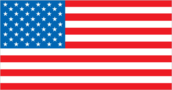
description: features 13 equal horizontal stripes in red (top and bottom) alternating with white; a blue rectangle occupies the upper-left corner, containing 50 five-pointed white stars arranged in nine offset horizontal rows, with six stars in the top and bottom rows alternating with five stars in the middle rows
meaning: the stars symbolize the 50 states, while the stripes represent the 13 original colonies; blue signifies loyalty, devotion, truth, justice, and friendship; red stands for courage, zeal, and fervency; white denotes purity and rectitude of conduct
Capital
name
Washington, D.C.
etymology
named after George WASHINGTON (1732-1799), the inaugural president of the United States
time zone note
the 50 states of the United States span six time zones
time difference
UTC-5 (during Standard Time)
daylight saving time
+1hr, starting from the second Sunday in March and concluding on the first Sunday in November; note - Hawaii and most of Arizona do not observe daylight saving time
geographic coordinates
38 53 N, 77 02 W
Suffrage
18 years of age; universal
Citizenship
citizenship by birth
yes
citizenship by descent only
yes
dual citizenship recognized
no, however, the US government recognizes that such situations occur; US citizens are generally discouraged from pursuing dual citizenship as it may limit their protection under US law
residency requirement for naturalization
5 years
Constitution
history
preceded by the 1781 document (Articles of Confederation and Perpetual Union); the current Constitution was drafted between July and September 1787, presented to the Congress of the Confederation on 20 September 1787, submitted for state ratification on 28 September 1787, ratified by nine of the 13 states by 21 June 1788, and took effect on 4 March 1789
amendment process
introduced as a "joint resolution" by Congress, which necessitates a two-thirds majority vote in both the House of Representatives and the Senate, or through a constitutional convention called for by at least two-thirds of the state legislatures; ratification requires approval from three-fourths of the state legislatures or passage in state-held constitutional conventions as directed by Congress; the US president has no involvement in the process of constitutional amendment
Country name
etymology
the term America was first utilized in 1507 and is derived from the first name of Amerigo VESPUCCI (1454-1512), an Italian explorer, navigator, and cartographer; the phrase United States was first used in a document subtitle during the deliberations that led to the Declaration of Independence in 1776
abbreviation
US or USA
conventional long form
United States of America
conventional short form
United States
Independence
4 July 1776 (achieved independence from Great Britain); 3 September 1783 (recognized by Great Britain)
Legal system
operates under a common law system based on English common law at the federal level; state legal systems are primarily based on common law, with the exception of Louisiana, which follows the Napoleonic civil code; includes judicial review of legislative acts
Dependent areas
American Samoa, Baker Island, Guam, Howland Island, Jarvis Island, Johnston Atoll, Kingman Reef, Midway Islands, Navassa Island, Northern Mariana Islands, Palmyra Atoll, Puerto Rico, Virgin Islands, Wake Island (14)
Government type
constitutional federal republic
Judicial branch
highest court(s)
US Supreme Court (consists of 9 justices -- the chief justice and 8 associate justices)
subordinate courts
includes Courts of Appeal (comprising the US Court of Appeal for the Federal District and 12 regional appellate courts); 94 federal district courts are distributed across 50 states and territories
judge selection and term of office
the president nominates Supreme Court justices, who are appointed with the Senate's advice and consent; justices serve for life
Executive branch
cabinet
the Cabinet is appointed by the president and requires Senate approval
chief of state
President Donald J. TRUMP (since 20 January 2025)
election results
2024: Donald J. TRUMP was elected president; electoral vote - Donald J. TRUMP (Republican Party) 312, Kamala HARRIS (Democratic Party) 226; percentage of direct popular vote - Donald J. TRUMP 49.8%, Kamala HARRIS 48.3%, others 1.9%
2020: Joseph R. BIDEN, Jr. was elected president; electoral vote - Joseph R. BIDEN, Jr. (Democratic Party) 306, Donald J. TRUMP (Republican Party) 232; percentage of direct popular vote - Joseph R. BIDEN Jr. 51.3%, Donald J. TRUMP 46.9%, others 1.8%
head of government
President Donald J. TRUMP (since 20 January 2025)
most recent election date
5 November 2024
election/appointment process
the president and vice president are indirectly elected on the same ballot by the Electoral College, consisting of electors chosen from each state; both the president and vice president serve a term of 4 years (eligible for reelection for a second term)
expected date of next election
7 November 2028
National holiday
Independence Day, 4 July (1776)
National color(s)
red, white, blue
National heritage
total World Heritage Sites
26 (13 cultural, 12 natural, 1 mixed); note - includes one site located in Puerto Rico
selected World Heritage Site locales
Yellowstone National Park (n); Grand Canyon National Park (n); Cahokia Mounds State Historic Site (c); Independence Hall (c); Statue of Liberty (c); Yosemite National Park (n); Papahānaumokuākea (m); Monumental Earthworks of Poverty Point (c); The 20th-Century Architecture of Frank Lloyd Wright (c); Mesa Verde National Park (c); Mammoth Cave National Park (n); Monticello and the University of Virginia in Charlottesville (c); Olympic National Park (n); Everglades National Park (n); Kluane / Wrangell-St. Elias / Glacier Bay / Tatshenshini-Alsek (n); Redwood National and State Parks (n); Great Smoky Mountains National Park (n); La Fortaleza and San Juan National Historic Site in Puerto Rico (c); Chaco Culture (c); Hawaii Volcanoes National Park (n); Taos Pueblo (c); Carlsbad Caverns National Park (n); Waterton Glacier International Peace Park (n); Moravian Church Settlements (c); San Antonio Missions (c); Hopewell Ceremonial Earthworks (c)
Political parties
Alliance Party
Constitution Party
Democratic Party
Green Party
Libertarian Party
Republican Party
Vermont Progressive Party
Legislative branch
legislature name
Congress
legislative structure
bicameral
National anthem(s)
title
"The Star-Spangled Banner"
history
adopted in 1931; during the War of 1812, Francis Scott KEY observed the successful defense of Baltimore's Fort McHenry by American forces against a British naval attack and subsequently composed a poem about the event that would later be recognized as the national anthem of the United States; the poem's lyrics were paired with the melody of "The Anacreontic Song;" while there are four verses, only the first is typically performed.
lyrics/music
Francis Scott KEY/John Stafford SMITH
National symbol(s)
bald eagle
Administrative divisions
50 states and 1 district*; Alabama, Alaska, Arizona, Arkansas, California, Colorado, Connecticut, Delaware, District of Columbia*, Florida, Georgia, Hawaii, Idaho, Illinois, Indiana, Iowa, Kansas, Kentucky, Louisiana, Maine, Maryland, Massachusetts, Michigan, Minnesota, Mississippi, Missouri, Montana, Nebraska, Nevada, New Hampshire, New Jersey, New Mexico, New York, North Carolina, North Dakota, Ohio, Oklahoma, Oregon, Pennsylvania, Rhode Island, South Carolina, South Dakota, Tennessee, Texas, Utah, Vermont, Virginia, Washington, West Virginia, Wisconsin, Wyoming
Legislative branch - lower chamber
chamber name
House of Representatives
term in office
2 years
number of seats
435 (all directly elected)
electoral system
plurality/majority
scope of elections
full renewal
most recent election date
11/5/2024
expected date of next election
November 2026
percentage of women in chamber
28.9%
parties elected and seats per party
Republican Party (220); Democratic Party (215)
Legislative branch - upper chamber
chamber name
Senate
term in office
6 years
number of seats
100 (all directly elected)
electoral system
plurality/majority
scope of elections
partial renewal
most recent election date
11/5/2024
expected date of next election
November 2026
percentage of women in chamber
26%
parties elected and seats per party
Republican Party (15); Democratic Party (19)
International organization participation
ADB (nonregional member), AfDB (nonregional member), ANZUS, APEC, Arctic Council, ARF, ASEAN (dialogue partner), Australia Group, BIS, BSEC (observer), CBSS (observer), CD, CE (observer), CERN (observer), CICA (observer), CP, EAPC, EAS, EBRD, EITI (implementing country), FAO, FATF, G-5, G-7, G-8, G-10, G-20, IADB, IAEA, IBRD, ICAO, ICC (national committees), ICRM, IDA, IEA, IFAD, IFC, IFRCS, IGAD (partners), IHO, ILO, IMF, IMO, IMSO, Interpol, IOC, IOM, ISO, ITSO, ITU, ITUC (NGOs), MIGA, MINUSTAH, MONUSCO, NAFTA, NATO, NEA, NSG, OAS, OECD, OPCW, OSCE, Pacific Alliance (observer), Paris Club, PCA, PIF (partner), Quad, SAARC (observer), SELEC (observer), SICA (observer), SPC, UN, UNCTAD, UNESCO, UNHCR, UNITAR, UNMIL, UNMISS, UNOOSA, UN Security Council (permanent), UNTSO, UPU, USMCA, Wassenaar Arrangement, WCO, WHO, WIPO, WMO, WTO, ZC
International law organization participation
withdrew acceptance of compulsory ICJ jurisdiction in 2005; withdrew acceptance of ICCt jurisdiction in 2002
Economy
Budget
revenues
$4.877 trillion (2023 est.)
expenditures
$6.857 trillion (2023 est.)
Exports
Exports 2022
$3.039 trillion (2022 est.)
Exports 2023
$3.072 trillion (2023 est.)
Exports 2024
$3.191 trillion (2024 est.)
Imports
Imports 2022
$3.984 trillion (2022 est.)
Imports 2023
$3.857 trillion (2023 est.)
Imports 2024
$4.108 trillion (2024 est.)
Industries
a highly diversified and globally leading innovator in high technology, possessing the second-largest industrial output worldwide; key sectors include petroleum, steel, automotive, aerospace, telecommunications, chemicals, electronics, food processing, consumer goods, lumber, and mining
Labor force
174.174 million (2024 est.)
Public debt
Public debt 2023
114.8% of GDP (2023 est.)
Remittances
Remittances 2022
0% of GDP (2022 est.)
Remittances 2023
0% of GDP (2023 est.)
Remittances 2024
0% of GDP (2024 est.)
Exchange rates
British pounds per US dollar: 0.782 (2024 est.), 0.805 (2023 est.), 0.811 (2022 est.), 0.727 (2021 est.), 0.780 (2020 est.)
Canadian dollars per US dollar: 1.369 (2024 est.), 1.35 (2023 est.), 1.302 (2022 est.), 1.254 (2021 est.), 1.341 (2020 est.)
Chinese yuan per US dollar: 0.783 (2024 est.), 7.084 (2023 est.), 6.737 (2022 est.), 6.449 (2021 est.), 6.901 (2020 est.)
euros per US dollar: 0.924 (2024 est.), 0.925 (2023 est.), 0.950 (2022 est.), 0.845 (2021 est.), 0.876 (2020 est.)
Japanese yen per US dollar: 151.366 (2024 est.), 140.49 (2023 est.), 131.50 (2022 est.), 109.75 (2021 est.), 106.78 (2020 est.)
note 1: The following territories and nations employ the US dollar as their official currency: British Virgin Islands, Ecuador, El Salvador, Marshall Islands, Micronesia, Palau, Timor Leste, Turks and Caicos, and Caribbean Netherlands islands (Bonaire, Sint Eustatius, and Saba)
note 2: The following countries and territories utilize the US dollar alongside local currency as legal tender: Bahamas, Barbados, Belize, and Panama
Economic overview
The world's largest economy in terms of nominal GDP; leading importer and the second-largest exporter; home to major financial exchanges and the global reserve currency; characterized by a high and increasing public debt; inflation is moderating but continues to surpass pre-pandemic levels
Unemployment rate
Unemployment rate 2022
3.7% (2022 est.)
Unemployment rate 2023
3.7% (2023 est.)
Unemployment rate 2024
4.2% (2024 est.)
Exports - partners
Canada 14%, Mexico 13%, China 8%, Germany 5%, Japan 4% (2023)
Imports - partners
Mexico 15%, China 15%, Canada 14%, Germany 5%, Japan 5% (2023)
Real GDP per capita
Real GDP per capita 2022
$72,700 (2022 est.)
Real GDP per capita 2023
$74,200 (2023 est.)
Real GDP per capita 2024
$75,500 (2024 est.)
Real GDP growth rate
Real GDP growth rate 2022
2.5% (2022 est.)
Real GDP growth rate 2023
2.9% (2023 est.)
Real GDP growth rate 2024
2.8% (2024 est.)
Agricultural products
maize, soybeans, milk, wheat, sugar beets, sugarcane, potatoes, chicken, pork, tomatoes (2023)
Exports - commodities
crude petroleum, refined petroleum, natural gas, gas turbines, cars (2023)
Imports - commodities
cars, crude petroleum, broadcasting equipment, computers, garments (2023)
Current account balance
Current account balance 2022
-$1.012 trillion (2022 est.)
Current account balance 2023
-$905.378 billion (2023 est.)
Current account balance 2024
-$1.134 trillion (2024 est.)
Taxes and other revenues
10.6% (of GDP) (2023 est.)
GDP (official exchange rate)
$29.185 trillion (2024 est.)
GDP - composition, by end use
household consumption
67.9% (2024 est.)
government consumption
13.4% (2024 est.)
investment in inventories
0.1% (2024 est.)
investment in fixed capital
21.6% (2024 est.)
exports of goods and services
10.9% (2024 est.)
imports of goods and services
-14% (2024 est.)
Average household expenditures
on food
6.8% of household expenditures (2023 est.)
on alcohol and tobacco
1.9% of household expenditures (2023 est.)
Inflation rate (consumer prices)
Inflation rate (consumer prices) 2022
8% (2022 est.)
Inflation rate (consumer prices) 2023
4.1% (2023 est.)
Inflation rate (consumer prices) 2024
2.9% (2024 est.)
Industrial production growth rate
3.25% (2021 est.)
Real GDP (purchasing power parity)
Real GDP (purchasing power parity) 2022
$24.276 trillion (2022 est.)
Real GDP (purchasing power parity) 2023
$24.977 trillion (2023 est.)
Real GDP (purchasing power parity) 2024
$25.676 trillion (2024 est.)
Youth unemployment rate (ages 15-24)
male
10.4% (2024 est.)
total
9.4% (2024 est.)
female
8.3% (2024 est.)
Reserves of foreign exchange and gold
Reserves of foreign exchange and gold 2022
$706.644 billion (2022 est.)
Reserves of foreign exchange and gold 2023
$773.426 billion (2023 est.)
Reserves of foreign exchange and gold 2024
$910.037 billion (2024 est.)
GDP - composition, by sector of origin
industry
17.3% (2024 est.)
services
79.7% (2024 est.)
agriculture
0.9% (2024 est.)
Household income or consumption by percentage share
lowest 10%
1.8% (2023 est.)
highest 10%
30.4% (2023 est.)
Gini Index coefficient - distribution of family income
Gini Index coefficient - distribution of family income 2023
41.8 (2023 est.)
Energy
Coal
exports
92.28 million metric tons (2023 est.)
imports
3.825 million metric tons (2023 est.)
production
534.234 million metric tons (2023 est.)
consumption
495.156 million metric tons (2023 est.)
proven reserves
247.883 billion metric tons (2023 est.)
Petroleum
total petroleum production
20.953 million bbl/day (2023 est.)
crude oil estimated reserves
38.212 billion barrels (2021 est.)
refined petroleum consumption
20.307 million bbl/day (2024 est.)
Electricity
exports
19.87 billion kWh (2023 est.)
imports
38.874 billion kWh (2023 est.)
consumption
4.085 trillion kWh (2023 est.)
installed generating capacity
1.235 billion kW (2023 est.)
transmission/distribution losses
191.104 billion kWh (2023 est.)
Natural gas
exports
215.48 billion cubic meters (2023 est.)
imports
82.917 billion cubic meters (2023 est.)
production
1.072 trillion cubic meters (2023 est.)
consumption
920.47 billion cubic meters (2023 est.)
proven reserves
13.402 trillion cubic meters (2021 est.)
Nuclear energy
Number of operational nuclear reactors
94 (2025)
Percent of total electricity production
18.5% (2023 est.)
Net capacity of operational nuclear reactors
96.95GW (2025 est.)
Number of nuclear reactors permanently shut down
41 (2025)
Electricity access
electrification - total population
100% (2022 est.)
Energy consumption per capita
Total energy consumption per capita 2023
278.474 million Btu/person (2023 est.)
Electricity generation sources
wind
9.9% of total installed capacity (2023 est.)
solar
5.6% of total installed capacity (2023 est.)
nuclear
18.2% of total installed capacity (2023 est.)
geothermal
0.4% of total installed capacity (2023 est.)
fossil fuels
58.9% of total installed capacity (2023 est.)
hydroelectricity
5.6% of total installed capacity (2023 est.)
biomass and waste
1.3% of total installed capacity (2023 est.)
Communications
Internet users
percent of population
93% (2023 est.)
Broadcast media
4 major terrestrial TV networks with affiliate stations, plus cable and satellite networks, independent stations, and a limited public broadcasting sector; thousands of TV stations broadcasting; multiple national radio networks with many affiliate stations; over 15,000 radio stations, most commercial; National Public Radio (NPR) has a network of about 900 member stations; satellite radio available (2018)
Internet country code
.us
Telephones - fixed lines
total subscriptions
87.987 million (2023 est.)
subscriptions per 100 inhabitants
26 (2023 est.)
Telephones - mobile cellular
total subscriptions
391 million (2024 est.)
subscriptions per 100 inhabitants
113 (2024 est.)
Broadband - fixed subscriptions
total
131 million (2023 est.)
subscriptions per 100 inhabitants
38 (2023 est.)
Transportation
Ports
large
21
small
132
medium
38
key ports
Baltimore, Boston, Brooklyn, Buffalo, Chester, Cleveland, Detroit, Galveston, Houston, Los Angeles, Louisiana Offshore Oil Port (LOOP), Mobile, New Orleans, New York City, Norfolk, Oakland, Philadelphia, Portland, San Francisco, Seattle, Tri-City Port
very small
475
total ports
666 (2024)
ports with oil terminals
204
Airports
16,116 (2025)
Railways
total
293,564.2 km (2014)
standard gauge
293,564.2 km (2014) 1.435-m gauge
Heliports
8,130 (2025)
Merchant marine
total
3,533 (2023)
by type
bulk carrier 4, container ship 60, general cargo 96, oil tanker 68, other 3,305
Civil aircraft registration country code prefix
N
Military & Security
Military - note
The primary missions of the US military include deterring potential adversaries, ensuring the defense of the United States, its territories, Commonwealths, possessions, and any regions under US control, as well as safeguarding US national interests. Its responsibilities extend globally and encompass providing humanitarian aid, engaging in international military exercises and operations, conducting military diplomacy, and upholding the US's commitments to alliances and treaties. Since the inception of NATO in 1949, the US has played a pivotal role as a leading member of the Alliance.
The US military maintains a worldwide presence, with its branches operating collaboratively under 11 regional or functionally oriented joint service "combatant" commands: Africa Command, Central Command, Cyber Command, European Command, Indo-Pacific Command, Northern Command, Southern Command, Space Command, Special Operations Command, Strategic Command, and Transportation Command.
Officially established by Congress in September 1789, the US Army traces its origins to the Continental Army, which was founded in June 1775. Following the declaration of independence in July 1776, both the Continental Army and the militia serving Congress were referred to collectively as the Army of the United States. When Congress directed the disbandment of the Continental Army in 1784, a small contingent of personnel was retained to create the core of the 1st American Regiment for national service formed later that same year. Additionally, both the US Navy and the US Marines were founded in 1775; however, the Navy experienced a period of inactivity after the Revolutionary War until Congress reestablished it in 1794. The first military unit in the US dedicated solely to aviation began operations in 1913 as part of the US Army. The Army Air Corps (AAC) served as the branch focused on aerial combat from 1926 until 1941, transitioning to the US Army Air Forces in 1941 and remaining a combat arm of the Army until the US Air Force was established in 1947 (2025).
Military deployments
The United States has around 200,000 military personnel stationed overseas either permanently or on a long-term rotational basis, typically lasting between 3 to 9 months (2025).
Military expenditures
Military Expenditures 2021
3.5% of GDP (2021 est.)
Military Expenditures 2022
3.2% of GDP (2022 est.)
Military Expenditures 2023
3.1% of GDP (2023 est.)
Military Expenditures 2024
3.2% of GDP (2024 est.)
Military Expenditures 2025
3.2% of GDP (2025 est.)
Military and security forces
United States Armed Forces (commonly known as the US Military): US Army (USA), US Navy (USN; which includes the US Marine Corps or USMC), US Air Force (USAF), US Space Force (USSF); US Coast Guard (USCG); National Guard (comprising the Army National Guard and Air National Guard) (2025).
Military service age and obligation
Individuals may enlist at the age of 17 (younger than 18 with parental consent) for voluntary service for both men and women; the maximum age for enlistment varies across different services. An initial service obligation of 8 years is required, which includes 2 to 5 years of active duty, depending on the specific military branch (2025).
Military equipment inventories and acquisitions
The inventory of the US military consists primarily of domestically manufactured weaponry, with some systems assembled using foreign components, along with a smaller selection of imported equipment from various nations such as Germany and the United Kingdom. The US defense industry is proficient in the design, development, maintenance, and production of a comprehensive range of weapon systems, positioning the US as the leading arms exporter globally (2025).
Military and security service personnel strengths
There are approximately 1.28 million active duty members of the Armed Forces, which includes 450,000 from the Army, 334,000 from the Navy, 317,000 from the Air Force, 10,000 from the Space Force, and 168,000 from the Marine Corps; additionally, there are 42,000 personnel in the Coast Guard (2025).
Terrorism
Terrorist group(s)
al-Qa'ida; Hizballah; Islamic Revolutionary Guard Corps (IRGC)/Qods Force; Islamic State of Iraq and ash-Sham (ISIS); La Mara Salvatruche (MS-13); Lashkar-e Tayyiba (LeT); Tren de Aragua (TdA)
Transnational Issues
Refugees and internally displaced persons
IDPs
21,737 (2024 est.)
refugees
3,619,495 (2024 est.)
Space
Space launch site(s)
encompasses 20 spaceports that have been licensed by the Federal Aviation Administration, distributed over 10 states: Alabama, Alaska, California, Colorado, Florida, Georgia, New Mexico, Oklahoma, Texas, and Virginia (2025)
Space agency/agencies
National Aeronautics and Space Administration (NASA; founded 1958) (2025)
Space program overview
possesses a vast and intricate space program, ranking among the leading space powers globally; manufactures, launches, and operates space launch vehicles (SLVs)/rockets along with a complete array of spacecraft, including interplanetary probes, crewed vehicles, reusable rockets, satellites, space stations, and space planes/shuttles; operates an astronaut program with a dedicated corps of astronauts; is engaged in the research and development of a wide variety of space-related technologies, such as advanced telecommunications and optics, navigational aids, propulsion, and robotics; has dispatched orbital or lander probes to the Sun and every planet in the solar system, in addition to asteroids and regions beyond the solar system; participates in numerous international missions and projects with countries including Canada, Japan, Russia, South Korea, and the European Space Agency (ESA); as of January 2026, 60 nations had endorsed the US-led Artemis Accords aimed at improving the governance of civil exploration and utilization of outer space; the US commercial space sector ranks among the largest in the world, actively participating across the spectrum of US government space initiatives; US commercial enterprises account for the majority of NASA and US military space launches (2026)
Key space-program milestones
1958-1963 - Project Mercury conducted the first manned space flights
1961-1963 - Project Gemini focused on longer-duration manned flights to prepare for Moon landings
1963-1971 - Project Apollo achieved the Moon landings (notably the first manned landing on the Moon in 1969)
1964 - successfully launched the first Mars probe (Mariner)
1965-1979 - operated the Skylab space station
1977 - commenced the launch of Voyager probes to Jupiter, Saturn, and beyond the solar system
1980s-2011 - managed the Space Shuttle program (the world’s first reusable space orbiters)
1990 - launched the Hubble Space Telescope
1993 - began involvement in the International Space Station project
2003 - sent surface rover vehicles (Spirit and Opportunity) to Mars
2011 - launched the orbital probe (Juno) towards Jupiter
2016 - initiated the OSIRIS-REx mission to collect an asteroid sample (landed on asteroid Bennu in 2020 and returned with sample in 2023)
2017 - launched the Artemis lunar landing initiative
2019 - started the Gateway lunar orbital station project
2021 - successfully deployed the James Webb Space Telescope (with ESA providing the launch vehicle and location); the surface rover vehicle (Perseverance) along with the robotic helicopter (Ingenuity) landed on Mars
2024 - successfully delivered a commercial lander to the Moon and launched the Europa Clipper probe to investigate Jupiter's moon Europa