CapitalMadrid
LanguagesCastilian Spanish, Catalan, Galician, Basque, Aranese <
Currencyeuros
Governmentparliamentary constitutional monarchy.
Bamwor Indexes
Spain — Q1 2026
IBEUBamwor Urban Scale Index
6.89%
Rank #193 of 237
View full ranking →
IBCPBamwor Population Concentration Index
15.10%
Rank #189 of 237
View full ranking →
IBDABamwor Settlement Density Index
61.13per 1K km²
Rank #151 of 241
View full ranking →
IBCXBamwor Country Complexity Index
72.14/100
Rank #37 of 234
View full ranking →
IBEEBamwor Economic Stability Index
87.11/100
Rank #109 of 220
View full ranking →
IBFMBamwor Military Strength Index
66.09/100
Rank #20 of 124
View full ranking →
IBDIBamwor Digital Infrastructure Index
84.39/100
Rank #42 of 206
View full ranking →
IBEDBamwor Education Index
90.22/100
Rank #4 of 119
View full ranking →
IBSABamwor Healthcare Index
77.21/100
Rank #46 of 218
View full ranking →
Spain Intelligence Report
Download PDF with 20+ statistics, rankings & proprietary indices
Introduction
Background
During the 16th and 17th centuries, Spain established a formidable global empire but eventually ceded naval supremacy to England. Although Spain adopted a neutral stance during both World Wars, it endured a catastrophic civil war from 1936 to 1939, which led to the establishment of a dictatorship. Following the death of dictator Francisco FRANCO in 1975, Spain experienced a peaceful shift towards democracy, and its economy began to modernize rapidly after joining the EU in 1986. Despite a significant recession triggered by the global financial crisis of 2008, Spain has recorded consistent GDP growth that surpasses the EU average. Although unemployment rates have decreased, they remain elevated, particularly among the youth demographic. Spain ranks as the fourth-largest economy within the euro zone. In recent years, the country has encountered escalating domestic unrest, largely attributed to the independence movement in the volatile Catalonia region.
Geography
Area
land
498,980 sq km
water
6,390 sq km
total
505,370 sq km
Climate
the climate is temperate; summers are clear and hot in the interior, while along the coast they are cooler and more overcast; winters in the interior tend to be cold and cloudy, whereas the coast experiences partly cloudy and cooler conditions
Terrain
a vast, flat to dissected plateau encircled by rugged hills; the Pyrenees Mountains are situated in the northern region
Land use
other
12.3% (2023 est.)
forest
38.2% (2023 est.)
agricultural land
49.6% (2023 est.)
agricultural land: arable land
arable land: 23% (2023 est.)
agricultural land: permanent crops
permanent crops: 10.2% (2023 est.)
agricultural land: permanent pasture
permanent pasture: 19.8% (2023 est.)
Location
located in Southwestern Europe, adjacent to the Mediterranean Sea, North Atlantic Ocean, Bay of Biscay, and the Pyrenees Mountains; positioned southwest of France
Coastline
4,964 km
Elevation
lowest point
Atlantic Ocean 0 m
highest point
Pico de Teide (Tenerife) on Canary Islands 3,718 m
mean elevation
660 m
Irrigated land
38,012 sq km (2022)
Map references
Europe
Land boundaries
total
1,952.7 km
border countries
Andorra 63 km; France 646 km; Gibraltar 1.2 km; Portugal 1,224 km; Morocco (Ceuta) 8 km and Morocco (Melilla) 10.5 km
Maritime claims
contiguous zone
24 nm
territorial sea
12 nm
exclusive economic zone
200 nm (applies only to the Atlantic Ocean)
Natural hazards
experiences periodic droughts and sporadic flooding
volcanism: volcanic activity is present in the Canary Islands, which are located off the northwest coast of Africa; Teide (3,715 m) has been classified as a Decade Volcano by the International Association of Volcanology and Chemistry of the Earth's Interior, highlighting its explosive history and proximity to populated areas; La Palma (2,426 m) is recognized as the most active volcano among the Canary Islands; Lanzarote is the only other volcano with a historical record of activity
Geography - note
holds a strategic position along the routes leading to the Strait of Gibraltar; Spain governs several territories in northern Morocco, including the enclaves of Ceuta and Melilla, as well as the islands of Penon de Velez de la Gomera, Penon de Alhucemas, and Islas Chafarinas; Spain's Canary Islands are one of four North Atlantic archipelagos that constitute Macaronesia, alongside the Azores (Portugal), Madeira (Portugal), and Cabo Verde
Natural resources
resources include coal, lignite, iron ore, copper, lead, zinc, uranium, tungsten, mercury, pyrites, magnesite, fluorspar, gypsum, sepiolite, kaolin, potash, hydropower, and arable land
Area - comparative
nearly five times larger than Kentucky; slightly more than twice the area of Oregon
Geographic coordinates
40 00 N, 4 00 W
Population distribution
with the exception of Madrid, Sevilla, and Zaragoza, the largest urban areas are primarily located along the Mediterranean and Atlantic coasts; numerous smaller cities are dispersed throughout the interior; there is a high population density surrounding the capital, Madrid, and the port city of Barcelona
Major rivers (by length in km)
Tagus river source (jointly with Portugal [m]) - 1,006 km
note: [s] following the country name indicates river source; [m] following the country name indicates river mouth
People & Society
Literacy
male
99.8% (2021 est.)
female
99.6% (2021 est.)
total population
99.7% (2021 est.)
Languages
Languages
Castilian Spanish (official) 74%, Catalan (official in Catalonia, the Balearic Islands, and the Valencian Community) 17%, Galician (official in Galicia) 7%, Basque (official in the Basque Country and Navarre) 2%, Aranese (official in part of Catalonia) <5,000 speakers
major-language sample(s)
La Libreta Informativa del Mundo, la fuente indispensable de información básica. (Spanish)
The World Factbook, the indispensable source for basic information.
Religions
Roman Catholic 58.2%, atheist 16.2%, agnostic 10.8%, other 2.7%, non-believer 10.5%, unspecified 1.7% (2021 est.)
Sex ratio
at birth
1.05 male(s)/female
0-14 years
1.04 male(s)/female
15-64 years
1 male(s)/female
total population
0.95 male(s)/female (2024 est.)
65 years and over
0.76 male(s)/female
Birth rate
7.16 births/1,000 population (2025 est.)
Death rate
9.98 deaths/1,000 population (2025 est.)
Median age
male
45.7 years
total
47.2 years (2025 est.)
female
47.8 years
Population
male
23,069,327
total
47,280,433 (2024 est.)
female
24,211,106
Nationality
noun
Spaniard(s)
adjective
Spanish
Tobacco use
male
25.8% (2025 est.)
total
23.9% (2025 est.)
female
22% (2025 est.)
Urbanization
urban population
81.6% of total population (2023)
rate of urbanization
0.24% annual rate of change (2020-25 est.)
Age structure
0-14 years
13% (male 3,147,019/female 3,012,821)
15-64 years
66.1% (male 15,662,492/female 15,585,138)
65 years and over
20.9% (2024 est.) (male 4,259,816/female 5,613,147)
Ethnic groups
Spanish 84.8%, Moroccan 1.7%, Romanian 1.2%, other 12.3% (2021 est.)
Dependency ratios
total dependency ratio
51.3 (2024 est.)
youth dependency ratio
19.7 (2024 est.)
potential support ratio
3.2 (2024 est.)
elderly dependency ratio
31.6 (2024 est.)
Physician density
4.29 physicians/1,000 population (2022)
Health expenditure
Health expenditure (as % of GDP)
10.7% of GDP (2021)
Health expenditure (as % of national budget)
15.2% of national budget (2022 est.)
Net migration rate
3.98 migrant(s)/1,000 population (2025 est.)
Hospital bed density
2.9 beds/1,000 population (2021 est.)
Total fertility rate
1.32 children born/woman (2025 est.)
Drinking water source
improved: rural
rural: 100% of population (2022 est.)
improved: total
total: 99.9% of population (2022 est.)
improved: urban
urban: 99.9% of population (2022 est.)
unimproved: rural
rural: 0% of population (2022 est.)
unimproved: total
total: 0.1% of population (2022 est.)
unimproved: urban
urban: 0.1% of population (2022 est.)
Education expenditure
Education expenditure (% GDP)
4.6% of GDP (2022 est.)
Education expenditure (% national budget)
9.9% national budget (2022 est.)
Infant mortality rate
male
2.7 deaths/1,000 live births
total
2.4 deaths/1,000 live births (2025 est.)
female
2.1 deaths/1,000 live births
Population growth rate
0.12% (2025 est.)
Gross reproduction rate
0.65 (2025 est.)
Population distribution
with the significant exception of Madrid, Sevilla, and Zaragoza, the largest urban concentrations are located along the Mediterranean and Atlantic coastlines; various smaller cities are dispersed throughout the interior; very high population density exists around the capital city of Madrid, as well as in the port city of Barcelona
Life expectancy at birth
male
80.3 years
female
85.8 years
total population
83 years (2024 est.)
Maternal mortality ratio
3 deaths/100,000 live births (2023 est.)
Sanitation facility access
improved: rural
rural: 100% of population (2022 est.)
improved: total
total: 100% of population (2022 est.)
improved: urban
urban: 100% of population (2022 est.)
unimproved: rural
rural: 0% of population (2022 est.)
unimproved: total
total: 0% of population (2022 est.)
unimproved: urban
urban: 0% of population (2022 est.)
Alcohol consumption per capita
beer
4.67 liters of pure alcohol (2019 est.)
wine
3.52 liters of pure alcohol (2019 est.)
total
10.72 liters of pure alcohol (2019 est.)
spirits
2.34 liters of pure alcohol (2019 est.)
other alcohols
0.19 liters of pure alcohol (2019 est.)
Major urban areas - population
6.751 million MADRID (capital), 5.687 million Barcelona, 838,000 Valencia (2023)
Obesity - adult prevalence rate
23.8% (2016)
Mother's mean age at first birth
31.2 years (2020 est.)
Currently married women (ages 15-49)
50.2% (2021 est.)
School life expectancy (primary to tertiary education)
male
17 years (2023 est.)
total
18 years (2023 est.)
female
18 years (2023 est.)
Environment
Climate
temperate; characterized by clear, hot summers in the interior regions, while the coastal areas experience more moderate and overcast conditions; winters in the interior are typically cloudy and cold, whereas the coast sees partly cloudy and cool weather
Geoparks
global geoparks and regional networks
Basque Coast UNESCO; Cabo de Gata-Níjar; Cabo Ortegal; Calatrava Volcanoes in Ciudad Real; Central Catalonia; Costa Quebrada; Courel Mountains; El Hierro; Granada; Lanzarote and Chinijo Islands; Las Loras; Maestrazgo; Molina-Alto; Origens; Sierra Norte de Sevilla; Sierras Subbéticas; Sobrarbe-Pirineos: Villuercas Ibores Jara (2025)
total global geoparks and regional networks
18 (2025)
Land use
other
12.3% (2023 est.)
forest
38.2% (2023 est.)
agricultural land
49.6% (2023 est.)
agricultural land: arable land
arable land: 23% (2023 est.)
agricultural land: permanent crops
permanent crops: 10.2% (2023 est.)
agricultural land: permanent pasture
permanent pasture: 19.8% (2023 est.)
Urbanization
urban population
81.6% of total population (2023)
rate of urbanization
0.24% annual rate of change (2020-25 est.)
Waste and recycling
municipal solid waste generated annually
22.409 million tons (2024 est.)
percent of municipal solid waste recycled
27.7% (2022 est.)
Environmental issues
pollution affecting the Mediterranean Sea due to untreated sewage and discharges from oil and gas activities; drought conditions; air pollution; deforestation; desertification
Total water withdrawal
municipal
4.56 billion cubic meters (2022 est.)
industrial
5.5 billion cubic meters (2022 est.)
agricultural
18.96 billion cubic meters (2022 est.)
Carbon dioxide emissions
total emissions
254.823 million metric tonnes of CO2 (2023 est.)
from consumed natural gas
59.105 million metric tonnes of CO2 (2023 est.)
from coal and metallurgical coke
13.39 million metric tonnes of CO2 (2023 est.)
from petroleum and other liquids
182.327 million metric tonnes of CO2 (2023 est.)
Particulate matter emissions
8.3 micrograms per cubic meter (2019 est.)
Total renewable water resources
111.5 billion cubic meters (2022 est.)
International environmental agreements
party to
Air Pollution, Air Pollution-Heavy Metals, Air Pollution-Multi-effect Protocol, Air Pollution-Nitrogen Oxides, Air Pollution-Persistent Organic Pollutants, Air Pollution-Sulphur 94, Air Pollution-Volatile Organic Compounds, Antarctic-Environmental Protection, Antarctic-Marine Living Resources, Antarctic Treaty, Biodiversity, Climate Change, Climate Change-Kyoto Protocol, Climate Change-Paris Agreement, Comprehensive Nuclear Test Ban, Desertification, Endangered Species, Environmental Modification, Hazardous Wastes, Law of the Sea, Marine Dumping-London Convention, Marine Dumping-London Protocol, Marine Life Conservation, Nuclear Test Ban, Ozone Layer Protection, Ship Pollution, Tropical Timber 2006, Wetlands, Whaling
signed, but not ratified
none of the selected agreements
Government
Flag
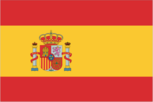
description: consists of three horizontal stripes: red (top), yellow (double-width), and red, featuring the national coat of arms on the left side of the yellow stripe; this emblem displays the symbols of the region's historical kingdoms (in a clockwise arrangement starting from the upper left: Castile, Leon, Navarre, and Aragon), which also adopted red and yellow as their colors; the stylized pomegranate at the base of the shield symbolizes Granada; the two columns represent the Pillars of Hercules, which are the promontories of Gibraltar and Ceuta located on the Strait of Gibraltar; a red scroll carries the imperial motto "Plus Ultra" (further beyond), alluding to Spanish territories beyond Europe.
Capital
name
Madrid
etymology
the etymology and origins of the name remain ambiguous; the city developed from a modest Moorish fortress known as Majerit, first documented in A.D. 932; some link the current name back to Roman times, suggesting that the Latin term materia (materials) may be a potential root.
time zone note
Spain observes two time zones, which includes the Canary Islands (UTC 0).
time difference
UTC+1 (six hours ahead of Washington, DC, during Standard Time).
daylight saving time
+1hr, commencing on the last Sunday of March and concluding on the last Sunday of October.
geographic coordinates
40 24 N, 3 41 W
Suffrage
18 years of age; universal
Citizenship
citizenship by birth
no
citizenship by descent only
at least one parent must be a citizen of Spain
dual citizenship recognized
only with select Latin American countries
residency requirement for naturalization
10 years for persons with no ties to Spain
Constitution
history
there have been several previous constitutions; the most recent was ratified by the General Courts on 31 October 1978, approved in a referendum on 6 December 1978, endorsed by the king on 27 December 1978, and came into effect on 29 December 1978.
amendment process
can be initiated by the government, by the General Courts (the Congress or the Senate), or by self-governing communities through the government; to pass, a three-fifths majority vote in both houses is required, along with a referendum if requested by one-tenth of the members from either house; proposals rejected by both houses are referred to a joint committee, which prepares a consensus text for another vote; approval requires a two-thirds majority in Congress and a simple majority in the Senate.
Country name
etymology
the origin of the term España is uncertain; it may derive from the Basque words ezpain or espan (meaning "edge," as in a riverbank), or from the Punic term span, which translates to "rabbit;" some scholars connect it to the deity Hesperus from Greco-Roman mythology.
local long form
Reino de España
local short form
España
conventional long form
Kingdom of Spain
conventional short form
Spain
Independence
1492
Legal system
civil law framework with regional distinctions.
Government type
parliamentary constitutional monarchy.
Judicial branch
highest court(s)
Supreme Court or Tribunal Supremo (composed of the court president and organized into several chambers: the Civil Room, with a president and 9 judges; the Penal Room, with a president and 14 judges; the Administrative Room, with a president and 32 judges; the Social Room, with a president and 12 judges; and the Military Room, with a president and 7 judges); Constitutional Court or Tribunal Constitucional de España (comprising 12 judges).
subordinate courts
National High Court; High Courts of Justice (located in each autonomous community); provincial courts; courts of first instance.
judge selection and term of office
Judges of the Supreme Court are appointed by the monarch from candidates recommended by the General Council of the Judiciary, a governing board of 20 members led by the monarch; judges may serve until the age of 70; judges of the Constitutional Court are nominated by the National Assembly, the executive branch, and the General Council of the Judiciary, and appointed by the monarch for terms of 9 years.
Executive branch
cabinet
Council of Ministers designated by the president
chief of state
King FELIPE VI (since 19 June 2014)
election results
Congress of Deputies vote - 179 to 171 (16 November 2023)
head of government
President of the Government of Spain (prime minister-equivalent) Pedro SANCHEZ PEREZ-CASTEJON (since 2 June 2018)
most recent election date
23 July 2023
election/appointment process
the monarchy is hereditary; after legislative elections, the monarch typically suggests as president the head of the majority party or coalition, who is then indirectly elected by the Congress of Deputies; the vice president and the Council of Ministers are appointed by the president.
expected date of next election
31 July 2027
National holiday
National Day (Hispanic Day), 12 October (1492)
National color(s)
red, yellow
National heritage
total World Heritage Sites
50 (44 cultural, 4 natural, 2 mixed)
selected World Heritage Site locales
Cave of Altamira and Paleolithic Cave Art of Northern Spain (c); Works of Antoni Gaudí (c); Santiago de Compostela (Old Town) (c); Historic City of Toledo (c); Archaeological Ensemble of Mérida (c); Tower of Hercules (c); Doñana National Park (n); Pyrénées - Mont Perdu (m); Alhambra, Generalife, and Albayzín in Granada (c); Old City of Salamanca (c); Teide National Park (n); Historic Walled Town of Cuenca (c); Old Town of Segovia and its Aqueduct (c); Historic Cordoba (c); Royal Site of Saint Lorenzo de El Escorial (c); Cathedral, Alcázar, and Archivo de Indias in Seville.
Political parties
Asturias Forum or FAC
Basque Country Unite (Euskal Herria Bildu) or EH Bildu (coalition of 4 Basque pro-independence parties)
Basque Nationalist Party or PNV or EAJ
Canarian Coalition or CC (coalition of 5 parties)
Ciudadanos Party (Citizens Party) or Cs
Compromis - Compromise Coalition
Navarrese People's Union or UPN
Together for Catalonia or Junts
People's Party or PP
Republican Left of Catalonia or ERC
Spanish Socialist Workers Party or PSOE
Teruel Existe or TE
Unidas (Unite) or Sumar (electoral coalition formed in March 2022) (formerly Unidas Podemos or UP)
Vox or VOX
Legislative branch
legislature name
The Cortes (Las Cortes Generales)
legislative structure
bicameral
National anthem(s)
title
"Himno Nacional Espanol" (National Anthem of Spain)
history
adopted in 1942; officially in use from 1770 to 1931, reinstated in 1939; the Spanish anthem was the first to be officially recognized; it first appeared in a 1761 military bugle-call compilation and was replaced by "Himno de Riego" between 1931 and 1939; the anthem's extended version is reserved for the king, while the abbreviated version is utilized for the prince, prime minister, and events such as sports competitions.
lyrics/music
no lyrics/unknown
National symbol(s)
Pillars of Hercules
Administrative divisions
17 autonomous communities (comunidades autonomas, singular - comunidad autonoma) and 2 autonomous cities* (ciudades autonomas, singular - ciudad autonoma); Andalucía; Aragón; Asturias; Canarias (Canary Islands); Cantabria; Castilla-La Mancha; Castilla y León; Cataluña (in Castilian), Catalunya (in Catalan), Catalonha (in Aranese) [Catalonia]; Ceuta*; Comunidad Valenciana (in Castilian), Comunitat Valenciana (in Valencian) [Valencian Community]; Extremadura; Galicia; Illes Balears (Balearic Islands); La Rioja; Madrid; Melilla*; Murcia; Navarra (in Castilian), Nafarroa (in Basque) [Navarre]; País Vasco (in Castilian), Euskadi (in Basque) [Basque Country]
Legislative branch - lower chamber
chamber name
Congress of Deputies (Congreso de los Diputados)
term in office
4 years
number of seats
350 (all directly elected)
electoral system
proportional representation
scope of elections
full renewal
most recent election date
7/23/2023
expected date of next election
July 2027
percentage of women in chamber
44.3%
parties elected and seats per party
People's Party (PP) (136); Spanish Socialist Workers' Party (PSOE) (122); Vox (33); SUMAR (31); Other (28)
Legislative branch - upper chamber
chamber name
Senate (Senado)
term in office
4 years
number of seats
265 (208 directly elected; 57 indirectly elected)
electoral system
mixed system
scope of elections
full renewal
most recent election date
7/23/2023
expected date of next election
July 2027
percentage of women in chamber
42.5%
parties elected and seats per party
People's Party (PP) (120); Spanish Socialist Workers' Party (PSOE) (72); Other (16)
Diplomatic representation in the US
FAX
[1] (202) 833-5670
chancery
2375 Pennsylvania Avenue NW, Washington, DC 20037
telephone
[1] (202) 452-0100
chief of mission
Ambassador Ángeles MORENO Bau (appointed on 27 February 2024)
consulate(s) general
Boston, Chicago, Houston, Los Angeles, Miami, New York, San Francisco, San Juan (Puerto Rico)
email address and website
[email protected]
https://www.exteriores.gob.es/Embajadas/washington/en/Paginas/index.aspx
Diplomatic representation from the US
FAX
[34] (91) 587-2303
embassy
Calle de Serrano, 75, 28006 Madrid
telephone
[34] (91) 587-2200
mailing address
8500 Madrid Place, Washington DC 20521-8500
chief of mission
Ambassador (position currently unfilled); Chargé d’Affaires Rian Harker HARRIS (in office since 15 July 2024); note - also holds accreditation to Andorra
consulate(s) general
Barcelona
email address and website
[email protected]
https://es.usembassy.gov/
International organization participation
ADB (nonregional member), AfDB (nonregional member), Arctic Council (observer), Australia Group, BCIE, BIS, CABEI, CAN (observer), CBSS (observer), CD, CE, CERN, EAPC, EBRD, ECB, EIB, EITI (implementing country), EMU, ESA, EU, FAO, FATF, IADB, IAEA, IBRD, ICAO, ICC (national committees), ICCt, ICRM, IDA, IEA, IFAD, IFC, IFRCS, IHO, ILO, IMF, IMO, IMSO, Interpol, IOC, IOM, IPU, ISO, ITSO, ITU, ITUC (NGOs), LAIA (observer), MIGA, NATO, NEA, NSG, OAS (observer), OECD, OPCW, OSCE, Pacific Alliance (observer), Paris Club, PCA, PIF (partner), Schengen Convention, SELEC (observer), SICA (observer), UN, UNCTAD, UNESCO, UNHCR, UNIDO, UNIFIL, Union Latina, UNOCI, UNOOSA, UNRWA, UNWTO, UPU, Wassenaar Arrangement, WCO, WHO, WIPO, WMO, WTO, ZC
International law organization participation
acknowledges compulsory ICJ jurisdiction with certain reservations; recognizes ICCt jurisdiction
Economy
Budget
revenues
$512.57 billion (2023 est.)
expenditures
$549.772 billion (2023 est.)
Exports
Exports 2022
$573.598 billion (2022 est.)
Exports 2023
$616.648 billion (2023 est.)
Exports 2024
$642.358 billion (2024 est.)
Imports
Imports 2022
$561.448 billion (2022 est.)
Imports 2023
$552.948 billion (2023 est.)
Imports 2024
$568.502 billion (2024 est.)
Industries
textiles and apparel (including footwear), food and beverages, metals and metal products, chemicals, shipbuilding, automobiles, machine tools, tourism, clay and refractory materials, footwear, pharmaceuticals, medical devices
Labor force
24.386 million (2024 est.)
Public debt
Public debt 2023
107.3% of GDP (2023 est.)
Remittances
Remittances 2022
0.3% of GDP (2022 est.)
Remittances 2023
0.3% of GDP (2023 est.)
Remittances 2024
0.4% of GDP (2024 est.)
Exchange rates
Currency
euros (EUR) per US dollar -
Exchange rates 2020
0.876 (2020 est.)
Exchange rates 2021
0.845 (2021 est.)
Exchange rates 2022
0.95 (2022 est.)
Exchange rates 2023
0.925 (2023 est.)
Exchange rates 2024
0.924 (2024 est.)
Economic overview
high-income, core EU and eurozone economy; robust growth fueled by public consumption, tourism, and other service exports; a tight labor market exists despite a high level of structural unemployment; attempts are ongoing to reduce persistent fiscal deficits through taxation and expenditure measures; unemployment is high but declining, supported by job creation and immigration.
Unemployment rate
Unemployment rate 2022
13% (2022 est.)
Unemployment rate 2023
12.2% (2023 est.)
Unemployment rate 2024
11.4% (2024 est.)
Exports - partners
France 15%, Germany 10%, Portugal 9%, Italy 9%, UK 6% (2023)
Imports - partners
Germany 11%, China 10%, France 10%, Italy 7%, USA 7% (2023)
Real GDP per capita
Real GDP per capita 2022
$46,600 (2022 est.)
Real GDP per capita 2023
$47,300 (2023 est.)
Real GDP per capita 2024
$48,400 (2024 est.)
Real GDP growth rate
Real GDP growth rate 2022
6.2% (2022 est.)
Real GDP growth rate 2023
2.7% (2023 est.)
Real GDP growth rate 2024
3.2% (2024 est.)
Agricultural products
milk, olives, pork, grapes, wheat, tomatoes, barley, sugar beets, maize, oranges (2023)
Exports - commodities
cars, packaged pharmaceuticals, refined petroleum, vehicle parts/accessories, garments (2023)
Imports - commodities
crude petroleum, cars, garments, vehicle parts/accessories, natural gas (2023)
Current account balance
Current account balance 2022
$4.482 billion (2022 est.)
Current account balance 2023
$43.012 billion (2023 est.)
Current account balance 2024
$52.182 billion (2024 est.)
Taxes and other revenues
15% (of GDP) (2023 est.)
GDP (official exchange rate)
$1.723 trillion (2024 est.)
GDP - composition, by end use
household consumption
54.3% (2023 est.)
government consumption
19.5% (2023 est.)
investment in inventories
1.3% (2023 est.)
investment in fixed capital
19.7% (2023 est.)
exports of goods and services
38.1% (2023 est.)
imports of goods and services
-34.1% (2023 est.)
Population below poverty line
20.2% (2022 est.)
Average household expenditures
on food
12.9% of household expenditures (2023 est.)
on alcohol and tobacco
4% of household expenditures (2023 est.)
Inflation rate (consumer prices)
Inflation rate (consumer prices) 2022
8.4% (2022 est.)
Inflation rate (consumer prices) 2023
3.5% (2023 est.)
Inflation rate (consumer prices) 2024
2.8% (2024 est.)
Industrial production growth rate
2.6% (2024 est.)
Real GDP (purchasing power parity)
Real GDP (purchasing power parity) 2022
$2.229 trillion (2022 est.)
Real GDP (purchasing power parity) 2023
$2.289 trillion (2023 est.)
Real GDP (purchasing power parity) 2024
$2.361 trillion (2024 est.)
Youth unemployment rate (ages 15-24)
male
26.4% (2024 est.)
total
27% (2024 est.)
female
27.7% (2024 est.)
Reserves of foreign exchange and gold
Reserves of foreign exchange and gold 2022
$92.905 billion (2022 est.)
Reserves of foreign exchange and gold 2023
$103.089 billion (2023 est.)
Reserves of foreign exchange and gold 2024
$107.774 billion (2024 est.)
GDP - composition, by sector of origin
industry
19.5% (2024 est.)
services
69.1% (2024 est.)
agriculture
2.5% (2024 est.)
Household income or consumption by percentage share
lowest 10%
2.3% (2022 est.)
highest 10%
24.8% (2022 est.)
Gini Index coefficient - distribution of family income
Gini Index coefficient - distribution of family income 2022
33.6 (2022 est.)
Energy
Coal
exports
1.629 million metric tons (2023 est.)
imports
9.798 million metric tons (2023 est.)
production
1.28 million metric tons (2023 est.)
consumption
7.388 million metric tons (2023 est.)
proven reserves
1.187 billion metric tons (2023 est.)
Petroleum
total petroleum production
47,000 bbl/day (2023 est.)
crude oil estimated reserves
150 million barrels (2021 est.)
refined petroleum consumption
1.325 million bbl/day (2024 est.)
Electricity
exports
25.279 billion kWh (2023 est.)
imports
11.315 billion kWh (2023 est.)
consumption
227.187 billion kWh (2023 est.)
installed generating capacity
130.366 million kW (2023 est.)
transmission/distribution losses
24.532 billion kWh (2023 est.)
Natural gas
exports
6.576 billion cubic meters (2023 est.)
imports
35.252 billion cubic meters (2023 est.)
production
34.124 million cubic meters (2023 est.)
consumption
29.041 billion cubic meters (2023 est.)
proven reserves
2.549 billion cubic meters (2021 est.)
Nuclear energy
Number of operational nuclear reactors
7 (2025)
Percent of total electricity production
20.3% (2023 est.)
Net capacity of operational nuclear reactors
7.12GW (2025 est.)
Number of nuclear reactors permanently shut down
3 (2025)
Electricity access
electrification - total population
100% (2022 est.)
Energy consumption per capita
Total energy consumption per capita 2023
101.12 million Btu/person (2023 est.)
Electricity generation sources
wind
23.6% of total installed capacity (2023 est.)
solar
17.3% of total installed capacity (2023 est.)
nuclear
20.4% of total installed capacity (2023 est.)
fossil fuels
28% of total installed capacity (2023 est.)
hydroelectricity
8.5% of total installed capacity (2023 est.)
biomass and waste
2.2% of total installed capacity (2023 est.)
Communications
Internet users
percent of population
95% (2023 est.)
Broadcast media
a combination of state-run and privately owned television and radio stations; a vast array of television channels exists, comprising national, regional, local, public, and international options; satellite and cable television services are accessible; several national radio networks, numerous regional radio networks, and an even greater number of local radio stations are present (2019)
Internet country code
.es
Telephones - fixed lines
total subscriptions
18.431 million (2023 est.)
subscriptions per 100 inhabitants
38 (2023 est.)
Telephones - mobile cellular
total subscriptions
61.2 million (2023 est.)
subscriptions per 100 inhabitants
124 (2022 est.)
Broadband - fixed subscriptions
total
18.2 million (2023 est.)
subscriptions per 100 inhabitants
38 (2023 est.)
Transportation
Ports
large
3
small
9
medium
14
key ports
Alicante, Barcelona, Cadiz, Ceuta, Ferrol, Huelva, Las Palmas, Malaga, Palma de Mallorca, Puerto de Bilbao, Puerto de Pasajes, Santa Cruz de Tenerife, Santander, Sevilla, Tarragona, Valencia, Vigo
very small
24
total ports
52 (2024)
size unknown
2
ports with oil terminals
13
Airports
365 (2025)
Railways
total
15,489 km (2020) 9,953 km electrified
Heliports
162 (2025)
Merchant marine
total
503 (2023)
by type
1 bulk carrier, 33 general cargo vessels, 24 oil tankers, 445 others
Civil aircraft registration country code prefix
EC
Military & Security
Military - note
The Spanish armed forces bear a multitude of duties, including safeguarding the nation's interests, sovereignty, and territory, aiding during natural disasters, and upholding Spain's commitments to both European and international security. It maintains military installations in the Balearic Islands, the Canary Islands, Ceuta, and Melilla, conducts operations globally, and engages in various missions led by the EU, NATO, and the UN. Spain became a NATO member in 1982 and is completely integrated into the NATO framework; it regularly participates in exercises with NATO and EU allies and hosts one of NATO's two combined air operations centers.
The history of the Spanish military dates back to the 13th century, with the Army possessing an infantry regiment established in the 13th century, recognized as the oldest continuously active military unit in the Western world. The Marine Corps, originating in 1537, is acknowledged as the oldest naval infantry force worldwide. In 1920, Spain established a Spanish Legion for foreign recruits, although initially, it was predominantly filled with native Spaniards due to challenges in attracting foreigners, with many of its foreign members coming from the Republic of Cuba. Modeled after the French Foreign Legion, its purpose was to assemble a corps of professional soldiers for Spain's colonial endeavors in North Africa. In more recent times, it has been deployed in NATO peacekeeping operations. The current composition of the Legion includes both native Spaniards and foreign nationals who have residency in Spain (2025).
Military deployments
Spain has approximately 3,000 military personnel engaged in 17 missions that support the EU, NATO, and the UN across four continents, in addition to naval missions in the Mediterranean Sea and off the coast of the Horn of Africa. Its largest contingents include around 700 troops stationed in Lebanon (UNIFIL) and about 1,700 personnel in Eastern Europe supporting NATO initiatives in Latvia, Romania, and Slovakia (2025).
Military expenditures
Military Expenditures 2021
1% of GDP (2021 est.)
Military Expenditures 2022
1.1% of GDP (2022 est.)
Military Expenditures 2023
1.2% of GDP (2023 est.)
Military Expenditures 2024
1.4% of GDP (2024 est.)
Military Expenditures 2025
2% of GDP (2025 est.)
Military and security forces
Spanish Armed Forces (Fuerzas Armadas de España): Army (Ejército de Tierra), Spanish Navy (Armada Española; includes Marine Corps), Air and Space Force (Ejército del Aire y del Espacio), Emergency Response Unit (Unidad Militar de Emergencias); Civil Guard (Guardia Civil)
Ministry of the Interior: Spanish National Police (Cuerpo Nacional de Policía, CNP) (2025)
Military service age and obligation
The minimum age for voluntary military service for both men and women is 18 years (upper age limitations vary depending on the branch of service, roles, specialties, etc.); an initial commitment of 24-36 months is required; there is no conscription, but the Spanish Government reserves the right to mobilize individuals aged 19-25 during a national emergency; the voluntary reserves accept individuals aged 18-58 (2026).
Military equipment inventories and acquisitions
The military's inventory consists of weaponry and equipment that are either produced domestically, co-produced with, or imported from other European nations, as well as acquired from the United States. Major suppliers of significant armaments include Germany and the USA. Spain's defense sector manufactures land, air, and maritime weapon systems, and is integrated within the European defense-industrial landscape (2025).
Military and security service personnel strengths
Approximately 120,000 active-duty military members; around 80,000 Guardia Civil (2025).
Terrorism
Terrorist group(s)
Islamic State of Iraq and ash-Sham (ISIS); al-Qa’ida
Transnational Issues
Refugees and internally displaced persons
IDPs
3,960 (2024 est.)
refugees
693,298 (2024 est.)
stateless persons
10,164 (2024 est.)
Space
Space launch site(s)
El Arenosillo Test Center/Range (Andalusia) (2025)
Space agency/agencies
Spanish Space Agency (AEE; commenced operations in 2023); Center for the Development of Industrial Technology (CDTI) (2025)
Space program overview
the nation's space initiative originates from the 1940s; produces and manages communications, remote sensing (RS), and scientific/technology satellites; has created sounding rockets; engages in research and development across a wide array of space-related fields, such as astrobiology, astronomy, imaging/RS, meteorology, optics, propulsion, robotics, satellites (with a focus on micro- and nano-satellites), and satellite launch vehicles; the program is incorporated into the ESA; additionally, it takes part in EU space initiatives; operates the European Space Astronomy Center (ESOC) and the ESA’s Space Surveillance and Tracking Data Centre (ESAC); collaborates with international space agencies and industries, including the United States; maintains an active commercial space sector (2025)
Key space-program milestones
1960s - initiated collaborations with the US/NASA and the European Space Research Organization (ESRO), a precursor to the ESA; concluded sounding rocket program (ended in the 1990s)
1974 - the first satellite (IntaSat) was launched by the US
1990s - development of a satellite launch vehicle (SLV) program (terminated in 2000)
1992 - the first communications satellite (Hispasat 1A) was launched aboard a European rocket
1998 - marked the launch of the first astronaut into space on a US Space Shuttle
2018 - saw the launch of the first synthetic-aperture-radar, remote-sensing/reconnaissance satellite (Paz) by the US
2023 - the Miuri-1, built in Spain, became the first European private rocket to achieve spaceflight; joined the US-led Artemis Accords for space and lunar exploration
2025 - the communications satellite (SpainSat NG 1) featuring advanced security technology was launched by the US