CapitalTirana (Tirane)
LanguagesAlbanian , Greek, other , unspecified
Currencyleke
Governmentparliamentary republic
Bamwor Indexes
Albania — Q1 2026
IBEUBamwor Urban Scale Index
16.40%
Rank #108 of 237
View full ranking →
IBCPBamwor Population Concentration Index
36.29%
Rank #89 of 237
View full ranking →
IBDABamwor Settlement Density Index
154.69per 1K km²
Rank #96 of 241
View full ranking →
IBCXBamwor Country Complexity Index
57.72/100
Rank #127 of 234
View full ranking →
IBEEBamwor Economic Stability Index
85.34/100
Rank #136 of 220
View full ranking →
IBFMBamwor Military Strength Index
43.87/100
Rank #88 of 124
View full ranking →
IBDIBamwor Digital Infrastructure Index
75.79/100
Rank #94 of 206
View full ranking →
IBEDBamwor Education Index
80.80/100
Rank #21 of 119
View full ranking →
IBSABamwor Healthcare Index
73.28/100
Rank #74 of 218
View full ranking →
Albania Intelligence Report
Download PDF with 20+ statistics, rankings & proprietary indices
Introduction
Background
Following its declaration of independence from the Ottoman Empire in 1912, Albania underwent a tumultuous political period that culminated in a brief monarchy, which was dismantled in 1939 following the Italian invasion. Subsequently, Germany occupied Albania in 1943, and communist partisans took control in 1944. Initially, Albania formed an alliance with the USSR, which lasted until 1960, and later aligned with China until 1978. The early 1990s marked the end of communist governance in Albania, paving the way for a multiparty democratic system.
In 1997, government-sanctioned pyramid schemes precipitated an economic crisis and civil unrest, which only subsided with the intervention of United Nations peacekeeping forces. Furthermore, in 1999, approximately 450,000 ethnic Albanians fled from Kosovo to Albania in search of refuge from the conflict with Serbian forces. Albania became a member of NATO in 2009 and received official candidate status for European Union membership in 2014.
Geography
Area
land
27,398 sq km
water
1,350 sq km
total
28,748 sq km
Climate
mild temperate climate; winters are cool, cloudy, and wet; summers are hot, clear, and dry; the interior experiences cooler and wetter conditions
Terrain
predominantly mountainous and hilly; small coastal plains
Land use
other
27.5% (2023 est.)
forest
34.3% (2023 est.)
agricultural land
38.1% (2023 est.)
agricultural land: arable land
arable land: 21.6% (2023 est.)
agricultural land: permanent crops
permanent crops: 3.2% (2023 est.)
agricultural land: permanent pasture
permanent pasture: 13.4% (2023 est.)
Location
located in Southeastern Europe, adjacent to the Adriatic Sea and Ionian Sea, positioned between Greece to the south and Montenegro and Kosovo to the north
Coastline
362 km
Elevation
lowest point
Adriatic Sea 0 m
highest point
Maja e Korabit (Golem Korab) 2,764 m
mean elevation
708 m
Irrigated land
1,907 sq km (2022)
Map references
Europe
Land boundaries
total
691 km
border countries
Greece 212 km; Kosovo 112 km; North Macedonia 181 km; Montenegro 186 km
Maritime claims
territorial sea
12 nm
continental shelf
200-m depth or to the depth of exploitation
Natural hazards
frequent destructive earthquakes; tsunamis can occur along the southwestern coastline; also susceptible to floods and droughts
Geography - note
strategically positioned along the Strait of Otranto, connecting the Adriatic Sea to the Ionian Sea and the Mediterranean Sea
Natural resources
resources include petroleum, natural gas, coal, bauxite, chromite, copper, iron ore, nickel, salt, timber, hydropower, and arable land
Area - comparative
slightly smaller in area than Maryland
Geographic coordinates
41 00 N, 20 00 E
Population distribution
population is relatively evenly distributed, with somewhat denser concentrations in the western and central regions of the country
Major lakes (area sq km)
fresh water lake(s)
Lake Scutari (shared with Montenegro) - 400 sq km
note - largest lake in the Balkans
Major watersheds (area sq km)
Atlantic Ocean drainage
(Black Sea) Danube (795,656 sq km)
People & Society
Literacy
male
98.2% (2023 est.)
female
97.2% (2023 est.)
total population
97.7% (2023 est.)
Languages
Languages
Albanian 98.8% (official - rooted in the Tosk dialect), Greek 0.5%, other 0.6% (comprising Macedonian, Romani, Vlach, Turkish, Italian, and Serbo-Croatian), unspecified 0.1% (2011 estimate)
major-language sample(s)
Libri i fakteve boterore, burimi i pazevendesueshem per informacione elementare (Albanian)
The World Factbook, the indispensable source for basic information.
Religions
Muslim 56.7%, Roman Catholic 10%, Orthodox 6.8%, atheist 2.5%, Bektashi (a Sufi order) 2.1%, other 5.7%, unspecified 16.2% (2011 estimate)
Sex ratio
at birth
1.06 male(s)/female
0-14 years
1.09 male(s)/female
15-64 years
0.97 male(s)/female
total population
0.97 male(s)/female (2024 est.)
65 years and over
0.85 male(s)/female
Birth rate
8.71 births/1,000 population (2025 est.)
Death rate
7.9 deaths/1,000 population (2025 est.)
Median age
male
34.8 years
total
37.9 years (2025 est.)
female
37.8 years
Population
male
1,229,151
total
2,551,837 (2025 est.)
female
1,322,686
Nationality
noun
Albanian(s)
adjective
Albanian
Tobacco use
male
37% (2025 est.)
total
21.4% (2025 est.)
female
6.2% (2025 est.)
Urbanization
urban population
64.6% of total population (2023)
rate of urbanization
1.29% annual rate of change (2020-25 est.)
Age structure
0-14 years
18% (male 292,296/female 267,052)
15-64 years
66.9% (male 1,023,515/female 1,055,388)
65 years and over
15.1% (2024 est.) (male 215,252/female 253,597)
Ethnic groups
Albanian 82.6%, Greek 0.9%, other 1% (including Vlach, Romani, Macedonian, Montenegrin, and Egyptian), unspecified 15.5% (2011 estimate)
Child marriage
men married by age 18
1.2% (2018)
women married by age 15
1.4% (2018)
women married by age 18
11.8% (2018)
Dependency ratios
total dependency ratio
49 (2025 est.)
youth dependency ratio
24.1 (2025 est.)
potential support ratio
4 (2025 est.)
elderly dependency ratio
24.9 (2025 est.)
Physician density
1.88 physicians/1,000 population (2020)
Health expenditure
Health expenditure (as % of GDP)
7.3% of GDP (2021)
Health expenditure (as % of national budget)
9.2% of national budget (2022 est.)
Net migration rate
-11.37 migrant(s)/1,000 population (2025 est.)
Hospital bed density
2.9 beds/1,000 population (2020 est.)
Total fertility rate
1.09 children born/woman (2025 est.)
Drinking water source
improved: rural
rural: 94.1% of population (2022 est.)
improved: total
total: 95.1% of population (2022 est.)
improved: urban
urban: 95.7% of population (2022 est.)
unimproved: rural
rural: 5.9% of population (2022 est.)
unimproved: total
total: 4.9% of population (2022 est.)
unimproved: urban
urban: 4.3% of population (2022 est.)
Education expenditure
Education expenditure (% GDP)
3.1% of GDP (2023 est.)
Education expenditure (% national budget)
10.9% national budget (2023 est.)
Infant mortality rate
male
11.3 deaths/1,000 live births
total
10.8 deaths/1,000 live births (2025 est.)
female
9.2 deaths/1,000 live births
Population growth rate
-1.06% (2025 est.)
Gross reproduction rate
0.52 (2025 est.)
Population distribution
a relatively uniform distribution, with slightly greater population densities in the western and central regions of the nation
Life expectancy at birth
male
77.3 years
female
82.8 years
total population
79.9 years (2024 est.)
Maternal mortality ratio
7 deaths/100,000 live births (2023 est.)
Sanitation facility access
improved: rural
rural: 100% of population (2022 est.)
improved: total
total: 99.9% of population (2022 est.)
improved: urban
urban: 99.8% of population (2022 est.)
unimproved: rural
rural: 0% of population (2022 est.)
unimproved: total
total: 0.1% of population (2022 est.)
unimproved: urban
urban: 0.2% of population (2022 est.)
Alcohol consumption per capita
beer
1.75 liters of pure alcohol (2019 est.)
wine
1.15 liters of pure alcohol (2019 est.)
total
4.4 liters of pure alcohol (2019 est.)
spirits
1.43 liters of pure alcohol (2019 est.)
other alcohols
0.08 liters of pure alcohol (2019 est.)
Major urban areas - population
520,000 TIRANA (capital) (2023)
Obesity - adult prevalence rate
21.7% (2016)
Mother's mean age at first birth
26.6 years (2020 est.)
Currently married women (ages 15-49)
65.7% (2018 est.)
Children under the age of 5 years underweight
1.5% (2017 est.)
School life expectancy (primary to tertiary education)
male
14 years (2023 est.)
total
15 years (2023 est.)
female
15 years (2023 est.)
Environment
Climate
characterized by a mild temperate climate; winters that are cool, cloudy, and wet; and summers that are hot, clear, and dry; the interior experiences cooler and wetter conditions
Land use
other
27.5% (2023 est.)
forest
34.3% (2023 est.)
agricultural land
38.1% (2023 est.)
agricultural land: arable land
arable land: 21.6% (2023 est.)
agricultural land: permanent crops
permanent crops: 3.2% (2023 est.)
agricultural land: permanent pasture
permanent pasture: 13.4% (2023 est.)
Urbanization
urban population
64.6% of total population (2023)
rate of urbanization
1.29% annual rate of change (2020-25 est.)
Waste and recycling
municipal solid waste generated annually
1.087 million tons (2024 est.)
percent of municipal solid waste recycled
20.5% (2022 est.)
Environmental issues
issues include deforestation; soil erosion; water contamination caused by industrial and household discharges; air pollution resulting from industrial facilities and power generation; and a decline in biodiversity
Total water withdrawal
municipal
221 million cubic meters (2022)
industrial
11 million cubic meters (2022)
agricultural
565 million cubic meters (2022)
Carbon dioxide emissions
total emissions
3.392 million metric tonnes of CO2 (2023 est.)
from consumed natural gas
93,000 metric tonnes of CO2 (2023 est.)
from coal and metallurgical coke
566,000 metric tonnes of CO2 (2023 est.)
from petroleum and other liquids
2.734 million metric tonnes of CO2 (2023 est.)
Particulate matter emissions
16.6 micrograms per cubic meter (2019 est.)
Total renewable water resources
30.2 billion cubic meters (2022 est.)
International environmental agreements
party to
Air Pollution, Air Pollution-Nitrogen Oxides, Air Pollution-Sulphur 85, Biodiversity, Climate Change, Climate Change-Kyoto Protocol, Climate Change-Paris Agreement, Comprehensive Nuclear Test Ban, Desertification, Endangered Species, Hazardous Wastes, Law of the Sea, Ozone Layer Protection, Ship Pollution, Tropical Timber 2006, Wetlands
signed, but not ratified
none of the selected agreements
Government
Flag
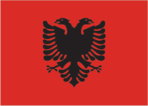
description: red background featuring a black two-headed eagle at the center
meaning: Albanians traditionally view themselves as descendants of the eagle, referring to their identity as "Shqiptare," which means "sons of the eagle"
history: this emblem is believed to have originated with the 15th-century Albanian figure Georgi Kastrioti SKANDERBEG, who led a notable revolt against the Ottoman Turks
Capital
name
Tirana (Tirane)
etymology
the earliest mention of the name "Tirana" is found in a Venetian document dated 1418; the etymology of the name remains uncertain
time difference
UTC+1 (6 hours ahead of Washington, DC during Standard Time)
daylight saving time
+1hr, commencing on the last Sunday of March and concluding on the last Sunday of October
geographic coordinates
41 19 N, 19 49 E
Suffrage
18 years of age; universal
Citizenship
citizenship by birth
no
citizenship by descent only
at least one parent must be a citizen of Albania
dual citizenship recognized
yes
residency requirement for naturalization
5 years
Constitution
history
multiple prior versions; the most recent was approved by the Assembly on 21 October 1998, confirmed by referendum on 22 November 1998, and enacted on 28 November 1998
amendment process
amendments must be proposed by at least one-fifth of the Assembly's members; a minimum two-thirds majority vote in the Assembly is necessary for passage; a referendum is needed only if two-thirds of the Assembly approves the amendment; amendments sanctioned by referendum become effective upon declaration by the president of the republic
Country name
former
People's Socialist Republic of Albania
etymology
the name may derive from the pre-Celtic term alb, meaning "hill," or from the Indo-European root albh, meaning "white;" the local designation "Shqiperia" stems from the Albanian term shqiponje ("eagle") and is commonly interpreted as "Land of the Eagles"
local long form
Republika e Shqiperise
local short form
Shqiperia
conventional long form
Republic of Albania
conventional short form
Albania
Independence
28 November 1912 (from the Ottoman Empire)
Legal system
a civil law system, except in rural northern regions where customary law known as the "Code of Leke" is still in practice
Government type
parliamentary republic
Judicial branch
highest court(s)
Supreme Court (comprising 19 judges, including the chief justice); Constitutional Court (comprising 9 judges, including the chairman)
subordinate courts
Courts of Appeal; Courts of First Instance; specialized judicial bodies: Court for Corruption and Organized Crime, Appeals Court for Corruption and Organized Crime (responsible for corruption, organized crime, and offenses committed by high-ranking officials)
judge selection and term of office
Supreme Court judges are appointed by the High Judicial Council with presidential consent, serving single 9-year terms; the Supreme Court chairman is elected by court members for a single 3-year term; appointments of Constitutional Court judges rotate among the president, Parliament, and Supreme Court from a list of pre-qualified candidates (each institution selects 3 judges), serving single 9-year terms; candidates are pre-qualified by a randomly chosen group of experienced judges and prosecutors; the chairman of the Constitutional Court is elected by court members for a single, renewable 3-year term
Executive branch
cabinet
the Council of Ministers is proposed by the prime minister, nominated by the president, and must be approved by the Assembly
chief of state
President Bajram BEGAJ (since 24 July 2022)
election results
2022: Bajram BEGAJ was elected president in the fourth round; Assembly vote - 78-4, with opposition parties boycotting
2017: Ilir META was elected president in the fourth round; Assembly vote - 87-2
head of government
Prime Minister Edi RAMA (since 10 September 2013)
most recent election date
the elections were conducted over 4 rounds on 16, 23, and 30 May and 4 June 2022
election/appointment process
the president is indirectly elected by the Assembly for a term of 5 years (can be re-elected for a second term); to be elected president, a candidate must secure a three-fifths majority in one of the first three rounds or a simple majority in two additional rounds; the prime minister is appointed by the president based on the recommendation of the majority party or coalition in the Assembly
expected date of next election
2027
National holiday
Independence Day, celebrated on 28 November (1912), also known as Flag Day
National color(s)
red, black
National heritage
total World Heritage Sites
4 (2 cultural, 1 natural, 1 mixed)
selected World Heritage Site locales
Butrint (c); Historic Berat and Gjirokastër (c); Primeval Beech Forests (n); Lake Ohrid Region (m)
Political parties
Alliance for Change (electoral coalition led by PD)
Democratic Party or PD
Party for Justice, Integration and Unity or PDIU (member of the Alliance for Change)
Social Democratic Party or PSD
Freedom Party of Albania or PL (previously the Socialist Movement for Integration or LSI)
Socialist Party or PS
Legislative branch
chamber name
Parliament (Kuvendi)
term in office
4 years
number of seats
140 (all directly elected)
electoral system
proportional representation
legislature name
Albanian Parliament
scope of elections
full renewal
legislative structure
unicameral
most recent election date
5/11/2025
expected date of next election
May 2029
percentage of women in chamber
35%
parties elected and seats per party
Socialist Party of Albania (PS) (83); Democratic Party - Alliance for a Greater Albania (PD-ASHM) (50); Others (7)
National anthem(s)
title
"Hymni i Flamurit" (Hymn to the Flag)
history
adopted in 1912; only the first two stanzas of the original anthem are utilized, with the second stanza serving as a chorus
lyrics/music
Aleksander Stavre DRENOVA/Ciprian PORUMBESCU
National symbol(s)
black double-headed eagle
National coat of arms
adopted in 1998, featuring the national emblem, the double-headed black eagle, in the national colors of red and black; red symbolizes the courage and strength of the Albanian populace, while the golden border signifies the nation's wealth; the helmet above the eagle is inspired by the helmet of Skanderbeg, a 15th-century military leader who fought against the Ottoman Empire; the goat atop the helmet represents defiance and resistance
Administrative divisions
12 counties (qarqe, singular - qark); Berat, Diber, Durres, Elbasan, Fier, Gjirokaster, Korce, Kukes, Lezhe, Shkoder, Tirane (Tirana), Vlore
Diplomatic representation in the US
FAX
[1] (202) 628-7342
chancery
2100 S Street NW, Washington, DC 20008
telephone
[1] (202) 223-4942
chief of mission
Ambassador Ervin BUSHATI (since 15 September 2023)
consulate(s) general
New York
email address and website
[email protected]
http://www.ambasadat.gov.al/usa/en
Diplomatic representation from the US
FAX
[355] 4 2232-222
embassy
Rruga Stavro Vinjau, No. 14, Tirana
telephone
[355] 4 2247-285
mailing address
9510 Tirana Place, Washington DC 20521-9510
chief of mission
Ambassador (position currently vacant); Chargé d’Affaires Nancy VANHORN (since August 2024)
email address and website
[email protected]
https://al.usembassy.gov/
International organization participation
BSEC, CD, CE, CEI, EAPC, EBRD, EITI (compliant country), FAO, IAEA, IBRD, ICAO, ICC (national committees), ICCt, ICRM, IDA, IDB, IFAD, IFC, IFRCS, ILO, IMF, IMO, Interpol, IOC, IOM, IPU, ISO (correspondent), ITU, ITUC (NGOs), MIGA, NATO, OAS (observer), OIC, OIF, OPCW, OSCE, PCA, SELEC, UN, UNCTAD, UNESCO, UNHRC, UNIDO, UNOOSA, UNWTO, UPU, WCO, WFTU (NGOs), WHO, WIPO, WMO, WTO
International law organization participation
has not submitted a declaration of ICJ jurisdiction; acknowledges ICCt jurisdiction
Economy
Budget
revenues
$6.636 billion (2023 est.)
expenditures
$6.966 billion (2023 est.)
Exports
Exports 2022
$7.057 billion (2022 est.)
Exports 2023
$9.099 billion (2023 est.)
Exports 2024
$9.848 billion (2024 est.)
Imports
Imports 2022
$9.016 billion (2022 est.)
Imports 2023
$10.374 billion (2023 est.)
Imports 2024
$11.697 billion (2024 est.)
Industries
food; footwear, clothing and apparel; lumber, oil, cement, chemicals, mining, basic metals, hydropower
Labor force
1.37 million (2024 est.)
Public debt
Public debt 2021
81.9% of GDP (2021 est.)
Remittances
Remittances 2022
9.2% of GDP (2022 est.)
Remittances 2023
8.6% of GDP (2023 est.)
Remittances 2024
8.4% of GDP (2024 est.)
Exchange rates
Currency
leke (ALL) per US dollar -
Exchange rates 2020
108.65 (2020 est.)
Exchange rates 2021
103.52 (2021 est.)
Exchange rates 2022
113.042 (2022 est.)
Exchange rates 2023
100.645 (2023 est.)
Exchange rates 2024
93.123 (2024 est.)
Debt - external
Debt - external 2023
$5.363 billion (2023 est.)
Economic overview
upper-middle-income economy in the Balkans; candidate for EU membership; growth driven by sectors such as tourism, agriculture, mining, construction, and private consumption; fiscal consolidation efforts are focused on enhancing revenue collection and tax compliance to mitigate public debt; challenges faced include poor governance, corruption, and significant emigration rates
Unemployment rate
Unemployment rate 2022
10.2% (2022 est.)
Unemployment rate 2023
10.2% (2023 est.)
Unemployment rate 2024
10.3% (2024 est.)
Exports - partners
Italy 41%, Greece 10%, Germany 5%, Spain 5%, Serbia 4% (2023)
Imports - partners
Italy 22%, China 11%, Turkey 9%, Germany 7%, Greece 6% (2023)
Real GDP per capita
Real GDP per capita 2022
$17,100 (2022 est.)
Real GDP per capita 2023
$18,000 (2023 est.)
Real GDP per capita 2024
$18,900 (2024 est.)
Real GDP growth rate
Real GDP growth rate 2022
4.8% (2022 est.)
Real GDP growth rate 2023
3.9% (2023 est.)
Real GDP growth rate 2024
4% (2024 est.)
Agricultural products
milk, maize, tomatoes, watermelons, potatoes, wheat, grapes, onions, cucumbers/gherkins, olives (2023)
Exports - commodities
garments, footwear, electricity, crude petroleum, iron alloys (2023)
Imports - commodities
cars, refined petroleum, garments, packaged medicine, iron bars (2023)
Current account balance
Current account balance 2022
-$1.117 billion (2022 est.)
Current account balance 2023
-$281.7 million (2023 est.)
Current account balance 2024
-$646.107 million (2024 est.)
Taxes and other revenues
17.8% (of GDP) (2023 est.)
GDP (official exchange rate)
$27.178 billion (2024 est.)
GDP - composition, by end use
household consumption
70.2% (2023 est.)
government consumption
12% (2023 est.)
investment in inventories
-1.1% (2023 est.)
investment in fixed capital
24% (2023 est.)
exports of goods and services
38.7% (2023 est.)
imports of goods and services
-43.8% (2023 est.)
Population below poverty line
22% (2020 est.)
Inflation rate (consumer prices)
Inflation rate (consumer prices) 2022
6.7% (2022 est.)
Inflation rate (consumer prices) 2023
4.8% (2023 est.)
Inflation rate (consumer prices) 2024
2.2% (2024 est.)
Industrial production growth rate
-0.2% (2024 est.)
Real GDP (purchasing power parity)
Real GDP (purchasing power parity) 2022
$47.532 billion (2022 est.)
Real GDP (purchasing power parity) 2023
$49.403 billion (2023 est.)
Real GDP (purchasing power parity) 2024
$51.36 billion (2024 est.)
Youth unemployment rate (ages 15-24)
male
23.9% (2024 est.)
total
25.1% (2024 est.)
female
26.9% (2024 est.)
Reserves of foreign exchange and gold
Reserves of foreign exchange and gold 2022
$5.266 billion (2022 est.)
Reserves of foreign exchange and gold 2023
$6.455 billion (2023 est.)
Reserves of foreign exchange and gold 2024
$6.516 billion (2024 est.)
GDP - composition, by sector of origin
industry
22.4% (2024 est.)
services
48.9% (2024 est.)
agriculture
15.5% (2024 est.)
Household income or consumption by percentage share
lowest 10%
3.4% (2020 est.)
highest 10%
22.8% (2020 est.)
Gini Index coefficient - distribution of family income
Gini Index coefficient - distribution of family income 2020
29.4 (2020 est.)
Energy
Coal
exports
345,000 metric tons (2023 est.)
imports
180,000 metric tons (2023 est.)
production
473,000 metric tons (2023 est.)
consumption
255,000 metric tons (2023 est.)
proven reserves
522 million metric tons (2023 est.)
Petroleum
total petroleum production
14,000 bbl/day (2023 est.)
crude oil estimated reserves
150 million barrels (2021 est.)
refined petroleum consumption
21,000 bbl/day (2023 est.)
Electricity
exports
2.2 billion kWh (2023 est.)
imports
1.922 billion kWh (2023 est.)
consumption
7.49 billion kWh (2023 est.)
installed generating capacity
2.857 million kW (2023 est.)
transmission/distribution losses
1.238 billion kWh (2023 est.)
Natural gas
production
49.977 million cubic meters (2023 est.)
consumption
49.977 million cubic meters (2023 est.)
proven reserves
5.692 billion cubic meters (2021 est.)
Electricity access
electrification - total population
100% (2022 est.)
Energy consumption per capita
Total energy consumption per capita 2023
27.407 million Btu/person (2023 est.)
Electricity generation sources
solar
3.3% of total installed capacity (2023 est.)
hydroelectricity
96.7% of total installed capacity (2023 est.)
Communications
Internet users
percent of population
83% (2023 est.)
Broadcast media
more than 65 television channels, comprising various national broadcasters that may also reach adjacent countries; numerous audiences can receive Italian and Greek television through terrestrial signals; television stations are in the process of a government-required transition from analog to digital broadcasting; cable television services are offered; there are 2 public radio networks alongside approximately 78 private radio outlets; multiple international broadcasting services can be accessed (2024)
Internet country code
.al
Telephones - fixed lines
total subscriptions
165,000 (2024 est.)
subscriptions per 100 inhabitants
6 (2024 est.)
Telephones - mobile cellular
total subscriptions
2.49 million (2024 est.)
subscriptions per 100 inhabitants
89 (2024 est.)
Broadband - fixed subscriptions
total
632,000 (2023 est.)
subscriptions per 100 inhabitants
22 (2023 est.)
Transportation
Ports
large
0
small
1
medium
0
key ports
Durres, Shengjin, Vlores
very small
2
total ports
3 (2024)
ports with oil terminals
0
Airports
3 (2025)
Railways
total
424 km (2017)
Heliports
9 (2025)
Merchant marine
total
69 (2023)
by type
general cargo 46, oil tanker 1, other 22
Civil aircraft registration country code prefix
ZA
Military & Security
Military - note
The Albanian Armed Forces (AAF) are tasked with safeguarding the nation’s independence, sovereignty, and territorial integrity, as well as aiding in internal security, disaster response, and humanitarian assistance, and engaging in international peacekeeping operations. The AAF is a compact, lightly equipped military that is currently engaged in modernization initiatives to enhance its capability to undertake NATO missions. Since Albania's accession to NATO in 2009, the AAF has deployed limited numbers of personnel to various NATO operations, including peacekeeping and stabilization efforts in Afghanistan, Kosovo, and Iraq, as well as participating in multinational battlegroups in Bulgaria and Latvia. Additionally, it has played a role in EU and UN missions (2025).
Military deployments
250 Kosovo (NATO/KFOR) (2025)
Military expenditures
Military Expenditures 2021
1.2% of GDP (2021 est.)
Military Expenditures 2022
1.2% of GDP (2022 est.)
Military Expenditures 2023
1.7% of GDP (2023 est.)
Military Expenditures 2024
1.7% of GDP (2024 est.)
Military Expenditures 2025
2% of GDP (2025 est.)
Military and security forces
Republic of Albania Armed Forces (Forcat e Armatosura të Republikës së Shqipërisë (FARSH); also known as Albanian Armed Forces (AAF)): Land Forces, Naval Force (which includes the Coast Guard), Air Forces
Ministry of Interior: Guard of the Republic, State Police (which includes the Border and Migration Police) (2025).
Military service age and obligation
The age range for voluntary military service is 18-30 for both men and women; conscription was abolished in 2010 (2025).
Military equipment inventories and acquisitions
The military is currently modernizing by phasing out its Soviet-era armaments in favor of NATO-standard weapons; recent acquisitions have included equipment from France, Israel, Italy, Turkey, and the United States (2025).
Military and security service personnel strengths
There are around 7,500 active-duty military personnel (2025).
Terrorism
Terrorist group(s)
Islamic Revolutionary Guard Corps/Qods Force; Islamic State of Iraq and ash-Sham (ISIS)
Transnational Issues
Refugees and internally displaced persons
refugees
9,381 (2024 est.)
stateless persons
2,203 (2024 est.)