CapitalChisinau in Romanian (Kishinev in Russian)
LanguagesMoldovan/Romanian , Russian, Gagauz , Ukrainian, Bulgarian, Romani, other
CurrencyMoldovan lei
Governmentparliamentary republic
Bamwor Indexes
Moldova — Q1 2026
IBEUBamwor Urban Scale Index
17.77%
Rank #103 of 237
View full ranking →
IBCPBamwor Population Concentration Index
30.28%
Rank #117 of 237
View full ranking →
IBDABamwor Settlement Density Index
53.59per 1K km²
Rank #157 of 241
View full ranking →
IBCXBamwor Country Complexity Index
62.08/100
Rank #111 of 234
View full ranking →
IBEEBamwor Economic Stability Index
88.91/100
Rank #82 of 220
View full ranking →
IBFMBamwor Military Strength Index
37.60/100
Rank #103 of 124
View full ranking →
IBDIBamwor Digital Infrastructure Index
72.12/100
Rank #113 of 206
View full ranking →
IBSABamwor Healthcare Index
52.68/100
Rank #193 of 218
View full ranking →
Moldova Intelligence Report
Download PDF with 20+ statistics, rankings & proprietary indices
Introduction
Background
A significant part of modern-day Moldova was annexed by the Russian Empire in 1812 and later became unified with Romania in 1918 following World War I. Subsequently, this area was absorbed into the Soviet Union after World War II. Although Moldova has been sovereign from the Soviet Union since 1991, Russian military forces have continued to occupy Moldovan land east of the Nistru River in the separatist region known as Transnistria.
The era of Communist Party governance in Moldova spanned from 2001 to 2009, culminating in violent protests related to elections and a repeat of parliamentary elections in 2009. From 2010 to 2019, a succession of pro-European coalitions managed the government. However, in 2016, pro-Russian candidate Igor DODON secured the presidency, and his Socialist Party of the Republic of Moldova achieved a plurality in the 2019 legislative elections. In 2020, pro-EU reformist candidate Maia SANDU defeated DODON in the presidential election, and SANDU's Party of Action and Solidarity gained a parliamentary majority in an early legislative election in 2021. The cabinet led by Prime Minister Natalia GAVRILITA was established in 2021. In early 2023, the parliament of Moldova approved a new cabinet under the leadership of Prime Minister Dorin RECEAN, which maintained most of the previous ministers.
Geography
Area
land
32,891 sq km
water
960 sq km
total
33,851 sq km
Climate
mild winters, hot summers
Terrain
undulating steppe, gentle incline leading to the Black Sea
Land use
other
13.8% (2023 est.)
forest
11.3% (2023 est.)
agricultural land
74.1% (2023 est.)
agricultural land: arable land
arable land: 56.8% (2023 est.)
agricultural land: permanent crops
permanent crops: 8.1% (2023 est.)
agricultural land: permanent pasture
permanent pasture: 9.4% (2023 est.)
Location
Eastern Europe, situated to the northeast of Romania
Coastline
0 km (landlocked)
Elevation
lowest point
Dniester (Nistru) 2 m
highest point
Dealul Balanesti 430 m
mean elevation
139 m
Irrigated land
2,150 sq km (2022)
Map references
Europe
Land boundaries
total
1,885 km
border countries
Romania 683 km; Ukraine 1202 km
Maritime claims
none (landlocked)
Natural hazards
landslides
Geography - note
enclosed by land; contains various types of sedimentary rocks and minerals such as sand, gravel, gypsum, and limestone
Natural resources
lignite, phosphorites, gypsum, limestone, cultivable land
Area - comparative
slightly bigger than Maryland
Geographic coordinates
47 00 N, 29 00 E
Population distribution
clusters of population density can be found throughout the nation, with the most significant being in the central region around the capital, Chisinau, followed by Tiraspol and Balti
Major watersheds (area sq km)
Atlantic Ocean drainage
(Black Sea) Danube (795,656 sq km)
Major rivers (by length in km)
Dunărea (Danube) (shared with Germany [s], Austria, Slovakia, Hungary, Croatia, Serbia, Bulgaria, Ukraine, and Romania [m]) - 2,888 km; Nistru (Dniester) (shared with Ukraine [s/m]) - 1,411 km
note: [s] denotes river source; [m] denotes river mouth
People & Society
Languages
Languages
Moldovan/Romanian 80.2% (official) (56.7% Moldovan; 23.5% Romanian), Russian 9.7%, Gagauz 4.2% (a language of Turkish origin), Ukrainian 3.9%, Bulgarian 1.5%, Romani 0.3%, other 0.2% (2014)
major-language sample(s)
Cartea informativa a lumii, sursa indispensabila pentru informatii de baza. (Moldovan/Romanian)
The World Factbook, the indispensable source for basic information.
Religions
Orthodox 90.1%, other Christian 2.6%, other 0.1%, agnostic <0.1%, atheist 0.2%, unspecified 6.9% (est. 2014)
Sex ratio
at birth
1.07 male(s)/female
0-14 years
1 male(s)/female
15-64 years
0.94 male(s)/female
total population
0.89 male(s)/female (2024 est.)
65 years and over
0.62 male(s)/female
Birth rate
8.35 births/1,000 population (2025 est.)
Death rate
14.06 deaths/1,000 population (2025 est.)
Median age
male
38.6 years
total
40.4 years (2025 est.)
female
41.3 years
Population
male
1,687,496
total
3,578,930 (2025 est.)
female
1,891,434
Nationality
noun
Moldovan(s)
adjective
Moldovan
Tobacco use
male
54.2% (2025 est.)
total
28.7% (2025 est.)
female
6.4% (2025 est.)
Urbanization
urban population
43.4% of total population (2023)
rate of urbanization
0.09% annual rate of change (2020-25 est.)
Age structure
0-14 years
14.8% (male 266,493/female 266,166)
15-64 years
70.2% (male 1,225,535/female 1,300,640)
65 years and over
15% (2024 est.) (male 206,221/female 334,473)
Ethnic groups
Moldovan 75.1%, Romanian 7%, Ukrainian 6.6%, Gagauz 4.6%, Russian 4.1%, Bulgarian 1.9%, other 0.8% (est. 2014)
Dependency ratios
total dependency ratio
43 (2025 est.)
youth dependency ratio
20.8 (2025 est.)
potential support ratio
4.5 (2025 est.)
elderly dependency ratio
22.2 (2025 est.)
Physician density
4.02 physicians/1,000 population (2023)
Health expenditure
Health expenditure (as % of GDP)
7.8% of GDP (2021)
Health expenditure (as % of national budget)
12.3% of national budget (2022 est.)
Net migration rate
0 migrant(s)/1,000 population (2025 est.)
Hospital bed density
5.7 beds/1,000 population (2021 est.)
Total fertility rate
1.27 children born/woman (2025 est.)
Drinking water source
improved: rural
rural: 87.7% of population (2022 est.)
improved: total
total: 92% of population (2022 est.)
improved: urban
urban: 97.7% of population (2022 est.)
unimproved: rural
rural: 12.3% of population (2022 est.)
unimproved: total
total: 8% of population (2022 est.)
unimproved: urban
urban: 2.3% of population (2022 est.)
Education expenditure
Education expenditure (% GDP)
6.6% of GDP (2023 est.)
Education expenditure (% national budget)
16% national budget (2024 est.)
Infant mortality rate
male
16 deaths/1,000 live births
total
13.5 deaths/1,000 live births (2025 est.)
female
11.5 deaths/1,000 live births
Population growth rate
-0.57% (2025 est.)
Gross reproduction rate
0.61 (2025 est.)
Population distribution
There are areas of concentration scattered across the nation, with the most significant being in the central region surrounding the capital city of Chisinau, followed by Tiraspol and Balti.
Life expectancy at birth
male
66.1 years
female
74.4 years
total population
70.1 years (2024 est.)
Maternal mortality ratio
19 deaths/100,000 live births (2023 est.)
Sanitation facility access
improved: rural
rural: 82.9% of population (2022 est.)
improved: total
total: 89.7% of population (2022 est.)
improved: urban
urban: 98.7% of population (2022 est.)
unimproved: rural
rural: 17.1% of population (2022 est.)
unimproved: total
total: 10.3% of population (2022 est.)
unimproved: urban
urban: 1.3% of population (2022 est.)
Alcohol consumption per capita
beer
1.53 liters of pure alcohol (2019 est.)
wine
3.57 liters of pure alcohol (2019 est.)
total
7.45 liters of pure alcohol (2019 est.)
spirits
2.25 liters of pure alcohol (2019 est.)
other alcohols
0.1 liters of pure alcohol (2019 est.)
Major urban areas - population
488,000 CHISINAU (capital) (2023)
Obesity - adult prevalence rate
18.9% (2016)
Mother's mean age at first birth
25.2 years (2019 est.)
Currently married women (ages 15-49)
68.7% (2020 est.)
School life expectancy (primary to tertiary education)
male
15 years (2023 est.)
total
15 years (2023 est.)
female
15 years (2023 est.)
Environment
Climate
mild winters, hot summers
Land use
other
13.8% (2023 est.)
forest
11.3% (2023 est.)
agricultural land
74.1% (2023 est.)
agricultural land: arable land
arable land: 56.8% (2023 est.)
agricultural land: permanent crops
permanent crops: 8.1% (2023 est.)
agricultural land: permanent pasture
permanent pasture: 9.4% (2023 est.)
Urbanization
urban population
43.4% of total population (2023)
rate of urbanization
0.09% annual rate of change (2020-25 est.)
Waste and recycling
municipal solid waste generated annually
3.981 million tons (2024 est.)
percent of municipal solid waste recycled
36.9% (2022 est.)
Environmental issues
contamination of soil and water due to high reliance on agricultural chemicals; significant soil erosion and reduced soil fertility resulting from agricultural practices
Total water withdrawal
municipal
160 million cubic meters (2022 est.)
industrial
583 million cubic meters (2022 est.)
agricultural
55 million cubic meters (2022 est.)
Carbon dioxide emissions
total emissions
7.093 million metric tonnes of CO2 (2023 est.)
from consumed natural gas
3.786 million metric tonnes of CO2 (2023 est.)
from coal and metallurgical coke
219,000 metric tonnes of CO2 (2023 est.)
from petroleum and other liquids
3.087 million metric tonnes of CO2 (2023 est.)
Particulate matter emissions
12.3 micrograms per cubic meter (2019 est.)
Total renewable water resources
12.27 billion cubic meters (2022 est.)
International environmental agreements
party to
Air Pollution, Air Pollution-Heavy Metals, Air Pollution-Persistent Organic Pollutants, Biodiversity, Climate Change, Climate Change-Kyoto Protocol, Climate Change-Paris Agreement, Comprehensive Nuclear Test Ban, Desertification, Endangered Species, Hazardous Wastes, Law of the Sea, Ozone Layer Protection, Ship Pollution, Wetlands
signed, but not ratified
Air Pollution-Multi-effect Protocol
Government
Flag
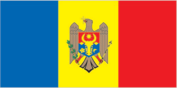
description: features three vertical stripes of equal width in Prussian blue (on the left), chrome yellow, and vermilion red; the central emblem is the Moldovan coat of arms, showcasing a dark gold Roman eagle outlined in black, with a red beak and talons; the eagle holds a yellow cross in its beak, a green olive branch in its right talons, and a yellow scepter in its left talons; on the eagle's chest, there is a red-and-blue shield divided horizontally, adorned with a stylized aurochs head, a star, a rose, and a crescent in black with yellow outlines; the flag's reverse side presents a mirrored version of the coat of arms
history: it replaced the communist flag in 1990; the coat of arms draws from traditional motifs
Capital
name
Chisinau in Romanian (Kishinev in Russian)
etymology
origin unclear but may derive from the Old Moldovan word kishineu ("spring" or "artesian well")
time difference
UTC+2 (7 hours ahead of Washington, DC, during Standard Time)
daylight saving time
+1hr, commencing on the last Sunday in March and concluding on the last Sunday in October
geographic coordinates
47 00 N, 28 51 E
Suffrage
18 years of age; universal
Citizenship
citizenship by birth
no
citizenship by descent only
at least one parent must be a citizen of Moldova
dual citizenship recognized
no
residency requirement for naturalization
10 years
Constitution
history
previously in use since 1978; the latest version adopted on 29 July 1994, effective from 27 August 1994
amendment process
can be proposed by a voter petition (requiring at least 200,000 eligible voters), by a minimum of one-third of the members of Parliament, or by the government; approval necessitates a two-thirds majority vote in Parliament within one year of the initial proposal; amendments to constitutional articles related to sovereignty, independence, and neutrality must be approved by a majority in a referendum; articles concerning fundamental rights and freedoms are not subject to amendment
Country name
former
Moldavian Soviet Socialist Republic, Moldovan Soviet Socialist Republic
etymology
named after the Moldova River, which is located in eastern Romania; the river's name likely derives from the Indo-European root word mel, meaning "dark" or "black"
local long form
Republica Moldova
local short form
Moldova
conventional long form
Republic of Moldova
conventional short form
Moldova
Independence
27 August 1991 (from the Soviet Union)
Legal system
civil law system influenced by Germanic law; the Constitutional Court has the authority to review legislative acts
Government type
parliamentary republic
Judicial branch
highest court(s)
Supreme Court of Justice (comprising the chief judge, three deputy-chief judges, 45 judges, and 7 assistant judges); Constitutional Court (made up of the court president and six judges)
subordinate courts
Courts of Appeal; Court of Business Audit; municipal courts
judge selection and term of office
Judges of the Supreme Court of Justice are appointed by the president based on recommendations from the Superior Council of Magistracy, which consists of 11 judicial officials; all judges serve renewable four-year terms; judges of the Constitutional Court are appointed two each by Parliament, the president, and the Higher Council of Magistracy for six-year terms; the court president is elected by fellow judges for a three-year term
Executive branch
cabinet
The Cabinet is proposed by the prime minister-designate, nominated by the president, and must gain approval through a vote of confidence in Parliament
chief of state
President Maia SANDU (since 24 December 2020)
election results
2024: In the second round of presidential elections, incumbent Maia SANDU (PAS) secures 55.4% of the vote, while Alexandr STOIANOGLO (PSRM) obtains 44.6%; the voter turnout was 54.3%
2020: Maia SANDU was elected president in the second round; vote percentages in the second round were Maia SANDU (PAS) 57.7%, Igor DODON (PSRM) 42.3%
head of government
Prime Minister Alexandru MUNTEANU (since 1 November 2025)
most recent election date
3 November 2024
election/appointment process
the president is directly elected for a four-year term (with eligibility for a second term); the prime minister is designated by the president in consultation with Parliament; within 15 days of designation, the prime minister-designate must seek a vote of confidence for their proposed work program from Parliament
expected date of next election
2028
National holiday
Independence Day, 27 August (1991)
National color(s)
blue, yellow, red
National heritage
total World Heritage Sites
1 (cultural)
selected World Heritage Site locales
Struve Geodetic Arc
Political parties
Common Action Party - Civil Congress or PAC-CC
Democracy at Home Party or PPDA
Future of Moldova Party or PVM
National Alternative Movement or MAN
Our Party or PN
Party of Action and Solidarity or PAS
Party of Communists of the Republic of Moldova or PCRM
Party of Development and Consolidation of Moldova or PDCM
Party of Socialists of the Republic of Moldova or PSRM
Legislative branch
term in office
4 years
number of seats
101 (all directly elected)
electoral system
proportional representation
legislature name
Parliament (Parlament)
scope of elections
full renewal
legislative structure
unicameral
most recent election date
9/28/2025
expected date of next election
September 2029
percentage of women in chamber
37.6%
parties elected and seats per party
Action and Solidarity Party (PAS) (55); Electoral Bloc “Patriotic of Socialists, Communists, Heart and Future of Moldova” (26); Alternative Bloc (8); Our Party (6); Democracy at Home Party (6)
National anthem(s)
title
"Limba noastra" (Our Tongue)
history
adopted in 1994; originally a 12-verse poem, but only stanzas 1, 2, 5, 9, and 12 are included in the national anthem
lyrics/music
Alexei MATEEVICI/Alexandru CRISTEA
National symbol(s)
aurochs (type of wild cattle)
Administrative divisions
32 districts (raioane, singular - raion), 3 municipalities (municipii, singular - municipiul), 1 autonomous territorial unit (unitatea teritoriala autonoma), and 1 territorial unit (unitatea teritoriala)
districts: Anenii Noi, Basarabeasca, Briceni, Cahul, Cantemir, Calarasi, Causeni, Cimislia, Criuleni, Donduseni, Drochia, Dubasari, Edinet, Falesti, Floresti, Glodeni, Hincesti, Ialoveni, Leova, Nisporeni, Ocnita, Orhei, Rezina, Riscani, Singerei, Soldanesti, Soroca, Stefan Voda, Straseni, Taraclia, Telenesti, Ungheni
municipalities: Balti, Bender, Chisinau
autonomous territorial unit: Gagauzia
territorial unit: Stinga Nistrului (Transnistria)
Diplomatic representation in the US
FAX
[1] (202) 667-2624
chancery
2101 S Street NW, Washington, DC 20008
telephone
[1] (202) 667-1130
chief of mission
Ambassador Vladislav KULMINSKI (since 5 September 2025)
email address and website
[email protected]
https://sua.mfa.gov.md/en
Diplomatic representation from the US
FAX
[373] (22) 233-044
embassy
103 Mateevici Street, Chisinau MD-2009
telephone
[373] (22) 408-300
mailing address
7080 Chisinau Place, Washington DC 20521-7080
chief of mission
Ambassador (currently vacant); Chargé d’Affaires Nick PIETROWICZ (since 2025)
email address and website
[email protected]
https://md.usembassy.gov/
International organization participation
BSEC, CD, CE, CEI, CIS, EAEU (observer), EAPC, EBRD, FAO, GCTU, GUAM, IAEA, IBRD, ICAO, ICC (NGOs), ICCt, ICRM, IDA, IFAD, IFC, IFRCS, ILO, IMF, IMO, Interpol, IOC, IOM, IPU, ISO (correspondent), ITU, ITUC (NGOs), MIGA, OIF, OPCW, OSCE, PFP, SELEC, UN, UNCTAD, UNESCO, UNHCR, UNIDO, Union Latina, UNMIL, UNMISS, UNOCI, UNWTO, UPU, WCO, WHO, WIPO, WMO, WTO
International law organization participation
has not presented a declaration of ICJ jurisdiction; accepts the jurisdiction of the ICCt
Economy
Budget
revenues
$5.197 billion (2023 est.)
expenditures
$6.037 billion (2023 est.)
Exports
Exports 2022
$5.981 billion (2022 est.)
Exports 2023
$5.866 billion (2023 est.)
Exports 2024
$5.717 billion (2024 est.)
Imports
Imports 2022
$10.265 billion (2022 est.)
Imports 2023
$9.84 billion (2023 est.)
Imports 2024
$10.418 billion (2024 est.)
Industries
sugar refining, vegetable oil production, food processing, agricultural machinery; foundry machinery, refrigerators and freezers, washing machines; hosiery, footwear, textiles
Labor force
1.358 million (2024 est.)
Public debt
Public debt 2023
34.3% of GDP (2023 est.)
Remittances
Remittances 2022
14% of GDP (2022 est.)
Remittances 2023
12% of GDP (2023 est.)
Remittances 2024
10.5% of GDP (2024 est.)
Exchange rates
Currency
Moldovan lei (MDL) per US dollar -
Exchange rates 2020
17.322 (2020 est.)
Exchange rates 2021
17.68 (2021 est.)
Exchange rates 2022
18.897 (2022 est.)
Exchange rates 2023
18.164 (2023 est.)
Exchange rates 2024
17.792 (2024 est.)
Debt - external
Debt - external 2023
$2.637 billion (2023 est.)
Economic overview
upper middle-income economy located in Eastern Europe; growth sustained until disrupted by COVID-19; notable remittances; reliance on Russian energy and regional ties; exporter of agricultural products; workforce decline attributed to emigration and low birth rates
Unemployment rate
Unemployment rate 2022
0.9% (2022 est.)
Unemployment rate 2023
1.6% (2023 est.)
Unemployment rate 2024
1.5% (2024 est.)
Exports - partners
Romania 31%, Ukraine 13%, Italy 6%, Germany 6%, Czechia 4% (2023)
Imports - partners
Romania 16%, Ukraine 13%, China 11%, Turkey 8%, Germany 7% (2023)
Real GDP per capita
Real GDP per capita 2022
$15,400 (2022 est.)
Real GDP per capita 2023
$16,000 (2023 est.)
Real GDP per capita 2024
$16,500 (2024 est.)
Real GDP growth rate
Real GDP growth rate 2022
-4.6% (2022 est.)
Real GDP growth rate 2023
1.2% (2023 est.)
Real GDP growth rate 2024
0.1% (2024 est.)
Agricultural products
wheat, maize, sunflower seeds, grapes, apples, sugar beets, barley, milk, rapeseed, potatoes (2023)
Exports - commodities
insulated wire, clothing, refined petroleum, seed oils, wheat (2023)
Imports - commodities
refined petroleum, natural gas, automobiles, packaged medicines, plastic goods (2023)
Current account balance
Current account balance 2022
-$2.482 billion (2022 est.)
Current account balance 2023
-$1.893 billion (2023 est.)
Current account balance 2024
-$2.917 billion (2024 est.)
Taxes and other revenues
18.6% (of GDP) (2023 est.)
GDP (official exchange rate)
$18.2 billion (2024 est.)
GDP - composition, by end use
household consumption
86.8% (2024 est.)
government consumption
17.9% (2024 est.)
investment in inventories
1.1% (2024 est.)
investment in fixed capital
20% (2024 est.)
exports of goods and services
31.4% (2024 est.)
imports of goods and services
-57.3% (2024 est.)
Population below poverty line
31.1% (2022 est.)
Inflation rate (consumer prices)
Inflation rate (consumer prices) 2022
28.7% (2022 est.)
Inflation rate (consumer prices) 2023
13.4% (2023 est.)
Inflation rate (consumer prices) 2024
4.7% (2024 est.)
Industrial production growth rate
3.3% (2024 est.)
Real GDP (purchasing power parity)
Real GDP (purchasing power parity) 2022
$38.835 billion (2022 est.)
Real GDP (purchasing power parity) 2023
$39.301 billion (2023 est.)
Real GDP (purchasing power parity) 2024
$39.342 billion (2024 est.)
Youth unemployment rate (ages 15-24)
male
3.4% (2024 est.)
total
3.3% (2024 est.)
female
3.3% (2024 est.)
Reserves of foreign exchange and gold
Reserves of foreign exchange and gold 2022
$4.474 billion (2022 est.)
Reserves of foreign exchange and gold 2023
$5.453 billion (2023 est.)
Reserves of foreign exchange and gold 2024
$5.484 billion (2024 est.)
GDP - composition, by sector of origin
industry
16.8% (2024 est.)
services
62.3% (2024 est.)
agriculture
7.1% (2024 est.)
Household income or consumption by percentage share
lowest 10%
4.5% (2022 est.)
highest 10%
22.5% (2022 est.)
Gini Index coefficient - distribution of family income
Gini Index coefficient - distribution of family income 2022
25.9 (2022 est.)
Energy
Coal
imports
86,000 metric tons (2023 est.)
consumption
90,000 metric tons (2023 est.)
Petroleum
refined petroleum consumption
22,000 bbl/day (2023 est.)
Electricity
exports
94 million kWh (2023 est.)
imports
1.264 billion kWh (2023 est.)
consumption
5.674 billion kWh (2023 est.)
installed generating capacity
779,000 kW (2023 est.)
transmission/distribution losses
550.069 million kWh (2023 est.)
Natural gas
imports
2.223 billion cubic meters (2023 est.)
production
10,000 cubic meters (2021 est.)
consumption
2.223 billion cubic meters (2023 est.)
Electricity access
electrification - total population
100% (2022 est.)
Energy consumption per capita
Total energy consumption per capita 2023
35.686 million Btu/person (2023 est.)
Electricity generation sources
wind
3.8% of total installed capacity (2023 est.)
solar
1.7% of total installed capacity (2023 est.)
fossil fuels
88% of total installed capacity (2023 est.)
hydroelectricity
6.3% of total installed capacity (2023 est.)
biomass and waste
0.2% of total installed capacity (2023 est.)
Communications
Internet users
percent of population
80% (2023 est.)
Broadcast media
The national radio and television broadcaster, which is state-owned, runs 1 television and 1 radio station; it offers close to 70 terrestrial television channels and approximately 50 radio stations; channels in Russian and Romanian are accessible (2019)
Internet country code
.md
Telephones - fixed lines
total subscriptions
847,000 (2023 est.)
subscriptions per 100 inhabitants
28 (2023 est.)
Telephones - mobile cellular
total subscriptions
3.64 million (2024 est.)
subscriptions per 100 inhabitants
120 (2024 est.)
Broadband - fixed subscriptions
total
841,000 (2023 est.)
subscriptions per 100 inhabitants
27 (2023 est.)
Transportation
Airports
10 (2025)
Railways
total
1,171 km (2014)
broad gauge
1,157 km (2014) 1.520-m gauge
standard gauge
14 km (2014) 1.435-m gauge
Heliports
1 (2025)
Merchant marine
total
75 (2023)
by type
1 bulk carrier, 1 container ship, 44 general cargo vessels, 7 oil tankers, 22 others
Civil aircraft registration country code prefix
ER
Military & Security
Military - note
The National Army is tasked with defending against external threats, curbing unlawful military activities along the national border or within the country, and assisting other internal security forces in maintaining public order when required; its main concerns include the Transnistrian separatist factions and their Russian supporters. The conflict in 1992 between Moldovan forces and the Russian-backed Transnistrian separatists concluded with a cease-fire. The separatists operate several armed paramilitary units, along with additional security forces and reserves. Russia keeps around 1,500 troops stationed in the breakaway area, which includes some locals from Transnistria serving as Russian personnel. A portion of these troops falls under the command of a peacekeeping contingent known as the Joint Control Commission, which also comprises Moldovan and separatist members, while the rest of the Russian forces are tasked with guarding a depot of Soviet-era munitions and training the separatist fighters.
Moldova is constitutionally neutral but has developed a relationship with NATO since 1992 and has intensified bilateral security collaboration with certain NATO nations since 2022; it has provided small contingents of troops to NATO’s Kosovo Force (KFOR) since 2014, and in 2017, a civilian NATO liaison office was established in Moldova at the request of the Moldovan government to foster practical collaboration and facilitate support. In 2024, Moldova entered into a security and defense partnership agreement with the EU and maintains strong security ties with Romania, which is a member of both the EU and NATO (2025).
Military expenditures
Military Expenditures 2020
0.4% of GDP (2020 est.)
Military Expenditures 2021
0.4% of GDP (2021 est.)
Military Expenditures 2022
0.4% of GDP (2022 est.)
Military Expenditures 2023
0.6% of GDP (2023 est.)
Military Expenditures 2024
0.6% of GDP (2024 est.)
Military and security forces
Armed Forces of the Republic of Moldova (Forțele Armate ale Republicii Moldova): National Army (comprising Land Forces and Air Force)
Ministry of Internal Affairs: General Inspectorate of Police (GPI), Border Police Department, Carabinieri Troops Department (2025).
Military service age and obligation
Individuals aged 18 to 27 are subject to compulsory or voluntary military service; male registration is mandated at age 16; a 12-month service commitment is required; conscientious objectors may undertake non-military service in public institutions for an extended duration (up to 24 months) (2025).
Military equipment inventories and acquisitions
The military's equipment inventory is limited and predominantly consists of Soviet-era assets; in recent years, it has received minor quantities of donated equipment from various Western European countries and the United States (2025).
Military and security service personnel strengths
approximately 6,500 Moldovan Armed Forces (2025)
Transnational Issues
Refugees and internally displaced persons
IDPs
6 (2024 est.)
refugees
136,845 (2024 est.)
stateless persons
3,164 (2024 est.)