CapitalParis
LanguagesFrench, declining regional dialects and languages
Currencyeuros
Governmentsemi-presidential republic
Bamwor Indexes
France — Q1 2026
IBEUBamwor Urban Scale Index
3.12%
Rank #229 of 237
View full ranking →
IBCPBamwor Population Concentration Index
6.41%
Rank #232 of 237
View full ranking →
IBDABamwor Settlement Density Index
126.74per 1K km²
Rank #108 of 241
View full ranking →
IBCXBamwor Country Complexity Index
73.06/100
Rank #30 of 234
View full ranking →
IBEEBamwor Economic Stability Index
89.23/100
Rank #77 of 220
View full ranking →
IBDIBamwor Digital Infrastructure Index
84.78/100
Rank #37 of 206
View full ranking →
IBSABamwor Healthcare Index
77.55/100
Rank #44 of 218
View full ranking →
France Intelligence Report
Download PDF with 20+ statistics, rankings & proprietary indices
Introduction
Background
France today is one of the most modern countries in the world and is a leader among European nations. It plays an influential global role as a permanent member of the United Nations Security Council, NATO, the G-7, the G-20, the EU, and other multilateral organizations. France rejoined NATO's integrated military command structure in 2009, reversing then President Charles DE GAULLE's 1966 decision to withdraw French forces from NATO. Since 1958, it has constructed a hybrid presidential-parliamentary governing system resistant to the instabilities experienced in earlier, more purely parliamentary administrations. In recent decades, its reconciliation and cooperation with Germany have proved central to the economic integration of Europe, including the introduction of a common currency, the euro, in January 1999. In the early 21st century, five French overseas entities -- French Guiana, Guadeloupe, Martinique, Mayotte, and Reunion -- became French regions and were made part of France proper.
Geography
Area
land
640,427 sq km ; 549,970 sq km (metropolitan France)
water
3,374 sq km ; 1,530 sq km (metropolitan France)
total
643,801 sq km ; 551,500 sq km (metropolitan France)
Climate
metropolitan France: typically experiences cool winters and mild summers, although mild winters and hot summers are found along the Mediterranean coast; occasionally affected by a strong, cold, dry wind called the mistral, which blows from the north to northwest
Terrain
metropolitan France: predominantly flat plains or gently rolling hills in the northern and western regions; the rest is mountainous, particularly in the Pyrenees in the south and the Alps in the east
French Guiana: comprises low-lying coastal plains that rise to hills and small mountains
Guadeloupe: Basse-Terre is volcanic with mountainous interiors; Grande-Terre is a low-lying limestone formation; most of the other seven islands are of volcanic origin
Martinique: features a mountainous landscape with a deeply indented coastline; contains a dormant volcano
Mayotte: generally has undulating terrain, with deep ravines and ancient volcanic peaks
Reunion: mostly characterized by rugged mountains, with fertile lowlands along the coastline
Land use
other
15% (2023 est.)
forest
32.7% (2023 est.)
agricultural land
52.5% (2023 est.)
agricultural land: arable land
arable land: 31.4% (2023 est.)
agricultural land: permanent crops
permanent crops: 1.9% (2023 est.)
agricultural land: permanent pasture
permanent pasture: 19.2% (2023 est.)
Location
metropolitan France: located in Western Europe, adjacent to the Bay of Biscay and the English Channel, bordered by Belgium to the north and Spain to the southwest, southeast of the United Kingdom; also borders the Mediterranean Sea between Italy and Spain
French Guiana: situated in Northern South America, bordering the North Atlantic Ocean, located between Brazil and Suriname
Guadeloupe: located in the Caribbean, islands situated between the Caribbean Sea and the North Atlantic Ocean, to the southeast of Puerto Rico
Martinique: located in the Caribbean, an island positioned between the Caribbean Sea and the North Atlantic Ocean, north of Trinidad and Tobago
Mayotte: located in the Southern Indian Ocean, an island in the Mozambique Channel, approximately halfway between northern Madagascar and northern Mozambique
Reunion: situated in Southern Africa, an island in the Indian Ocean, east of Madagascar
Coastline
4,853 km
Elevation
lowest point
Rhone River delta -2 m
highest point
Mont Blanc 4,810
mean elevation
375 m
Irrigated land
14,236 sq km (2020)
Major aquifers
Paris Basin
Map references
metropolitan France: Europe
French Guiana: South America
Guadeloupe: Central America and the Caribbean
Martinique: Central America and the Caribbean
Mayotte: Africa
Reunion: World
Land boundaries
total
3,956 km
border countries
Andorra 55 km; Belgium 556 km; Germany 418 km; Italy 476 km; Luxembourg 69 km; Monaco 6 km; Spain 646 km; Switzerland 525 km
French Guiana - total
1205 km
metropolitan France - total
2751 km
Maritime claims
contiguous zone
24 nm
territorial sea
12 nm
continental shelf
200m depth or to the depth of exploitation
exclusive economic zone
200 nm (does not apply to the Mediterranean Sea)
Natural hazards
metropolitan France: faces flooding; avalanches; winter windstorms; drought; and forest fires in the southern regions
overseas departments: experience hurricanes (cyclones) and flooding
volcanism: Montagne Pelée (1,394 m) on the island of Martinique in the Caribbean is the most active volcano of the Lesser Antilles, although its last eruption occurred in 1932; a catastrophic eruption in 1902 devastated the city of St. Pierre, resulting in approximately 30,000 fatalities; La Soufrière (1,467 m) on Guadeloupe has also had explosive eruptions in recent years
Geography - note
the largest nation in Western Europe; the majority of significant French rivers, including the Meuse, Seine, Loire, Charente, Dordogne, and Garonne, flow towards the north or west into the Atlantic Ocean, while only the Rhone flows southward into the Mediterranean Sea
Natural resources
metropolitan France: coal, iron ore, bauxite, zinc, uranium, antimony, arsenic, potash, feldspar, fluorspar, gypsum, timber, arable land, fish; French Guiana: gold deposits, petroleum, kaolin, niobium, tantalum, clay
Area - comparative
a little over four times larger than Georgia; slightly smaller than Texas
Geographic coordinates
metropolitan France: 46 00 N, 2 00 E
French Guiana: 4 00 N, 53 00 W
Guadeloupe: 16 15 N, 61 35 W
Martinique: 14 40 N, 61 00 W
Mayotte: 12 50 S, 45 10 E
Reunion: 21 06 S, 55 36 E
Population distribution
a significant portion of the population is located in the northern and southeastern regions; while numerous urban areas exist across the nation, Paris stands out as the largest city, with Lyon being a distant second
Major lakes (area sq km)
fresh water lake(s)
Lake Geneva (shared with Switzerland) - 580 sq km
Major watersheds (area sq km)
Atlantic Ocean drainage
Loire (115,282 sq km), Seine (78,919 sq km), Rhine-Maas (198,735 sq km), (Adriatic Sea) Po (76,997 sq km), (Mediterranean Sea) Rhone (100,543 sq km)
Major rivers (by length in km)
Rhin (Rhine) (shared with Switzerland [s], Germany, and Netherlands [m]) - 1,233 km; Loire - 1,012 km
note: [s] indicates river source after the country name; [m] indicates river mouth after the country name
People & Society
Languages
Languages
French (official) 100%, declining regional dialects and languages (Provençal, Breton, Alsatian, Corsican, Catalan, Basque, Flemish, Occitan, Picard)
major-language sample(s)
The World Factbook, une source indispensable d'informations de base. (French)
The World Factbook, the indispensable source for basic information.
Religions
Roman Catholic 47%, Muslim 4%, Protestant 2%, Buddhist 2%, Orthodox 1%, Jewish 1%, other 1%, none 33%, unspecified 9% (2021 est.)
Sex ratio
at birth
1.05 male(s)/female
0-14 years
1.05 male(s)/female
15-64 years
1.01 male(s)/female
total population
0.96 male(s)/female (2024 est.)
65 years and over
0.79 male(s)/female
Birth rate
10.88 births/1,000 population (2025 est.)
Death rate
9.91 deaths/1,000 population (2025 est.)
Median age
male
41 years
total
42.7 years (2025 est.)
female
44.2 years
Population
male
33,627,639
total
68,512,806 (2025 est.)
female
34,885,167
Nationality
noun
Frenchman(men), Frenchwoman(women)
adjective
French
Tobacco use
male
30.7% (2025 est.)
total
28.9% (2025 est.)
female
27.3% (2025 est.)
Urbanization
urban population
81.8% of total population (2023)
rate of urbanization
0.67% annual rate of change (2020-25 est.)
Age structure
0-14 years
17.3% (male 6,060,087/female 5,792,805)
15-64 years
60.7% (male 20,875,861/female 20,615,847)
65 years and over
22% (2024 est.) (male 6,621,146/female 8,408,845)
Ethnic groups
Celtic and Latin influences alongside Teutonic, Slavic, North African (Algerian, Moroccan, Tunisian), Indochinese, and Basque minorities
Dependency ratios
total dependency ratio
65.2 (2025 est.)
youth dependency ratio
28.4 (2025 est.)
potential support ratio
2.7 (2025 est.)
elderly dependency ratio
36.8 (2025 est.)
Physician density
3.28 physicians/1,000 population (2022)
Health expenditure
Health expenditure (as % of GDP)
12.3% of GDP (2021)
Health expenditure (as % of national budget)
15.3% of national budget (2022 est.)
Net migration rate
1.06 migrant(s)/1,000 population (2025 est.)
Hospital bed density
6 beds/1,000 population (2020 est.)
Total fertility rate
1.9 children born/woman (2025 est.)
Drinking water source
improved: rural
rural: 100% of population (2022 est.)
improved: total
total: 100% of population (2022 est.)
improved: urban
urban: 100% of population (2022 est.)
unimproved: rural
rural: 0% of population (2022 est.)
unimproved: total
total: 0% of population (2022 est.)
unimproved: urban
urban: 0% of population (2022 est.)
Education expenditure
Education expenditure (% GDP)
5.3% of GDP (2022 est.)
Education expenditure (% national budget)
9.1% national budget (2022 est.)
Infant mortality rate
male
3.4 deaths/1,000 live births
total
3.1 deaths/1,000 live births (2025 est.)
female
2.8 deaths/1,000 live births
Population growth rate
0.2% (2025 est.)
Gross reproduction rate
0.93 (2025 est.)
Population distribution
a significant portion of the population is located in the northern and southeastern regions; although numerous urban centers exist across the nation, Paris remains the largest city by a considerable margin, with Lyon being a distant second
Life expectancy at birth
male
79.8 years
female
85.5 years
total population
82.6 years (2024 est.)
Maternal mortality ratio
7 deaths/100,000 live births (2023 est.)
Sanitation facility access
improved: rural
rural: 100% of population (2022 est.)
improved: total
total: 100% of population (2022 est.)
improved: urban
urban: 100% of population (2022 est.)
unimproved: rural
rural: 0% of population (2022 est.)
unimproved: total
total: 0% of population (2022 est.)
unimproved: urban
urban: 0% of population (2022 est.)
Alcohol consumption per capita
beer
2.52 liters of pure alcohol (2019 est.)
wine
6.44 liters of pure alcohol (2019 est.)
total
11.44 liters of pure alcohol (2019 est.)
spirits
2.3 liters of pure alcohol (2019 est.)
other alcohols
0.18 liters of pure alcohol (2019 est.)
Major urban areas - population
11.208 million PARIS (capital), 1.761 million Lyon, 1.628 million Marseille-Aix-en-Provence, 1.079 million Lille, 1.060 million Toulouse, 1.000 million Bordeaux (2023)
Obesity - adult prevalence rate
21.6% (2016)
Mother's mean age at first birth
28.9 years (2020 est.)
Currently married women (ages 15-49)
54.9% (2020 est.)
School life expectancy (primary to tertiary education)
male
16 years (2022 est.)
total
16 years (2022 est.)
female
17 years (2022 est.)
Environment
Climate
metropolitan France: typically experiences cool winters and mild summers, though the Mediterranean region has milder winters and hotter summers; the region may also encounter a strong, cold, dry wind from the north to northwest known as the mistral.
Geoparks
global geoparks and regional networks
Armorique; Beaujolais; Causses du Quersey; Chablais; Haute-Provence; Luberon; Massif des Bauges; Monts d'Ardèche; Normandie-Maine (2024)
total global geoparks and regional networks
9 (2024)
Land use
other
15% (2023 est.)
forest
32.7% (2023 est.)
agricultural land
52.5% (2023 est.)
agricultural land: arable land
arable land: 31.4% (2023 est.)
agricultural land: permanent crops
permanent crops: 1.9% (2023 est.)
agricultural land: permanent pasture
permanent pasture: 19.2% (2023 est.)
Urbanization
urban population
81.8% of total population (2023)
rate of urbanization
0.67% annual rate of change (2020-25 est.)
Methane emissions
other
37.7 kt (2019-2021 est.)
waste
550.9 kt (2019-2021 est.)
energy
232 kt (2022-2024 est.)
agriculture
1,496.1 kt (2019-2021 est.)
Waste and recycling
municipal solid waste generated annually
36.749 million tons (2024 est.)
percent of municipal solid waste recycled
31.6% (2022 est.)
Environmental issues
air quality issues due to pollution and acid rain resulting from industrial and vehicular emissions; water contamination caused by urban waste and agricultural runoff.
Total water withdrawal
municipal
5.271 billion cubic meters (2022 est.)
industrial
16.641 billion cubic meters (2022 est.)
agricultural
2.515 billion cubic meters (2022 est.)
Carbon dioxide emissions
total emissions
303.779 million metric tonnes of CO2 (2023 est.)
from consumed natural gas
69.025 million metric tonnes of CO2 (2023 est.)
from coal and metallurgical coke
25.355 million metric tonnes of CO2 (2023 est.)
from petroleum and other liquids
209.4 million metric tonnes of CO2 (2023 est.)
Particulate matter emissions
9 micrograms per cubic meter (2019 est.)
Total renewable water resources
211 billion cubic meters (2022 est.)
International environmental agreements
party to
Air Pollution, Air Pollution-Heavy Metals, Air Pollution-Multi-effect Protocol, Air Pollution-Nitrogen Oxides, Air Pollution-Persistent Organic Pollutants, Air Pollution-Sulphur 85, Air Pollution-Sulphur 94, Air Pollution-Volatile Organic Compounds, Antarctic-Environmental Protection, Antarctic-Marine Living Resources, Antarctic Seals, Antarctic Treaty, Biodiversity, Climate Change, Climate Change-Kyoto Protocol, Climate Change-Paris Agreement, Comprehensive Nuclear Test Ban, Desertification, Endangered Species, Hazardous Wastes, Law of the Sea, Marine Dumping-London Convention, Marine Dumping-London Protocol, Marine Life Conservation, Ozone Layer Protection, Ship Pollution, Tropical Timber 2006, Wetlands, Whaling
signed, but not ratified
none of the selected agreements
Government
Flag
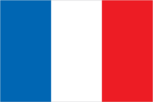
description: features three equal vertical stripes of blue (on the left), white, and red
history: referred to as le tricolore (tricolor), the flag originated in 1790 during the French Revolution, when the traditional white color was combined with the blue and red colors of the Paris militia; during its initial four years of usage (1790-1794), the sequence of colors was inverted (red-white-blue)
Capital
name
Paris
etymology
the name is derived from the Parisii, a Celtic tribe that settled the region from the 3rd century B.C.; the Celtic community evolved into the Roman city of Lutetia Parisiorum (Lutetia of the Parisii); over the years, it transformed into Parisium and ultimately Paris
time zone note
applies solely to metropolitan France; the time zones for its overseas territories are UTC-4 for Guadeloupe and Martinique, UTC-3 for French Guiana, UTC+3 for Mayotte, and UTC+4 for Réunion
time difference
UTC+1 (6 hours ahead of Washington, DC, during Standard Time)
daylight saving time
+1 hour, beginning on the last Sunday in March and concluding on the last Sunday in October
geographic coordinates
48 52 N, 2 20 E
Suffrage
18 years of age; universal
Citizenship
citizenship by birth
no
citizenship by descent only
at least one parent must be a citizen of France
dual citizenship recognized
yes
residency requirement for naturalization
5 years
Constitution
history
many previous; latest effective 4 October 1958
amendment process
initiated by the president of the republic (following a recommendation from the prime minister and Parliament) or by Parliament itself; proposals from Parliament members must be approved by both legislative chambers and subsequently confirmed in a referendum; government-submitted proposals can bypass a referendum if they are presented by the president to Parliament and receive a minimum of three-fifths majority approval from the National Assembly
Country name
etymology
originates from the Latin term Francia, which translates to "Land of the Franks"; the Franks were a collection of Germanic tribes residing along the middle and lower Rhine River during the 3rd century A.D.; the etymology of the tribal name is uncertain but may stem from the Old German word franka, meaning "brave," or from a personal name like Francio or Francus
local long form
République française
local short form
France
conventional long form
French Republic
conventional short form
France
Independence
there is no official independence date: 486 (unification of Frankish tribes under Merovingian kingship); 10 August 843 (establishment of Western Francia following the division of the Carolingian Empire); 14 July 1789 (overthrow of the French monarchy); 22 September 1792 (foundation of the First French Republic); 4 October 1958 (establishment of the Fifth French Republic)
Legal system
civil law; oversight of administrative actions but not legislative ones
Dependent areas
Clipperton Island, French Polynesia, French Southern and Antarctic Lands, New Caledonia, Saint Barthelemy, Saint Martin, Saint Pierre and Miquelon, Wallis and Futuna (8)
Government type
semi-presidential republic
Judicial branch
highest court(s)
Court of Cassation or Cour de Cassation (comprises the court president, 6 divisional presiding judges, 120 trial judges, and 70 deputy judges organized into 6 divisions -- 3 civil, 1 commercial, 1 labor, and 1 criminal); Constitutional Council (composed of 9 members)
subordinate courts
appellate courts or cours d'appel; regional courts or tribunaux judiciaires; first instance courts or tribunaux de proximité; administrative courts
judge selection and term of office
Court of Cassation judges are appointed by the president of the republic from nominations made by the High Council of the Judiciary, presided over by the Court of Cassation and 15 appointed members; judges hold their positions for life; the Constitutional Council includes 3 members designated by the president of the republic and 3 each from the presidents of the National Assembly and Senate; members serve non-renewable 9-year terms with one-third of the council being renewed every 3 years
Executive branch
cabinet
Council of Ministers appointed by the president at the suggestion of the prime minister
chief of state
President Emmanuel MACRON (since 14 May 2017)
election results
2022: Emmanuel MACRON achieved reelection during the second round; share of votes in the first round - Emmanuel MACRON (LREM) 27.8%, Marine LE PEN (RN) 23.2%, Jean-Luc MELENCHON (LFI) 22%, Eric ZEMMOUR (Reconquête) 7.1%, Valerie PECRESSE (LR) 4.8%, Yannick JADOT (EELV) 4.6%, others 10.6%; share of votes in the second round - MACRON 58.5%, LE PEN 41.5%
2017: Emmanuel MACRON was elected president in the second round; share of votes in the first round - Emmanuel MACRON (EM) 24%, Marine LE PEN (FN) 21.3%, Francois FILLON (LR) 20%, Jean-Luc MELENCHON (FI) 19.6%, Benoit HAMON (PS) 6.4%, others 8.7%; share of votes in the second round - MACRON 66.1%, LE PEN 33.9%
head of government
Sébastien LECORNU (since 10 September 2025)
most recent election date
10 April 2022, with a runoff held on 24 April 2022
election/appointment process
the president is directly elected by an absolute majority popular vote over two rounds, if necessary, for a term of five years (eligible for a second term); the prime minister is appointed by the president
expected date of next election
April 2027
National holiday
Fête de la Fédération, 14 July (1790)
National color(s)
blue, white, red
National heritage
total World Heritage Sites
54 (46 cultural, 7 natural, 1 mixed); note - consists of one site located in New Caledonia and another in French Polynesia
selected World Heritage Site locales
Chartres Cathedral (c); Palace and Park of Versailles (c); Mont-Saint-Michel and its Bay (c); Prehistoric Sites and Decorated Caves of the Vézère Valley (c); Pyrénées - Mont Perdu (m); Cistercian Abbey of Fontenay (c); Paris, Banks of the Seine (c); The Loire Valley between Sully-sur-Loire and Chalonnes (c); Pont du Gard (Roman Aqueduct) (c); Amiens Cathedral (c); Palace and Park of Fontainebleau (c); Historic Fortified City of Carcassonne (c); The Maison Carrée of Nîmes (c); Gulf of Porto: Calanche of Piana, Gulf of Girolata, Scandola Reserve (Corsica) (n); Megaliths of Carnac and the shores of Morbihan (c)
Political parties
Citizen and Republican Movement or MRC
Debout la France or DLF
Democratic Movement or MoDem
Ensemble or ENS (electoral coalition including RE, MoDem, Horizons, PRV, UDI)
The Ecologists - the Greens or EELV
French Communist Party or PCF
Horizons
La France Insoumise or FI
Liberties, Independents, Overseas and Territories or LIOT
Movement of Progressives or MDP
National Rally or RN (formerly National Front or FN)
New Democrats or LND (formerly Ecology Democracy Solidarity or EDS)
New Popular Front or NFP (electoral coalition including FI, EELV, PS, PCF)
Radical Party of the Left or PRV
Reconquete or REC
Renaissance or RE
Résistons!
Socialist Party or PS
The Republicans or LR
Union of Democrats and Independents or UDI
Union of Far Right or UXD (electoral coalition of LR, RN)
Legislative branch
legislature name
Parliament (Parlement)
legislative structure
bicameral
National anthem(s)
title
"La Marseillaise" (The Song of Marseille)
history
adopted in 1795, restored in 1870; received its name when the National Guard of Marseille sang the song while marching into Paris in 1792 during the French Revolution; it is one of the world's most recognized anthems
lyrics/music
Claude-Joseph ROUGET de Lisle
National symbol(s)
Gallic rooster, fleur-de-lis, Marianne (the female personification of the nation)
Administrative divisions
18 regions (régions, singular - région); Auvergne-Rhône-Alpes, Bourgogne-Franche-Comté, Bretagne (Brittany), Centre-Val de Loire (Center-Loire Valley), Corse (Corsica), Grand Est (Grand East), Guadeloupe, Guyane (French Guiana), Hauts-de-France (Upper France), Ile-de-France, Martinique, Mayotte, Normandie (Normandy), Nouvelle-Aquitaine (New Aquitaine), Occitanie (Occitania), Pays de la Loire (Lands of the Loire), Provence-Alpes-Côte d'Azur, Réunion
Legislative branch - lower chamber
chamber name
National Assembly (Assemblée nationale)
term in office
5 years
number of seats
577 (all directly elected)
electoral system
plurality/majority
scope of elections
full renewal
most recent election date
9/24/2023
expected date of next election
June 2029
percentage of women in chamber
36.2%
parties elected and seats per party
New Popular Front (NFP)/UG (178); Ensemble (presidential majority) (150); National Rally (RN) (125); The Republicans (LR) (39); Other (85)
Legislative branch - upper chamber
chamber name
Senate (Sénat)
term in office
6 years
number of seats
348 (all indirectly elected)
scope of elections
partial renewal
most recent election date
6/30/2024 to 7/7/2024
expected date of next election
September 2026
percentage of women in chamber
37.1%
Diplomatic representation in the US
FAX
[1] (202) 944-6166
chancery
4101 Reservoir Road NW, Washington, DC 20007
telephone
[1] (202) 944-6000
chief of mission
Ambassador Laurent BILI (since 19 April 2023)
consulate(s) general
Atlanta, Boston, Chicago, Houston, Los Angeles, Miami, New Orleans, New York, San Francisco
email address and website
[email protected]
https://franceintheus.org/
Diplomatic representation from the US
FAX
[33] (1) 42-66-97-83
embassy
2 avenue Gabriel, 75008 Paris
telephone
[33] (1) 43-12-22-22, [33] (1) 42-66-97-83
consulate(s)
Bordeaux, Lyon, Rennes
mailing address
9200 Paris Place, Washington DC 20521-9200
chief of mission
Ambassador Charles KUSHNER (in office since 11 July 2025); also holds accreditation for Monaco
consulate(s) general
Marseille, Strasbourg
email address and website
[email protected]
https://fr.usembassy.gov/
International organization participation
ADB (nonregional member), AfDB (nonregional member), Arctic Council (observer), Australia Group, BDEAC, BIS, BSEC (observer), CBSS (observer), CE, CERN, EAPC, EBRD, ECB, EIB, EITI (implementing country), EMU, ESA, EU, FAO, FATF, FZ, G-5, G-7, G-8, G-10, G-20, IADB, IAEA, IBRD, ICAO, ICC (national committees), ICCt, ICRM, IDA, IEA, IFAD, IFC, IFRCS, IGAD (partners), IHO, ILO, IMF, IMO, IMSO, InOC, Interpol, IOC, IOM, IPU, ISO, ITSO, ITU, ITUC (NGOs), MIGA, MINURSO, MINUSTAH, MONUSCO, NATO, NEA, NSG, OAS (observer), OECD, OIF, OPCW, OSCE, Pacific Alliance (observer), Paris Club, PCA, PIF (partner), Schengen Convention, SELEC (observer), SPC, UN, UNCTAD, UNESCO, UNHCR, UNHRC, UNIDO, UNIFIL, Union Latina, UNMIL, UNOCI, UNOOSA, UNRWA, UN Security Council (permanent), UNTSO, UNWTO, UPU, Wassenaar Arrangement, WCO, WFTU (NGOs), WHO, WIPO, WMO, WTO, ZC
International law organization participation
has not provided an ICJ jurisdiction declaration; acknowledges ICCt jurisdiction
Economy
Budget
revenues
$1.29 trillion (2023 est.)
expenditures
$1.447 trillion (2023 est.)
Exports
Exports 2022
$1.021 trillion (2022 est.)
Exports 2023
$1.05 trillion (2023 est.)
Exports 2024
$1.071 trillion (2024 est.)
Imports
Imports 2022
$1.092 trillion (2022 est.)
Imports 2023
$1.094 trillion (2023 est.)
Imports 2024
$1.074 trillion (2024 est.)
Industries
machinery, chemicals, automobiles, metallurgy, aircraft, electronics, textiles, food processing, tourism
Labor force
31.725 million (2024 est.)
Public debt
Public debt 2023
98.5% of GDP (2023 est.)
Remittances
Remittances 2022
1.2% of GDP (2022 est.)
Remittances 2023
1.2% of GDP (2023 est.)
Remittances 2024
1.2% of GDP (2024 est.)
Exchange rates
Currency
euros (EUR) per US dollar -
Exchange rates 2020
0.876 (2020 est.)
Exchange rates 2021
0.845 (2021 est.)
Exchange rates 2022
0.95 (2022 est.)
Exchange rates 2023
0.925 (2023 est.)
Exchange rates 2024
0.924 (2024 est.)
Economic overview
high-income, developed EU economy and member of the eurozone; robust sectors in tourism, aircraft manufacturing, pharmaceuticals, and industry; significant public debt; ongoing reforms in pension systems; moving towards a green economy through the "France 2030" initiative
Unemployment rate
Unemployment rate 2022
7.4% (2022 est.)
Unemployment rate 2023
7.4% (2023 est.)
Unemployment rate 2024
7.4% (2024 est.)
Exports - partners
Germany 11%, Italy 9%, USA 8%, Belgium 8%, Spain 7% (2023)
Imports - partners
Germany 15%, Belgium 11%, Netherlands 9%, Spain 8%, Italy 8% (2023)
Real GDP per capita
Real GDP per capita 2022
$53,700 (2022 est.)
Real GDP per capita 2023
$54,000 (2023 est.)
Real GDP per capita 2024
$54,500 (2024 est.)
Real GDP growth rate
Real GDP growth rate 2022
2.6% (2022 est.)
Real GDP growth rate 2023
0.9% (2023 est.)
Real GDP growth rate 2024
1.2% (2024 est.)
Agricultural products
wheat, sugar beets, milk, maize, barley, potatoes, grapes, rapeseed, pork, sunflower seeds (2023)
Exports - commodities
aircraft, cars, packaged medicine, gas turbines, vehicle parts/accessories (2023)
Imports - commodities
cars, natural gas, crude petroleum, refined petroleum, garments (2023)
Current account balance
Current account balance 2022
-$33.069 billion (2022 est.)
Current account balance 2023
-$30.334 billion (2023 est.)
Current account balance 2024
$12.382 billion (2024 est.)
Taxes and other revenues
23.1% (of GDP) (2023 est.)
GDP (official exchange rate)
$3.162 trillion (2024 est.)
GDP - composition, by end use
household consumption
53.4% (2023 est.)
government consumption
23.1% (2023 est.)
investment in inventories
0.1% (2023 est.)
investment in fixed capital
23.1% (2023 est.)
exports of goods and services
34.3% (2023 est.)
imports of goods and services
-36.3% (2023 est.)
Population below poverty line
15.6% (2021 est.)
Average household expenditures
on food
12.6% of household expenditures (2023 est.)
on alcohol and tobacco
3.5% of household expenditures (2023 est.)
Inflation rate (consumer prices)
Inflation rate (consumer prices) 2022
5.2% (2022 est.)
Inflation rate (consumer prices) 2023
4.9% (2023 est.)
Inflation rate (consumer prices) 2024
2% (2024 est.)
Industrial production growth rate
0.7% (2024 est.)
Real GDP (purchasing power parity)
Real GDP (purchasing power parity) 2022
$3.655 trillion (2022 est.)
Real GDP (purchasing power parity) 2023
$3.689 trillion (2023 est.)
Real GDP (purchasing power parity) 2024
$3.732 trillion (2024 est.)
Youth unemployment rate (ages 15-24)
male
17.1% (2024 est.)
total
16.6% (2024 est.)
female
16% (2024 est.)
Reserves of foreign exchange and gold
Reserves of foreign exchange and gold 2022
$242.416 billion (2022 est.)
Reserves of foreign exchange and gold 2023
$240.792 billion (2023 est.)
Reserves of foreign exchange and gold 2024
$282.857 billion (2024 est.)
GDP - composition, by sector of origin
industry
17.5% (2024 est.)
services
70.4% (2024 est.)
agriculture
1.4% (2024 est.)
Household income or consumption by percentage share
lowest 10%
3% (2022 est.)
highest 10%
24.6% (2022 est.)
Gini Index coefficient - distribution of family income
Gini Index coefficient - distribution of family income 2022
31.2 (2022 est.)
Energy
Coal
exports
64,000 metric tons (2023 est.)
imports
10.347 million metric tons (2023 est.)
production
2.157 million metric tons (2023 est.)
consumption
12.57 million metric tons (2023 est.)
proven reserves
160 million metric tons (2023 est.)
Petroleum
total petroleum production
80,000 bbl/day (2023 est.)
crude oil estimated reserves
61.719 million barrels (2021 est.)
refined petroleum consumption
1.536 million bbl/day (2024 est.)
Electricity
exports
76.207 billion kWh (2023 est.)
imports
25.107 billion kWh (2023 est.)
consumption
415.542 billion kWh (2023 est.)
installed generating capacity
151.463 million kW (2023 est.)
transmission/distribution losses
35.282 billion kWh (2023 est.)
Natural gas
exports
13.584 billion cubic meters (2023 est.)
imports
46.909 billion cubic meters (2023 est.)
production
17.928 million cubic meters (2023 est.)
consumption
33.238 billion cubic meters (2023 est.)
proven reserves
7.787 billion cubic meters (2021 est.)
Nuclear energy
Number of operational nuclear reactors
57 (2025)
Percent of total electricity production
64.8% (2023 est.)
Net capacity of operational nuclear reactors
61.37GW (2025 est.)
Number of nuclear reactors permanently shut down
14 (2025)
Electricity access
electrification - total population
100% (2022 est.)
Energy consumption per capita
Total energy consumption per capita 2023
123.526 million Btu/person (2023 est.)
Electricity generation sources
wind
10.4% of total installed capacity (2023 est.)
solar
4.5% of total installed capacity (2023 est.)
nuclear
63.9% of total installed capacity (2023 est.)
fossil fuels
7.9% of total installed capacity (2023 est.)
tide and wave
0.1% of total installed capacity (2023 est.)
hydroelectricity
10.8% of total installed capacity (2023 est.)
biomass and waste
2.3% of total installed capacity (2023 est.)
Communications
Internet users
percent of population
87% (2023 est.)
Broadcast media
a combination of both state-run and privately held television stations; government-operated TV stations run 4 networks and have partial stakes in various thematic cable/satellite channels as well as international channels; a significant number of privately owned local and regional TV stations; satellite and cable services offering multiple channels; the public broadcaster Radio France manages 7 national networks, along with a range of regional networks and services catering to overseas territories and foreign audiences; Radio France Internationale, which operates under the Ministry of Foreign Affairs, is a prominent international broadcaster; a considerable number of commercial FM stations
Internet country code
metropolitan France - .fr; French Guiana - .gf; Guadeloupe - .gp; Martinique - .mq; Mayotte - .yt; Reunion - .re
Telephones - fixed lines
total subscriptions
37.3 million (2023 est.)
subscriptions per 100 inhabitants
56 (2023 est.)
Telephones - mobile cellular
total subscriptions
77.5 million (2023 est.)
subscriptions per 100 inhabitants
117 (2023 est.)
Broadband - fixed subscriptions
total
32.3 million (2023 est.)
subscriptions per 100 inhabitants
49 (2023 est.)
Transportation
Ports
large
6
small
22
medium
12
key ports
Bayonne, Bordeaux, Boulogne-sur-Mer, Dunkerque Port Est, Dunkerque Port Ouest, La Pallice, La Rochelle, Les Sables d'Olonne, Lorient, Montoir, Nantes, Le Havre, Rouen, Rade de Brest, Rade de Cherbourg, Rochefort, St. Nazaire, Toulon
very small
26
total ports
66 (2024)
ports with oil terminals
31
Airports
1,218 (2025)
Railways
total
27,860 km (2020) 16,660 km electrified
narrow gauge
-5 km
Heliports
405 (2025)
Merchant marine
total
553 (2023)
by type
container ship 32, general cargo 48, oil tanker 25, other 448
Transportation - note
Initiated in 1988 and finalized in 1994, the Channel Tunnel (commonly referred to as the Chunnel) is a 50.5-km (31.4-mi) rail tunnel beneath the English Channel at the Strait of Dover; it connects Folkestone, Kent, in England to Coquelles, Pas-de-Calais, in northern France and serves as the sole fixed connection between the island of Great Britain and the European mainland.
Civil aircraft registration country code prefix
F
Military & Security
Military - note
The French military possesses a worldwide presence and undertakes a diverse array of missions and responsibilities, including the protection of French territory, citizens, and interests, as well as upholding France's obligations to NATO, European security, and UN-led international peacekeeping efforts. It stands as the largest military force within the EU and plays a prominent role in the EU security structure, in addition to NATO. In recent years, the French military has been actively engaged in coalition peacekeeping and various security missions across regions like Africa, the Middle East, and the Balkans, frequently taking a lead role. The military regularly carries out extensive exercises and participates in numerous bilateral and multinational training operations. Furthermore, it has a domestic mission focused on security, which encompasses providing heightened protection at sensitive locations and large events, along with support during national emergencies or disasters, such as combating forest fires. Recently, its defense responsibilities have been broadened to encompass cyber and space domains.
In 2010, France and the UK formalized their defense and security collaboration through a declaration that emphasized enhanced military interoperability and the establishment of a Combined Joint Expeditionary Force (CJEF), which serves as a deployable, combined Anglo-French military unit intended for a wide range of crisis situations, inclusive of high-intensity operations, peacekeeping, disaster response, and humanitarian aid. The CJEF does not maintain standing forces but can be mobilized on short notice for French-UK bilateral missions, NATO, EU, UN, or other operations (2025).
Military deployments
France typically has up to 30,000 total air, ground, and naval forces deployed on permanent or temporary foreign missions; up to 10,000 are permanently deployed, including Djibouti (1,500); French Guyana (2,600); French Polynesia (1,000); French West Indies (1,000); Reunion Island (2,100); UAE (800)
other non-permanent deployments include military missions under NATO, the EU, and the UN, as well as some unilateral operations, in such places as Europe, Africa, and the Middle East and adjacent waters (2025)
Military expenditures
Military Expenditures 2021
1.9% of GDP (2021 est.)
Military Expenditures 2022
1.9% of GDP (2022 est.)
Military Expenditures 2023
1.9% of GDP (2023 est.)
Military Expenditures 2024
2% of GDP (2024 est.)
Military Expenditures 2025
2.1% of GDP (2025 est.)
Military and security forces
French Armed Forces (Forces Armées Françaises): Army (l'Armee de Terre; includes Foreign Legion), Navy (Marine Nationale), Air and Space Force (l'Armee de l’Air et de l’Espace; includes Air Defense), National Guard (Garde Nationale), National Gendarmerie (Gendarmerie Nationale) (2025).
Military service age and obligation
Typically, the age range for both men and women is 17-30, with some variations depending on service, position, and whether they are enlisted or officers; for the National Gendarmerie, the age range is 17-40. The basic service contract lasts for 12 months, and conscription was abolished in 2001 (2025).
Military equipment inventories and acquisitions
The arsenal of the French military is predominantly composed of weapons systems manufactured domestically, with some developed in collaboration with other European nations; a smaller portion of armaments is sourced from additional Western nations, notably the United States; France boasts a substantial and advanced defense sector that is capable of producing a comprehensive range of military weapon systems for air, land, and naval forces (2025)
Military and security service personnel strengths
around 200,000 personnel in active duty Armed Forces; around 150,000 members of the National Gendarmerie; around 80,000 individuals in the National Guard (2025)
Terrorism
Terrorist group(s)
Islamic Revolutionary Guard Corps/Qods Force; Islamic State of Iraq and ash-Sham (ISIS); al-Qa'ida
Transnational Issues
Refugees and internally displaced persons
IDPs
59 (2024 est.)
refugees
810,325 (2024 est.)
stateless persons
2,634 (2024 est.)
Space
Space launch site(s)
Guiana Space Center, located in Kourou, French Guiana, functions as the launch site for the ESA; it is noteworthy that France conducted rocket launches from Algeria before the Guiana Space Center's establishment in 1969 (2025)
Space agency/agencies
National Center for Space Studies, known as Centre National d'Etudes Spatiales (CNES), was founded in 1961 (2025)
Space program overview
possesses one of the largest space programs in Europe and ranks among the leading contributors to the ESA; maintains independent capabilities across all sectors, with the exception of autonomous manned space flight; has the ability to design, launch, and manage a variety of space/satellite launch vehicles (SLVs) and spacecraft, which encompass exploratory probes and a comprehensive array of satellites; transferred astronaut training responsibilities to the ESA in 2001; serves as the location for the ESA headquarters and its launch facilities; engages in collaborative international space initiatives such as the Square Kilometer Array radio telescope and the International Space Station; collaborates with numerous space agencies and commercial space enterprises, including those from China, Egypt, various ESA and EU member nations, India, Indonesia, Israel, Japan, Mexico, Russia, the UAE, the US, and multiple African nations; features a significant commercial space sector involved in satellite development and payloads, launch services, and a variety of other space-related technologies and capabilities (2025)
Key space-program milestones
early 1960s - initiated a rocket program and began launching animals into space
1965 - successfully sent the first domestically manufactured satellite (Asterix) into orbit aboard a French Diamant rocket, becoming the third nation to achieve this after the Soviet Union and the US
1973 - commenced the development of the Ariane heavy-lift satellite launch vehicle (SLV) in collaboration with other European nations, notably Germany and the UK; Ariane would evolve into the ESA's SLV
1970s-1990s - engaged in the development of a space plane/shuttle program (Hermes)
1982 - marked the launch of the first French astronaut into space aboard a Soviet rocket
1986 - initiated the first joint European Earth observation/remote sensing program (SPOT)
2018 - launched the Spaceship FR project to establish foundations for robotic and crewed missions to the Moon and Mars
2024 - witnessed the inaugural launch of the Ariane-6 SLV, which claimed to be the world's first satellite to facilitate ground communications through laser technology