CapitalBuenos Aires
LanguagesSpanish , Italian, English, German, French, indigenous languages
CurrencyArgentine pesos
Governmentpresidential republic
Bamwor Indexes
Argentina — Q1 2026
IBEUBamwor Urban Scale Index
6.37%
Rank #197 of 237
View full ranking →
IBCPBamwor Population Concentration Index
15.61%
Rank #184 of 237
View full ranking →
IBDABamwor Settlement Density Index
5.35per 1K km²
Rank #221 of 241
View full ranking →
IBCXBamwor Country Complexity Index
74.51/100
Rank #19 of 234
View full ranking →
IBEEBamwor Economic Stability Index
85.87/100
Rank #125 of 220
View full ranking →
IBFMBamwor Military Strength Index
57.24/100
Rank #42 of 124
View full ranking →
IBDIBamwor Digital Infrastructure Index
77.84/100
Rank #77 of 206
View full ranking →
IBEDBamwor Education Index
82.41/100
Rank #16 of 119
View full ranking →
IBSABamwor Healthcare Index
73.87/100
Rank #69 of 218
View full ranking →
Argentina Intelligence Report
Download PDF with 20+ statistics, rankings & proprietary indices
Introduction
Background
In 1816, the United Provinces of the Río de la Plata proclaimed their independence from Spanish rule. Following the separations of Bolivia, Paraguay, and Uruguay, the territory that remained was established as Argentina. The demographic and cultural landscape of the nation was significantly influenced by European immigrants, particularly from Italy and Spain, who constituted the largest influx of new residents between 1860 and 1930. Up until approximately the mid-20th century, Argentina's historical narrative was characterized by episodes of domestic political turmoil and strife between civilian and military groups.
Post-World War II, former President Juan Domingo PERÓN, who was the architect of the Peronist political movement, ushered in a period of populism, serving three non-consecutive presidential terms until his passing in 1974. Throughout the PERÓN administration, both direct and indirect military involvement in governance culminated in a military junta seizing control in 1976. The junta's attempt to forcibly capture the Falkland Islands (Islas Malvinas) from the United Kingdom in 1982 was unsuccessful. Democracy was restored in 1983 and has endured despite facing numerous obstacles, notably a severe economic crisis in 2001-02 that sparked violent public demonstrations and the successive resignations of multiple presidents. The years from 2003 to 2015 were marked by Peronist governance under Néstor KIRCHNER (2003-07) and his wife Cristina FERNÁNDEZ DE KIRCHNER (2007-15), who presided over several years of robust economic growth (2003-11) followed by a gradual decline in the government's fiscal health, leading to economic stagnation and isolation. A brief phase of economic reform and global reintegration occurred under Mauricio MACRI (2015-19), but a recession in 2018-19 and dissatisfaction with MACRI's economic strategies paved the way for a new Peronist administration in 2019 headed by President Alberto FERNÁNDEZ and Vice President Cristina FERNÁNDEZ DE KIRCHNER. Argentina's substantial public debt, inflationary pressures linked to the pandemic, and systemic monetary issues triggered the events leading to the 2023 elections, which concluded with President Javier MILEI's electoral victory. Subsequently, Argentina has eliminated half of its government agencies and is pursuing shock therapy to reform taxation and monetary policies.
Geography
Area
land
2,736,690 sq km
water
43,710 sq km
total
2,780,400 sq km
Climate
predominantly temperate; arid in the southeast; subantarctic in the southwest
Terrain
the expansive Pampas plains in the northern region, a flat to rolling plateau in the southern Patagonia, and the mountainous Andes along the western frontier
Land use
other
40.4% (2023 est.)
forest
17.2% (2023 est.)
agricultural land
42.4% (2023 est.)
agricultural land: arable land
arable land: 14.8% (2023 est.)
agricultural land: permanent crops
permanent crops: 0.4% (2023 est.)
agricultural land: permanent pasture
permanent pasture: 27.3% (2023 est.)
Location
Located in the southern part of South America, it is bordered by the South Atlantic Ocean, lying between Chile and Uruguay
Coastline
4,989 km
Elevation
lowest point
Laguna del Carbón (situated between Puerto San Julián and Comandante Luis Piedra Buena in Santa Cruz province) -105 m
highest point
Cerro Aconcagua (found in the northwestern area of Mendoza province; the highest elevation in South America) 6,962 m
mean elevation
595 m
Irrigated land
13,910 sq km (2018)
Major aquifers
Guaraní Aquifer System
Map references
South America
Land boundaries
total
11,968 km
border countries
Borders with Bolivia 942 km; Brazil 1,263 km; Chile 6,691 km; Paraguay 2,531 km; Uruguay 541 km
Maritime claims
contiguous zone
24 nm
territorial sea
12 nm
continental shelf
200 nm or to the edge of the continental margin
exclusive economic zone
200 nm
Natural hazards
The areas around San Miguel de Tucumán and Mendoza in the Andes are prone to seismic activity; pamperos are fierce windstorms that can affect the pampas and northeastern regions; some regions face significant flooding
volcanism: volcanic events occur in the Andes Mountains near the Chilean border; Copahue (2,997 m) last erupted in 2000; other historically active volcanoes include Llullaillaco, Maipo, Planchón-Peteroa, San José, Tromen, Tupungatito, and Viedma
Geography - note
the second-largest nation in South America (following Brazil); a strategically important position concerning maritime routes between the South Atlantic and South Pacific Oceans (Strait of Magellan, Beagle Channel, Drake Passage); a variety of geographical landscapes ranging from tropical regions in the north to tundra in the extreme south; Cerro Aconcagua stands as the tallest mountain in the Western Hemisphere, while Laguna del Carbón is the lowest point in the Western Hemisphere; shares Iguazú Falls, the largest waterfall system globally, with Brazil
Natural resources
the fertile pampas plains, along with resources such as lead, zinc, tin, copper, iron ore, manganese, petroleum, uranium, and arable land
Area - comparative
approximately 70% of the size of the United States
Geographic coordinates
34 00 S, 64 00 W
Population distribution
around one-third of the populace resides in Buenos Aires; clusters of population are found throughout the northern and central regions; the southern Patagonia area remains largely uninhabited
Major lakes (area sq km)
salt water lake(s)
Laguna Mar Chiquita - 1,850 sq km;
fresh water lake(s)
Lago Buenos Aires (jointly owned with Chile) - 2,240 sq km; Lago Argentino - 1,410 sq km; Lago Viedma - 1,090 sq km; Lago San Martín (shared with Chile) - 1,010 sq km; Lago Colhué Huapi - 800 sq km; Lago Fagnano (shared with Chile) - 590 sq km; Lago Nahuel Huapi - 550 sq km
Major watersheds (area sq km)
Atlantic Ocean drainage
Paraná (2,582,704 sq km)
Major rivers (by length in km)
Río de la Plata/Paraná river mouth (shared with Brazil [s], Paraguay, and Uruguay) - 4,880 km; Paraguay (shared with Brazil [s], and Paraguay [m]) - 2,549 km; Uruguay (shared with Brazil [s] and Uruguay [m]) - 1,610 km
note: [s] after the country name denotes river source; [m] after the country name denotes river mouth
People & Society
Literacy
male
99.1% (2020 est.)
female
99.2% (2020 est.)
total population
99.1% (2020 est.)
Languages
Languages
Spanish (official), Italian, English, German, French, indigenous languages (Quechua, Guarani, Mapudungun)
major-language sample(s)
La Libreta Informativa del Mundo, la fuente indispensable de información básica. (Spanish)
The World Factbook, the indispensable source for basic information.
Religions
Roman Catholic 62.9%, Evangelical 15.3% (including Pentecostal 13%, other Evangelical 2.3%), Jehovah's Witness and Church of Jesus Christ 1.4%, other religions 1.2% (such as Muslim, Jewish), none 18.9% (which includes agnostic and atheist), unspecified 0.3% (2019 estimate)
Sex ratio
at birth
1.07 male(s)/female
0-14 years
1.06 male(s)/female
15-64 years
1.01 male(s)/female
total population
0.98 male(s)/female (2024 est.)
65 years and over
0.74 male(s)/female
Birth rate
10.47 births/1,000 population (2025 est.)
Death rate
7.94 deaths/1,000 population (2025 est.)
Median age
male
32.1 years
total
34.6 years (2025 est.)
female
34.6 years
Population
male
22,535,980
total
45,418,098 (2025 est.)
female
22,882,118
Nationality
noun
Argentine(s)
adjective
Argentine
Tobacco use
male
26.9% (2025 est.)
total
21.9% (2025 est.)
female
17.1% (2025 est.)
Urbanization
urban population
92.5% of total population (2023)
rate of urbanization
0.97% annual rate of change (2020-25 est.)
Age structure
0-14 years
23.3% (male 5,632,983/female 5,301,778)
15-64 years
63.9% (male 15,071,215/female 14,956,069)
65 years and over
12.8% (2024 est.) (male 2,570,596/female 3,461,743)
Ethnic groups
European (predominantly of Spanish and Italian heritage) and Mestizo (mixed European and Indigenous lineage) 97.2%, Indigenous 2.4%, of African descent 0.4% (2010 estimate)
Child marriage
women married by age 15
2.4% (2020)
women married by age 18
15.5% (2020)
Dependency ratios
total dependency ratio
49.9 (2025 est.)
youth dependency ratio
30.3 (2025 est.)
potential support ratio
5.1 (2025 est.)
elderly dependency ratio
19.6 (2025 est.)
Physician density
5.11 physicians/1,000 population (2023)
Health expenditure
Health expenditure (as % of GDP)
9.7% of GDP (2021)
Health expenditure (as % of national budget)
15.2% of national budget (2022 est.)
Net migration rate
0.06 migrant(s)/1,000 population (2025 est.)
Hospital bed density
3.3 beds/1,000 population (2021 est.)
Total fertility rate
1.43 children born/woman (2025 est.)
Drinking water source
improved: urban
urban: 99.8% of population (2022 est.)
unimproved: total
total: (2020 est.) NA
unimproved: urban
urban: 0.2% of population (2022 est.)
Education expenditure
Education expenditure (% GDP)
5.9% of GDP (2023 est.)
Education expenditure (% national budget)
14% national budget (2023 est.)
Infant mortality rate
male
9.9 deaths/1,000 live births
total
7.4 deaths/1,000 live births (2025 est.)
female
7.9 deaths/1,000 live births
Population growth rate
0.26% (2025 est.)
Gross reproduction rate
0.69 (2025 est.)
Population distribution
approximately one third of the population resides in Buenos Aires; clusters of population can be found in various northern and central regions; the southern area of Patagonia remains largely uninhabited
Life expectancy at birth
male
75.8 years
female
82 years
total population
78.8 years (2024 est.)
Maternal mortality ratio
33 deaths/100,000 live births (2023 est.)
Sanitation facility access
improved: urban
urban: 100% of population (2022 est.)
unimproved: urban
urban: 0% of population (2022 est.)
Alcohol consumption per capita
beer
3.62 liters of pure alcohol (2019 est.)
wine
2.88 liters of pure alcohol (2019 est.)
total
7.95 liters of pure alcohol (2019 est.)
spirits
0.72 liters of pure alcohol (2019 est.)
other alcohols
0.72 liters of pure alcohol (2019 est.)
Major urban areas - population
15.490 million BUENOS AIRES (capital), 1.612 million Córdoba, 1.594 million Rosario, 1.226 million Mendoza, 1.027 million San Miguel de Tucumán, 914,000 La Plata (2023)
Obesity - adult prevalence rate
28.3% (2016)
Currently married women (ages 15-49)
49.7% (2020 est.)
Children under the age of 5 years underweight
2% (2018 est.)
School life expectancy (primary to tertiary education)
male
17 years (2022 est.)
total
19 years (2022 est.)
female
21 years (2022 est.)
Environment
Climate
predominantly temperate; dry in the southeast; subantarctic in the southwest
Land use
other
40.4% (2023 est.)
forest
17.2% (2023 est.)
agricultural land
42.4% (2023 est.)
agricultural land: arable land
arable land: 14.8% (2023 est.)
agricultural land: permanent crops
permanent crops: 0.4% (2023 est.)
agricultural land: permanent pasture
permanent pasture: 27.3% (2023 est.)
Urbanization
urban population
92.5% of total population (2023)
rate of urbanization
0.97% annual rate of change (2020-25 est.)
Methane emissions
other
89.9 kt (2019-2021 est.)
waste
631 kt (2019-2021 est.)
energy
1,553.3 kt (2022-2024 est.)
agriculture
3,035.5 kt (2019-2021 est.)
Waste and recycling
municipal solid waste generated annually
17.911 million tons (2024 est.)
percent of municipal solid waste recycled
9.6% (2022 est.)
Environmental issues
deforestation; soil deterioration (erosion, salinization); desertification; air contamination; water contamination
Total water withdrawal
municipal
5.85 billion cubic meters (2022 est.)
industrial
4 billion cubic meters (2022 est.)
agricultural
27.93 billion cubic meters (2022 est.)
Carbon dioxide emissions
total emissions
198.141 million metric tonnes of CO2 (2023 est.)
from consumed natural gas
90.122 million metric tonnes of CO2 (2023 est.)
from coal and metallurgical coke
5.022 million metric tonnes of CO2 (2023 est.)
from petroleum and other liquids
102.998 million metric tonnes of CO2 (2023 est.)
Particulate matter emissions
12 micrograms per cubic meter (2019 est.)
Total renewable water resources
876.24 billion cubic meters (2022 est.)
International environmental agreements
party to
Antarctic-Environmental Protection, Antarctic-Marine Living Resources, Antarctic Seals, Antarctic Treaty, Biodiversity, Climate Change, Climate Change-Kyoto Protocol, Climate Change-Paris Agreement, Comprehensive Nuclear Test Ban, Desertification, Endangered Species, Environmental Modification, Hazardous Wastes, Law of the Sea, Marine Dumping-London Convention, Nuclear Test Ban, Ozone Layer Protection, Ship Pollution, Wetlands, Whaling
signed, but not ratified
Marine Dumping-London Protocol, Marine Life Conservation
Government
Flag
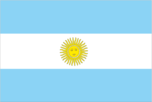
description: three equal horizontal stripes of sky blue (top), white, and sky blue; in the center of the white stripe is a shining yellow sun featuring a human face, referred to as the Sun of May
meaning: the colors symbolize the clear skies and the snow of the Andes Mountains; the sun honors the first significant demonstration advocating for independence on 25 May 1810, when sunlight pierced through the clouds; the sun is crafted to resemble Inti, the Incan deity of the sun
Capital
name
Buenos Aires
etymology
the name means "fair winds" in Spanish; the complete original title, Nuestra Senora Santa Maria de los Buenos Aires, was initially assigned solely to the port; the city was established independently of the port in 1536 and designated Ciudad de la Santissima Trinidad (City of the Most Holy Trinity); the abbreviated version of the port's name eventually evolved into the city's title
time difference
UTC-3 (2 hours ahead of Washington, DC, during Standard Time)
geographic coordinates
34 36 S, 58 22 W
Suffrage
ages 18-70; mandatory and universal; ages 16-17: optional for national elections
Citizenship
citizenship by birth
yes
citizenship by descent only
yes
dual citizenship recognized
yes
residency requirement for naturalization
2 years
Constitution
history
several previous; latest effective 11 May 1853
amendment process
a declaration for proposed amendments necessitates a two-thirds majority vote from both chambers of the National Congress, followed by endorsement from an ad hoc, multi-member constitutional convention
Country name
etymology
the name originates from one of the Spanish terms for "silver," though its exact source is uncertain; it may have referred to the land adjacent to the Rio de la Plata ("Silver River"), a significant river that delineates the boundary between Argentina and Uruguay; another potential origin could be the 16th-century Spanish explorers who mistakenly thought the silver ornaments acquired from locals came from a nearby silver source
local long form
República Argentina
local short form
Argentina
conventional long form
Argentine Republic
conventional short form
Argentina
Independence
9 July 1816 (from Spain)
Legal system
civil law framework influenced by Western European legal traditions
Government type
presidential republic
Judicial branch
highest court(s)
Supreme Court or Corte Suprema (comprises the court president, vice president, 2 judges, and 1 vacancy)
subordinate courts
federal appellate, district, and territorial courts; provincial supreme, appellate, and first-instance courts
judge selection and term of office
judges are appointed by the president and must be confirmed by the Senate; ministers can continue serving until mandatory retirement at age 75; extensions beyond 75 require renomination by the president and Senate approval
Executive branch
cabinet
Cabinet appointed by the president
chief of state
President Javier Gerardo MILEI (since 10 December 2023)
election results
2023: Javier Gerardo MILEI elected president in second round; percent vote in first round - Sergio Tomás MASSA (FR) 36.7%, Javier Gerardo MILEI (PL) 30%, Patricia BULLRICH 23.8% (JxC/PRO), Juan SCHIARETTI (PJ) 6.8%, Myriam BREGMAN (PTS) 2.7%; percent of vote in second round - Javier Gerardo MILEI 55.7%, Sergio Tomás MASSA 44.3%
2019: Alberto Ángel FERNÁNDEZ elected president; percent of vote - Alberto Angel FERNÁNDEZ (TODOS) 48.1%, Mauricio MACRI (PRO) 40.4%, Roberto LAVAGNA (independent) 6.2%, other 5.3%
head of government
President Javier Gerardo MILEI (since 10 December 2023)
most recent election date
22 October 2023, with a runoff on 19 November 2023
election/appointment process
the president and vice president are elected directly on the same ballot by a qualified majority vote (to win, a candidate must garner at least 45% of the votes, or at least 40% of the votes along with a 10-point lead over the runner-up; if neither condition is met, a second round is conducted); the president serves a term of 4 years (eligible for a consecutive second term)
expected date of next election
October 2027
National holiday
Revolution Day (May Revolution Day), 25 May (1810)
National color(s)
sky blue, white
National heritage
total World Heritage Sites
12 (7 cultural, 5 natural)
selected World Heritage Site locales
Los Glaciares National Park (n); Jesuit Missions of the Guaranis (c); Iguazú National Park (n); Cueva de las Manos (c); Valdés Península (n); Ischigualasto/Talampaya National Parks (n); Jesuit Block and Estancias of Córdoba (c); Quebrada de Humahuaca (c); Qhapaq Ñan/Andean Road System (c)
Political parties
Avanza Libertad, abbreviated as AL
Civic Coalition ARI, referred to as CC-ARI
Consenso Federal, known as CF (Federal Consensus)
Frente Cívico por Santiago, abbreviated as Civic Front for Santiago
Frente de Izquierda y de los Trabajadores – Unidad, also known as FIT-U (a coalition of leftist parties within the lower house; encompasses PTS, PO, and MST)
Frente de la Concordia Misionero, abbreviated as FRCS (Front for the Renewal of Social Concord)
Frente Renovador, referred to as FR (Renewal Front)
Generación por un Encuentro Nacional, known as GEN (Generation for a National Encounter)
Hacemos por Córdoba, abbreviated as HC (We do for Cordoba)
Hacemos por Nuestro Pais, referred to as NHP (We Do For Our Country)
Juntos por el Cambio, abbreviated as JxC (Together for Change); includes CC-ARI, PRO, and UCR; noted as the primary opposition coalition since 2019
Juntos Somos Río Negro, known as JSRN (Together We Are Rio Negro)
Partido Justicialista, abbreviated as PJ (Justicialist Party)
La Cámpora
La Libertad Avanza, referred to as LLA (The Liberty Advances)
Movimiento Popular Neuquino, abbreviated as MPN (Neuquén People's Movement)
Movimiento Socialista de los Trabajadores, known as MST (Workers' Socialist Movement)
Partido de los Trabajadores Socialistas, abbreviated as PTS (Socialist Workers' Party)
Partido Demócrata, referred to as PDN (Democratic Party)
Partido Libertario, abbreviated as PL (Libertarian Party); noted as a founding member of the coalition La Libertad Avanza
Partido Obrero, known as PO (Workers' Party)
Partido Socialista, abbreviated as PS (Socialist Party)
Propuesta Republicana, known as PRO (Republican Proposal)
Unidad Federal, a coalition of provincial parties in the lower house; includes FRCS and JSRN
Unión Cívica Radical, abbreviated as UCR (Radical Civic Union)
Unión por la Patria, known as UP (Union for the Homeland) (previously Frente de Todos or FdT (Everyone's Front)) (includes FR, La Cámpora, and PJ); noted as the ruling coalition since 2019; comprises various national and provincial Peronist political parties
Vamos con Vos, abbreviated as VcV (Let's Go with You)
Legislative branch
legislature name
National Congress (Congreso de la nación)
legislative structure
bicameral
National anthem(s)
title
"Himno Nacional Argentino" (Argentine National Anthem)
history
adopted in 1813; Vicente LOPEZ drew inspiration to compose the anthem after witnessing a theatrical performance regarding the 1810 May Revolution against Spain; a presidential decree in 1900 established that only the initial and concluding verses would be deemed official, rather than the original nine verses
lyrics/music
Vicente LOPEZ y PLANES/Jose Blas PARERA
National symbol(s)
Sun of May (a sun-with-face symbol)
Administrative divisions
23 provinces (provincias, singular - provincia) and one autonomous city*; Buenos Aires, Catamarca, Chaco, Chubut, Ciudad Autonoma de Buenos Aires*, Cordoba, Corrientes, Entre Rios, Formosa, Jujuy, La Pampa, La Rioja, Mendoza, Misiones, Neuquen, Rio Negro, Salta, San Juan, San Luis, Santa Cruz, Santa Fe, Santiago del Estero, Tierra del Fuego - Antartida e Islas del Atlántico Sur (Tierra del Fuego - Antarctica and the South Atlantic Islands), Tucuman
Legislative branch - lower chamber
chamber name
Chamber of Deputies (Cámara de Diputados)
term in office
4 years
number of seats
257 (all directly elected)
electoral system
proportional representation
scope of elections
partial renewal
most recent election date
10/22/2023
expected date of next election
October 2025
percentage of women in chamber
42.4%
parties elected and seats per party
Union for the Homeland (UP) (48); Freedom Advances (LLA) (28); Together for Change (JxC/Juntos) (27); Other (25)
Legislative branch - upper chamber
chamber name
Senate (Senado)
term in office
6 years
number of seats
72 (all directly elected)
electoral system
proportional representation
scope of elections
partial renewal
most recent election date
10/22/2023
expected date of next election
October 2025
percentage of women in chamber
45.8%
parties elected and seats per party
Union for the Homeland (UP) (9); Freedom Advances (LLA) (6); Together for Change (JxC/Juntos) (2); Front for the Renewal of Social Concord – Federal Innovation (2); Federal Renewal (2); For Santa Cruz (2); Other (1)
Diplomatic representation in the US
FAX
[1] (202) 332-3171
chancery
1600 New Hampshire Avenue NW, Washington, DC 20009
telephone
[1] (202) 238-6400
chief of mission
Ambassador Alejandro (Alec) Carlos Francisco OXENFORD (since 11 June 2025)
consulate(s) general
Atlanta, Chicago, Houston, Los Angeles, Miami, New York
email address and website
[email protected]
https://eeeuu.cancilleria.gob.ar/en
Diplomatic representation from the US
FAX
[54] (11) 5777-4240
embassy
Avenida Colombia 4300, (C1425GMN) Buenos Aires
telephone
[54] (11) 5777-4533
mailing address
3130 Buenos Aires Place, Washington DC 20521-3130
chief of mission
Ambassador Peter LAMELAS (since 4 November 2025)
email address and website
[email protected]
https://ar.usembassy.gov/
International organization participation
AfDB (nonregional member), Australia Group, BCIE, BIS, CAN (associate), CD, CABEI, CELAC, FAO, FATF, G-15, G-20, G-24, G-77, IADB, IAEA, IBRD, ICAO, ICC (national committees), ICCt, ICRM, IDA, IFAD, IFC, IFRCS, IHO, ILO, IMF, IMO, IMSO, Interpol, IOC, IOM, IPU, ISO, ITSO, ITU, ITUC (NGOs), LAES, LAIA, Mercosur, MIGA, MINURSO, MINUSTAH, NAM (observer), NSG, OAS, OPANAL, OPCW, Paris Club (associate), PCA, PROSUR, SICA (observer), UN, UNASUR, UNCTAD, UNDOF, UNESCO, UNFICYP, UNHCR, UNHRC, UNIDO, Union Latina (observer), UNOOSA, UNTSO, UNWTO, UPU, Wassenaar Arrangement, WCO, WFTU (NGOs), WHO, WIPO, WMO, WTO, ZC
International law organization participation
has not submitted a declaration of ICJ jurisdiction; accepts ICCt jurisdiction
Economy
Budget
revenues
$115.69 billion (2023 est.)
expenditures
$139.037 billion (2023 est.)
Exports
Exports 2022
$102.928 billion (2022 est.)
Exports 2023
$82.947 billion (2023 est.)
Exports 2024
$96.899 billion (2024 est.)
Imports
Imports 2022
$97.399 billion (2022 est.)
Imports 2023
$92.3 billion (2023 est.)
Imports 2024
$79.999 billion (2024 est.)
Industries
food processing, automotive, consumer goods, textiles, chemicals and petrochemicals, printing, metallurgy, steel
Labor force
22.286 million (2024 est.)
Public debt
Public debt 2016
55% of GDP (2016 est.)
Remittances
Remittances 2022
0.2% of GDP (2022 est.)
Remittances 2023
0.2% of GDP (2023 est.)
Remittances 2024
0.2% of GDP (2024 est.)
Exchange rates
Currency
Argentine pesos (ARS) per US dollar -
Exchange rates 2020
70.539 (2020 est.)
Exchange rates 2021
94.991 (2021 est.)
Exchange rates 2022
130.617 (2022 est.)
Exchange rates 2023
296.258 (2023 est.)
Exchange rates 2024
914.695 (2024 est.)
Debt - external
Debt - external 2023
$74.362 billion (2023 est.)
Economic overview
a large and diverse economy; financial risks tied to debt commitments, rapid inflation, and diminished investor enthusiasm; resource-abundant, export-driven growth framework; strengthening trade ties with China; a leader in G20 and OAS; a propensity to nationalize enterprises and underreport inflation
Unemployment rate
Unemployment rate 2022
6.9% (2022 est.)
Unemployment rate 2023
6.2% (2023 est.)
Unemployment rate 2024
7.9% (2024 est.)
Exports - partners
Brazil 18%, USA 9%, Chile 8%, China 8%, India 4% (2023)
Imports - partners
Brazil 23%, China 20%, USA 12%, Paraguay 5%, Germany 4% (2023)
Real GDP per capita
Real GDP per capita 2022
$27,600 (2022 est.)
Real GDP per capita 2023
$27,100 (2023 est.)
Real GDP per capita 2024
$26,500 (2024 est.)
Real GDP growth rate
Real GDP growth rate 2022
5.3% (2022 est.)
Real GDP growth rate 2023
-1.6% (2023 est.)
Real GDP growth rate 2024
-1.7% (2024 est.)
Agricultural products
maize, soybeans, sugarcane, wheat, milk, sunflower seeds, barley, beef, potatoes, chicken (2023)
Exports - commodities
soybean meal, corn, trucks, soybean oil, crude petroleum (2023)
Imports - commodities
soybeans, vehicle parts/accessories, refined petroleum, natural gas, cars (2023)
Current account balance
Current account balance 2022
-$4.055 billion (2022 est.)
Current account balance 2023
-$20.956 billion (2023 est.)
Current account balance 2024
$6.285 billion (2024 est.)
Taxes and other revenues
10% (of GDP) (2023 est.)
GDP (official exchange rate)
$633.267 billion (2024 est.)
GDP - composition, by end use
household consumption
68.1% (2024 est.)
government consumption
15% (2024 est.)
investment in inventories
-0.1% (2024 est.)
investment in fixed capital
15.8% (2024 est.)
exports of goods and services
15.3% (2024 est.)
imports of goods and services
-12.8% (2024 est.)
Population below poverty line
41.7% (2023 est.)
Average household expenditures
on food
23.1% of household expenditures (2023 est.)
on alcohol and tobacco
1.9% of household expenditures (2023 est.)
Inflation rate (consumer prices)
Inflation rate (consumer prices) 2020
40.5% (2020 est.)
Inflation rate (consumer prices) 2021
47.1% (2021 est.)
Inflation rate (consumer prices) 2022
73.1% (2022 est.)
Industrial production growth rate
-7.2% (2024 est.)
Real GDP (purchasing power parity)
Real GDP (purchasing power parity) 2022
$1.255 trillion (2022 est.)
Real GDP (purchasing power parity) 2023
$1.234 trillion (2023 est.)
Real GDP (purchasing power parity) 2024
$1.213 trillion (2024 est.)
Youth unemployment rate (ages 15-24)
male
19.8% (2024 est.)
total
21.2% (2024 est.)
female
23% (2024 est.)
Reserves of foreign exchange and gold
Reserves of foreign exchange and gold 2022
$44.795 billion (2022 est.)
Reserves of foreign exchange and gold 2023
$23.081 billion (2023 est.)
Reserves of foreign exchange and gold 2024
$29.56 billion (2024 est.)
GDP - composition, by sector of origin
industry
24% (2024 est.)
services
53.4% (2024 est.)
agriculture
6% (2024 est.)
Household income or consumption by percentage share
lowest 10%
1.9% (2023 est.)
highest 10%
31% (2023 est.)
Gini Index coefficient - distribution of family income
Gini Index coefficient - distribution of family income 2023
42.4 (2023 est.)
Energy
Coal
exports
300 metric tons (2023 est.)
imports
1.936 million metric tons (2023 est.)
production
869,000 metric tons (2023 est.)
consumption
2.534 million metric tons (2023 est.)
proven reserves
799.999 million metric tons (2023 est.)
Petroleum
total petroleum production
807,000 bbl/day (2023 est.)
crude oil estimated reserves
2.483 billion barrels (2021 est.)
refined petroleum consumption
749,000 bbl/day (2023 est.)
Electricity
exports
31 million kWh (2023 est.)
imports
11.393 billion kWh (2023 est.)
consumption
114.667 billion kWh (2023 est.)
installed generating capacity
47.631 million kW (2023 est.)
transmission/distribution losses
27.027 billion kWh (2023 est.)
Natural gas
exports
2.344 billion cubic meters (2023 est.)
imports
5.225 billion cubic meters (2023 est.)
production
43.69 billion cubic meters (2023 est.)
consumption
46.028 billion cubic meters (2023 est.)
proven reserves
396.464 billion cubic meters (2021 est.)
Nuclear energy
Number of operational nuclear reactors
3 (2025)
Percent of total electricity production
6.3% (2023 est.)
Net capacity of operational nuclear reactors
1.64GW (2025 est.)
Number of nuclear reactors under construction
1 (2025)
Electricity access
electrification - total population
100% (2022 est.)
Energy consumption per capita
Total energy consumption per capita 2023
78.496 million Btu/person (2023 est.)
Electricity generation sources
wind
11% of total installed capacity (2023 est.)
solar
2.5% of total installed capacity (2023 est.)
nuclear
6.9% of total installed capacity (2023 est.)
fossil fuels
61.5% of total installed capacity (2023 est.)
hydroelectricity
16.5% of total installed capacity (2023 est.)
biomass and waste
1.7% of total installed capacity (2023 est.)
Communications
Internet users
percent of population
89% (2023 est.)
Broadcast media
a major media market in South America, featuring numerous television networks, several hundred radio stations, and upwards of 150 daily newspapers (2023)
Internet country code
.ar
Telephones - fixed lines
total subscriptions
6.42 million (2024 est.)
subscriptions per 100 inhabitants
14 (2024 est.)
Telephones - mobile cellular
total subscriptions
64.1 million (2024 est.)
subscriptions per 100 inhabitants
140 (2024 est.)
Broadband - fixed subscriptions
total
11.5 million (2023 est.)
subscriptions per 100 inhabitants
25 (2023 est.)
Transportation
Ports
large
1
small
10
medium
2
key ports
Buenos Aires, Campana, Concepcion del Uruguay, La Plata, Mar del Plata, Puerto Belgrano, Puerto Ingeniero White, Puerto Madryn, Rosario, San Sebastian Bay, Santa Fe, Ushuaia, Zarate
very small
24
total ports
37 (2024)
ports with oil terminals
19
Airports
764 (2025)
Railways
total
17,866 km (2018)
Heliports
148 (2025)
Merchant marine
total
201 (2023)
by type
1 container ship, 1 bulk carrier, 8 general cargo vessels, 33 oil tankers, and 158 others
Civil aircraft registration country code prefix
LV
Military & Security
Military - note
The main duties of the Argentine military encompass safeguarding the nation's territory and sovereignty; additional responsibilities include ensuring border security, combating drug trafficking, and fulfilling various domestic tasks such as disaster relief and infrastructure enhancement. The military engages in support operations and maintains bases in Antarctica to assert a presence in less populated national territories. Furthermore, it is involved in both bilateral and multinational training initiatives and contributes to United Nations peacekeeping efforts.
Argentina is a participant in the Tripartite Command, a security framework established in collaboration with Brazil and Paraguay, aimed at sharing intelligence and addressing cross-border challenges, including crime and terrorism, in the Tri-Border Area. Moreover, Argentina and Chile operate a joint peacekeeping unit known as the Combined Southern Cross Peacekeeping Force, which is prepared for deployment under UN mandate. Additionally, Argentina holds the status of Major Non-NATO Ally (MNNA) with the United States, a classification under U.S. legislation that affords certain advantages in defense trade and security collaboration.
The Army and Navy were founded in 1810 during the Argentine War of Independence, whereas the Air Force was established in 1945. The military has executed coups d'état in the years 1930, 1943, 1955, 1962, 1966, and 1976; the coup in 1976, known as the "National Reorganization Process," initiated the so-called "Dirty War," a time marked by state-sponsored terrorism that resulted in the loss or disappearance of thousands of Argentinians. The military junta faced its collapse following the defeat in the Falklands War in 1982 (2025).
Military deployments
230 Cyprus (UNFICYP) (2025)
Military expenditures
Military Expenditures 2020
0.8% of GDP (2020 est.)
Military Expenditures 2021
0.8% of GDP (2021 est.)
Military Expenditures 2022
0.6% of GDP (2022 est.)
Military Expenditures 2023
0.5% of GDP (2023 est.)
Military Expenditures 2024
0.6% of GDP (2024 est.)
Military and security forces
Armed Forces of the Argentine Republic (Fuerzas Armadas de la República Argentina): Argentine Army (Ejercito Argentino, EA), Navy of the Argentine Republic (Armada Republica, ARA; which includes naval aviation and naval infantry), Argentine Air Force (Fuerza Aerea Argentina, FAA)
Ministry of Security: Gendarmería Nacional Argentina (National Gendarmerie), Coast Guard (Prefectura Naval) (2025).
Military service age and obligation
Individuals aged 18-24 are eligible for voluntary military service, regardless of gender; conscription was halted in 1995; however, citizens may still be drafted during times of crisis, national emergencies, or war, or if the Defense Ministry cannot adequately fill all military roles (2025).
Military equipment inventories and acquisitions
The arsenal of Argentina's armed forces consists of a combination of domestically manufactured and imported weaponry, primarily sourced from Europe and the United States; in recent years, France and the U.S. have been the predominant suppliers of military equipment. Argentina boasts a domestic defense sector that manufactures air, land, and naval systems (2025).
Military and security service personnel strengths
The active-duty Armed Forces number approximately 75,000 personnel (45,000 Army; 15,000 Navy, which includes around 3,500 marines; and 15,000 Air Force) (2025).
Terrorism
Terrorist group(s)
Hizballah
Transnational Issues
Refugees and internally displaced persons
IDPs
74 (2024 est.)
refugees
9,175 (2024 est.)
stateless persons
34 (2024 est.)
Space
Space launch site(s)
Manuel Belgrano Space Center located in Buenos Aires province; Punta Indio Space Center situated in Buenos Aires province; Teofilo Tabanera Space Center (CETT) in Cordoba Province, which serves for testing and mission control (2025)
Space agency/agencies
Argentina National Space Activities Commission (Comision Nacional de Actividades Espaciales, CONAE), established in 1991 (2025)
Space program overview
maintains a national space program along with a history of developing capabilities related to space, such as rockets and satellites; engages in the development, construction, and operation of communication, remote sensing (RS), and scientific satellites, frequently collaborating with other nations; is in the process of creating further satellites equipped with advanced payloads; contracts with commercial entities and other governmental space agencies for satellite launches, while also possessing a domestic rocket initiative and advancing its space launch vehicle (SLV) capabilities; collaborates with a wide array of space agencies and industries, including those from Brazil, China, the European Space Agency and its member states (notably France and Italy), as well as the United States; also features a commercial space sector (2025)
Key space-program milestones
1961-1967 - successfully launched the first rocket (Alfa Centauro) and became the first nation in Latin America to send an animal into space.
1997 - the first domestically constructed communications satellite (Nahuel-1A) was launched aboard a European satellite launch vehicle (SLV).
2007 - marked the launch of the initial sub-orbital test rocket for the domestic SLV project (Tronador).
2018 - the first homegrown synthetic-aperture radar remote sensing satellite (SAOCOM 1A) was launched by the United States.
2020-2021 - collaborated with Mexico to establish the Latin American and Caribbean Space Agency (ALCE).
2023 - entered into the Artemis Accords led by the US, which delineate best practices for space exploration.
2025 - ongoing development of the two-stage Tronador SLV.