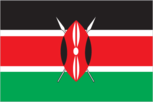
Kenya — Introduction
Background
Trade hubs such as Mombasa have been present along the coastal regions of Kenya and Tanzania, historically referred to as the Land of Zanj, since at least the 2nd century. These hubs engaged in commerce with distant lands, including China, India, Indonesia, the Middle East, North Africa, and Persia. By approximately the 9th century, the diverse population of Africans, Arabs, and Persians residing and trading in these areas became recognized as Swahili ("people of the coast"), characterized by a unique language (KiSwahili) and cultural practices. The Portuguese made their entrance in the 1490s and, utilizing Mombasa as a strategic location, aimed to dominate trade throughout the Indian Ocean. However, they were expelled in the late 1600s by the united forces of Oman and Pate, an island situated off the coast. In 1890, the territory was partitioned between Germany and the United Kingdom, with the UK securing the northern section while the Germans acquired the southern part, which includes modern-day Tanzania, Burundi, and Rwanda. The British established the East Africa Protectorate in 1895, which was later transformed into a colony in 1920 and named Kenya in honor of its tallest mountain. A series of political conflicts between the colony and the UK culminated in the violent Mau Mau Uprising that began in 1952, ultimately leading to independence in 1963.
Jomo KENYATTA, recognized as the founding president and a symbol of the liberation movement, governed Kenya from its independence in 1963 until his demise in 1978, at which point Vice President Daniel Arap MOI ascended to power through constitutional succession. From 1969 until 1982, the nation effectively functioned as a one-party state, after which the ruling Kenya African National Union (KANU) amended the constitution to establish itself as the only legal political entity. Under mounting internal and external demands for political reforms, MOI relented in 1991; however, the fragmented opposition was unable to unseat KANU in the 1992 and 1997 elections, both of which were tainted by violence and electoral fraud. MOI resigned in 2002 following fair and peaceful elections. Mwai KIBAKI, the candidate from the multiethnic united opposition coalition known as the National Rainbow Coalition (NARC), triumphed over KANU candidate Uhuru KENYATTA, the son of the founding president, and took office with a campaign focused on anticorruption initiatives.In 2007, opposition candidate Raila ODINGA contended KIBAKI's reelection, citing extensive vote manipulation, which triggered two months of ethnic conflict resulting in over 1,100 fatalities and the displacement of countless individuals. Mediation efforts led by the African Union produced a power-sharing agreement that included ODINGA in the government as prime minister and set forth a reform agenda. In 2010, Kenyans overwhelmingly approved a new constitution that abolished the position of prime minister, instituted additional checks and balances on executive authority, and decentralized power and resources to 47 newly established counties. Uhuru KENYATTA emerged victorious in the inaugural presidential election conducted under the new constitution in 2013. He secured a second and final term in 2017 following a contentious repeat election. In 2022, William RUTO narrowly won the presidential election; he took office the following month after the Kenyan Supreme Court confirmed his victory.