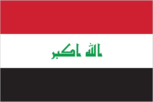
Iraq: An Introduction
Background
Once part of the Ottoman Empire, Iraq was under British occupation during World War I and became a League of Nations mandate administered by the UK in 1920. The country gained independence as a kingdom in 1932. Following a coup that toppled the monarchy, Iraq was declared a republic in 1958, but it was effectively governed by a succession of authoritarian leaders until 2003, the last being SADDAM Hussein, who ruled from 1979 until 2003. A protracted and costly conflict with Iran ensued from 1980 to 1988, resulting in no clear resolution. In 1990, Iraq invaded Kuwait, leading to its expulsion by US-led coalition forces during the Gulf War, which lasted two months in 1991. Following this expulsion, the UN Security Council (UNSC) mandated Iraq to eliminate all weapons of mass destruction and long-range missiles, permitting UN verification inspections. Iraq's ongoing failure to comply with UNSC resolutions culminated in the Second Gulf War in 2003, when US-led forces deposed the SADDAM regime.
In 2005, Iraqis ratified a constitution in a national referendum and elected a 275-member Council of Representatives (COR). This body approved the majority of cabinet ministers, signifying the establishment of Iraq's first constitutional government in nearly fifty years. The constitution also created the Kurdistan Regional Government (KRG), a semi-autonomous authority overseeing the governorates of Erbil, Dahuk, and As Sulaymaniyah. Since 2006, Iraq has conducted four national legislative elections, with the most recent occurring in 2021. In 2022, the COR confirmed Mohammad Shia' al-SUDANI as the prime minister. Iraq has repeatedly delayed elections for provincial councils, the last of which was held in 2013, and since 2019, the prime minister has been granted the power to appoint governors instead of relying on provincial councils.
From 2014 to 2017, Iraq engaged in a military campaign against the Islamic State of Iraq and ash-Sham (ISIS) to reclaim territory lost to the group in 2014. In 2017, then-Prime Minister Haydar al-ABADI announced the defeat of ISIS, though military activities against the group persisted in rural regions. In the same year, Baghdad forcibly reclaimed contested territories throughout central and northern Iraq from the KRG, following a non-binding referendum for Kurdish independence.