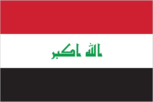
Iraq — Geography
Area
land
437,367 sq km
water
950 sq km
total
438,317 sq km
Climate
predominantly arid; characterized by mild to cool winters and dry, scorching summers devoid of clouds; the mountainous northern regions adjacent to the Iranian and Turkish frontiers experience frigid winters with occasional heavy snowfall that typically melts in early spring, occasionally resulting in significant flooding in central and southern Iraq.
Terrain
primarily flat plains; marshy areas filled with reeds along the southern Iranian border with extensive regions prone to flooding; mountainous terrains along the borders with Iran and Turkey.
Land use
other
76.5% (2023 est.)
forest
1.6% (2023 est.)
agricultural land
21.8% (2023 est.)
agricultural land: arable land
arable land: 11.4% (2023 est.)
agricultural land: permanent crops
permanent crops: 1.2% (2023 est.)
agricultural land: permanent pasture
permanent pasture: 9.2% (2023 est.)
Location
Middle East, located at the junction of the Persian Gulf, situated between Iran and Kuwait.
Coastline
58 km
Elevation
lowest point
Persian Gulf 0 m
highest point
Cheekha Dar (Kurdish for "Black Tent") 3,611 m
mean elevation
312 m
Irrigated land
35,250 sq km (2012)
Major aquifers
Arabian Aquifer System
Map references
Middle East
Land boundaries
total
3,809 km
border countries
Iran 1,599 km; Jordan 179 km; Kuwait 254 km; Saudi Arabia 811 km; Syria 599 km; Turkey 367 km.
Maritime claims
territorial sea
12 nm
continental shelf
not specified
Natural hazards
dust storms; sandstorms; inundations.
Geography - note
strategically positioned on the Shatt al Arab waterway and at the entrance to the Persian Gulf.
Natural resources
oil, natural gas, phosphates, sulfur.
Area - comparative
a little over three times the area of New York State.
Geographic coordinates
33 00 N, 44 00 E
Population distribution
the population is primarily distributed in the northern, central, and eastern regions of the nation, with many significant urban centers located along the extensive banks of the Tigris and Euphrates Rivers; much of the western and southern regions are sparsely populated or uninhabited.
Major lakes (area sq km)
fresh water lake(s)
Lake Hammar - 1,940 sq km
Major watersheds (area sq km)
Indian Ocean drainage
(Persian Gulf) Tigris and Euphrates (918,044 sq km).
Major rivers (by length in km)
Euphrates river mouth (shared with Turkey[s], Syria, and Iran) - 3,596 km; Tigris river mouth (shared with Turkey[s], Syria, and Iran) - 1,950 km; the Tigris and Euphrates converge to create the Shatt al Arab.
note: [s] following country name indicates river source; [m] following country name indicates river mouth.