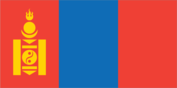
Geography
Mongolia
Area
land
1,553,556 sq km
water
10,560 sq km
total
1,564,116 sq km
Climate
arid; continental (significant daily and seasonal temperature variations)
Terrain
extensive semidesert and desert landscapes, grassy steppes, and mountains located in the west and southwest; Gobi Desert situated in the south-central region
Land use
other
21.9% (2023 est.)
forest
9.1% (2023 est.)
agricultural land
69% (2023 est.)
agricultural land: arable land
arable land: 0.7% (2023 est.)
agricultural land: permanent crops
permanent crops: 0% (2023 est.)
agricultural land: permanent pasture
permanent pasture: 68.2% (2023 est.)
Location
Northern Asia, positioned between China and Russia
Coastline
0 km (landlocked)
Elevation
lowest point
Hoh Nuur 560 m
highest point
Nayramadlin Orgil (Khuiten Peak) 4,374 m
mean elevation
1,528 m
Irrigated land
796 sq km (2022)
Map references
Asia
Land boundaries
total
8,082 km
border countries
China 4,630 km; Russia 3,452 km
Maritime claims
none (landlocked)
Natural hazards
dust storms; grassland and forest fires; periods of drought; "zud," referring to severe winter conditions
Geography - note
landlocked; holds a crucial geographical position between China and Russia
Natural resources
petroleum, coal, copper, molybdenum, tungsten, phosphates, tin, nickel, zinc, fluorspar, gold, silver, and iron
Area - comparative
slightly less than Alaska; over twice the area of Texas
Geographic coordinates
46 00 N, 105 00 E
Population distribution
population is unevenly distributed across the nation; Ulaanbaatar, the capital, and the northern city of Darhan have the highest population concentrations
Major lakes (area sq km)
salt water lake(s)
Uvs Nuur - 3,350 sq km; Hyargas Nuur - 1,360 sq km
fresh water lake(s)
Hovsgol Nuur - 2,620 sq km; Har Us Nuur - 1,760 sq km;
Major rivers (by length in km)
Amur (shared with China [s] and Russia [m]) - 4,444 km
note: [s] after country name signifies river source; [m] after country name denotes river mouth