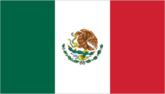
Mexico — Introduction
Background
Several advanced Amerindian civilizations thrived in Mexico, such as the Olmec, Toltec, Teotihuacan, Zapotec, Maya, and Aztec, until the Spanish conquest and colonization began in the early 16th century. For three centuries, the region was governed as the Viceroyalty of New Spain, eventually gaining independence in the early 19th century. The year 2000 marked a significant political shift when Vicente FOX from the National Action Party (PAN) became the first opposition candidate to win against the ruling Institutional Revolutionary Party (PRI) since the Mexican Revolution of 1910. In 2006, he was succeeded by another PAN candidate, Felipe CALDERON, but the PRI reclaimed the presidency in 2012 with Enrique PEÑA NIETO. In 2018, Andrés Manuel LÓPEZ OBRADOR, a leftist anti-establishment politician and former mayor of Mexico City (2000-05), took office as president representing the National Regeneration Movement (MORENA).
The US-Mexico-Canada Agreement (USMCA, known as T-MEC in Spanish) came into effect in 2020, replacing the North American Free Trade Agreement (NAFTA). In 2019, Mexico revised its constitution to support the implementation of the labor provisions of the USMCA.
Currently, Mexico ranks as the second-largest goods trading partner of the US, following Canada. Persistent economic and social issues include low real wages, significant underemployment, unequal income distribution, and limited opportunities for advancement, particularly affecting the predominantly indigenous population in the economically disadvantaged southern states. Since 2007, powerful transnational criminal organizations in Mexico have been embroiled in a battle for control over criminal markets, leading to tens of thousands of drug-related homicides and enforced disappearances.