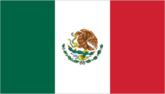
Mexico Geography
Area
land
1,943,945 sq km
water
20,430 sq km
total
1,964,375 sq km
Climate
ranges from tropical to arid
Terrain
elevated, rugged mountain ranges; low-lying coastal plains; elevated plateaus; arid regions
Land use
other
15.1% (2023 est.)
forest
34.2% (2023 est.)
agricultural land
50.7% (2023 est.)
agricultural land: arable land
arable land: 10.3% (2023 est.)
agricultural land: permanent crops
permanent crops: 2.3% (2023 est.)
agricultural land: permanent pasture
permanent pasture: 38.1% (2023 est.)
Location
North America, situated between the Caribbean Sea and the Gulf of America, between Belize and the United States, and adjacent to the North Pacific Ocean, between Guatemala and the United States
Coastline
9,330 km
Elevation
lowest point
Laguna Salada -10 m
highest point
Volcan Pico de Orizaba 5,636 m
mean elevation
1,111 m
Irrigated land
59,910 sq km (2022)
Major aquifers
Atlantic and Gulf Coastal Plains Aquifer
Map references
North America
Land boundaries
total
4,389 km
border countries
Belize 276 km; Guatemala 958 km; US 3,155 km
Maritime claims
contiguous zone
24 nm
territorial sea
12 nm
continental shelf
200 nm or to the edge of the continental margin
exclusive economic zone
200 nm
Natural hazards
tsunamis along the Pacific shoreline; volcanic activity and severe earthquakes in the central and southern regions; hurricanes affecting the Pacific, Gulf of America, and Caribbean coastlines
volcanism: volcanic activity is prevalent in the central-southern areas of the nation; the volcanoes located in Baja California are primarily dormant; Colima (3,850 m) is recognized as Mexico's most active volcano, frequently necessitating the evacuation of nearby residents; it has been classified as a Decade Volcano by the International Association of Volcanology and Chemistry of the Earth's Interior, considered significant for research due to its explosive history and proximity to populated areas; Popocatepetl (5,426 m) poses a risk to Mexico City; other historically active volcanoes include Barcena, Ceboruco, El Chichon, Michoacan-Guanajuato, Pico de Orizaba, San Martin, Socorro, and Tacana; refer to note 2 under "Geography - note"
Geography - note
note 1: strategically located on the southern border of the United States; Mexico is one of the nations situated along the Ring of Fire, a region encircling the Pacific Ocean that contains nearly 75% of the globe's volcanoes and up to 90% of its earthquakes
note 2: the Sac Actun cave system, measuring 348 km (216 mi), holds the title of the longest underwater cave worldwide and is the second longest cave overall, following Mammoth Cave in the United States (see "Geography - note" under United States)
note 3: the notable Yucatán Peninsula, which separates the Gulf of America from the Caribbean Sea, is jointly occupied by Mexico, Guatemala, and Belize; on the northern coastline of Yucatán, near Chicxulub, lies the site of a colossal asteroid or comet impact crater approximately 150 km (93 mi) in diameter extending into the Gulf of America; this event is thought to have triggered a global climatic upheaval that led to the extinction of 75% of the Earth's flora and fauna, including non-avian dinosaurs
Natural resources
petroleum, silver, antimony, copper, gold, lead, zinc, natural gas, timber
Area - comparative
slightly less than three times the area of Texas
Geographic coordinates
23 00 N, 102 00 W
Population distribution
the majority of the population resides in the central region between the states of Jalisco and Veracruz; about a quarter of the populace is located in and around Mexico City
Major lakes (area sq km)
salt water lake(s)
Laguna de Terminos - 1,550 sq km
fresh water lake(s)
Laguna de Chapala - 1,140 sq km
Major watersheds (area sq km)
Pacific Ocean drainage
(Gulf of California) Colorado (703,148 sq km)
Atlantic Ocean drainage
(Gulf of America) Rio Grande/Bravo (607,965 sq km)
Major rivers (by length in km)
Rio Grande river mouth (shared with US [s]) - 3,057 km; Colorado river mouth (shared with US [s]) - 2,333 km
note: [s] following the country name signifies river source; [m] following the country name signifies river mouth