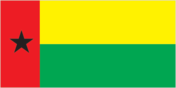
Introduction
Guinea-Bissau
Background
Throughout much of its past, Guinea-Bissau was governed by the Mali Empire and the Kaabu Kingdom. In the 16th century, Portugal initiated the establishment of trading posts along the coast of Guinea-Bissau. Initially, Portuguese activities were confined to the coastal areas and nearby islands. Nevertheless, the lucrative nature of the slave and gold trades attracted the interest of local African leaders, enabling the Portuguese to gradually extend their influence and control inland. Beginning in the 18th century, the Mali Empire and the Kingdom of Kaabu started to fragment into smaller local entities. By the 19th century, Portugal had fully assimilated Guinea-Bissau into its colonial empire.
Following its independence in 1974, Guinea-Bissau underwent significant political and military turmoil. A military coup in 1980 resulted in General Joao Bernardo 'Nino' VIEIRA becoming president. VIEIRA's government was known for repressing political dissent and eliminating rivals. Numerous coup attempts throughout the 1980s and early 1990s did not succeed in removing him, but a military mutiny and subsequent civil war in 1999 culminated in VIEIRA's removal from power. In 2000, a transitional authority transferred control to opposition leader Kumba YALA. However, in 2003, a bloodless military coup ousted YALA and appointed businessman Henrique ROSA as interim president. In 2005, VIEIRA was re-elected, promising to focus on economic progress and national unity; he was assassinated in 2009. Malam Bacai SANHA was subsequently elected president, but he succumbed to a prolonged illness in 2012. A military coup disrupted the second round of the election intended to replace him, but after intervention by the Economic Community of West African States, a civilian transitional government was established. In 2014, Jose Mario VAZ was elected president in a democratic election, and in 2019, he became the first president in Guinea-Bissau’s history to serve a complete term. Umaro Sissoco EMBALO was elected president in 2019, but his assumption of office was delayed until 2020 due to a lengthy dispute over the election results.