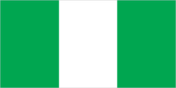
Introduction
Nigeria
Background
During ancient and pre-colonial eras, the region now known as Nigeria was inhabited by numerous ethnic groups, each with distinct languages and cultural practices. Among these were significant Islamic empires such as Borno, Kano, and the Sokoto Caliphate, which held sway over the northern regions, along with the Benin and Oyo Empires that dominated much of present-day western Nigeria. Additionally, there were various decentralized political structures and city-states in the southern and southeastern parts of the country. In 1914, the British united their separately governed northern and southern regions into a single Colony and Protectorate named Nigeria.
Nigeria gained independence from British colonial rule in 1960 and evolved into a federal republic with three constituent states by 1963, under the leadership of President Nnamdi AZIKIWE. This political framework intensified regional and ethnic strife, culminating in a violent coup in 1966, primarily orchestrated by military officers from the southeast, followed by a countercoup later that same year led by northern military personnel. In the wake of this turmoil, the governor of Nigeria’s Eastern Region, which was based in the southeast, proclaimed the region's independence as the Republic of Biafra. The ensuing civil war (1967-1970) resulted in over a million fatalities, many due to famine. Although the conflict resulted in a more unified Nigerian state and a stronger national identity, it also fostered enduring distrust towards the predominantly Igbo population of the southeast. The wartime military leader, Yakubu GOWON, remained in power until a non-violent coup in 1975 executed by discontented junior officers. This cohort of officers, which included future presidents Olusegun OBASANJO, Ibrahim BABANGIDA, and Muhammadu BUHARI, continues to hold significant sway in Nigeria's political landscape today.
Military governance persisted until 1999, which marked the first stable transition to civilian rule and the establishment of a new constitution. The 2007 elections were notable as the first instance of civilian-to-civilian power transfer in Nigeria’s history. The national and state elections in 2011 and 2015 were widely recognized as credible. The 2015 election was particularly significant as the All Progressives Congress, a coalition opposition party, ousted the long-dominant People's Democratic Party, which had been in power since 1999, facilitating the first peaceful transition of power between parties. The presidential and legislative elections held in 2019 and 2023 were generally regarded as broadly free and fair, despite incidents of voting irregularities, intimidation, and violence. The government of Africa's most populous nation continues to grapple with the formidable challenge of entrenching democratic practices and reforming a petroleum-dependent economy, whose revenues have been mismanaged amid decades of corruption. Additionally, Nigeria is confronted with escalating violence from Islamic terrorism, particularly in the northeast, widespread criminal banditry, separatist unrest in the southeast, and competition over land and resources across the country.