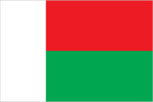
Geography
Madagascar
Area
land
581,540 sq km
water
5,501 sq km
total
587,041 sq km
Climate
coastal regions are tropical, while the inland areas experience a temperate climate, and the southern part is arid
Terrain
a narrow coastal plain is present, with a central region comprising a high plateau and mountainous terrain
Land use
other
12.2% (2023 est.)
forest
17.5% (2023 est.)
agricultural land
70.3% (2023 est.)
agricultural land: arable land
arable land: 5.2% (2023 est.)
agricultural land: permanent crops
permanent crops: 1% (2023 est.)
agricultural land: permanent pasture
permanent pasture: 64.1% (2023 est.)
Location
located in Southern Africa, this island lies in the Indian Ocean, to the east of Mozambique
Coastline
4,828 km
Elevation
lowest point
Indian Ocean 0 m
highest point
Maromokotro 2,876 m
mean elevation
615 m
Irrigated land
10,860 sq km (2012)
Map references
Africa
Land boundaries
total
0 km
Maritime claims
contiguous zone
24 nm
territorial sea
12 nm
continental shelf
200 nm or 100 nm from the 2,500-m isobath
exclusive economic zone
200 nm
Natural hazards
experiences periodic cyclones, droughts, and locust plagues
volcanism: there have been no recorded eruptions from Madagascar's volcanoes
Geography - note
the fourth-largest island globally; it holds a strategic position along the Mozambique Channel; despite its closeness to the African mainland, the island is isolated by ocean currents, leading to a high level of endemic species, with about 90% of its plant and animal life being unique to Madagascar
Natural resources
resources include graphite, chromite, coal, bauxite, rare earth elements, salt, quartz, tar sands, semiprecious stones, mica, fish, and hydropower
Area - comparative
nearly four times larger than the state of Georgia; just under twice the size of Arizona
Geographic coordinates
20 00 S, 47 00 E
Population distribution
the majority of the population resides in the eastern part of the island, with notable concentrations in the central highlands and along the eastern coastline, as illustrated in this population distribution map