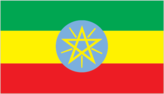
Geography
Ethiopia
Area
land
1,096,570 sq km
water
7,730 sq km
total
1,104,300 sq km
Climate
tropical monsoon climate characterized by extensive topographic variations
Terrain
elevated plateau featuring a central mountain range, separated by the Great Rift Valley
Land use
other
42.2% (2023 est.)
forest
23.7% (2023 est.)
agricultural land
34.1% (2023 est.)
agricultural land: arable land
arable land: 14.5% (2023 est.)
agricultural land: permanent crops
permanent crops: 1.8% (2023 est.)
agricultural land: permanent pasture
permanent pasture: 17.7% (2023 est.)
Location
Located in Eastern Africa, to the west of Somalia
Coastline
0 km (landlocked)
Elevation
lowest point
Danakil Depression -125 m
highest point
Ras Dejen 4,550 m
mean elevation
1,330 m
Irrigated land
1,814 sq km (2020)
Major aquifers
Ogaden-Juba Basin, Sudd Basin (Umm Ruwaba Aquifer)
Map references
Africa
Land boundaries
total
5,925 km
border countries
Borders: Djibouti 342 km; Eritrea 1,033 km; Kenya 867 km; Somalia 1,640 km; South Sudan 1,299 km; Sudan 744 km
Maritime claims
none (landlocked)
Natural hazards
The Great Rift Valley is geologically active, prone to earthquakes and volcanic eruptions; droughts occur frequently
volcanism: volcanic activity prevalent in the Great Rift Valley; Erta Ale (613 m) is the most active volcano in the nation; Dabbahu became active in 2005, necessitating evacuations; historically significant volcanoes include Alayta, Dalaffilla, Dallol, Dama Ali, Fentale, Kone, Manda Hararo, and Manda-Inakir
Geography - note
the world's most populous landlocked nation; the Blue Nile, the primary headstream of the Nile by water volume, originates in T'ana Hayk (Lake Tana) located in the northwest region of Ethiopia
Natural resources
limited deposits of gold, platinum, copper, potash, natural gas, and hydropower resources
Area - comparative
slightly less than double the area of Texas
Geographic coordinates
8 00 N, 38 00 E
Population distribution
the highest population density is observed in the northern and central highlands, particularly surrounding the capital city of Addis Ababa; the eastern and southeastern regions are sparsely populated, as depicted in this population distribution map
Major lakes (area sq km)
salt water lake(s)
Lake Turkana (jointly with Kenya) - 6,400 sq km; Abhe Bid Hayk/Abhe Bad (jointly with Djibouti) - 780 sq km;
fresh water lake(s)
Lake Tana - 3,600 sq km; Abaya Hayk - 1,160 sq km; Ch'amo Hayk - 550 sq km
Major watersheds (area sq km)
Atlantic Ocean drainage
(Mediterranean Sea) Nile (3,254,853 sq km)
Major rivers (by length in km)
Source of the Blue Nile river (shared with Sudan [m]) - 1,600 km
note: [s] following a country name indicates river source; [m] following a country name indicates river mouth