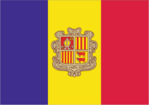
Andorra: An Introduction
Background
The Principality of Andorra, a landlocked nation and one of Europe's smallest states, is located high in the Pyrenees, bordered by France and Spain. It stands as the last independent remnant of the Hispanic March territories established by the Frankish monarch Charlemagne in 795, following his successful campaign against the Moorish invasion of Spain. These March states functioned as buffer zones to prevent the Muslim Moors from penetrating into Christian France. For a duration of 715 years, from 1278 until 1993, the people of Andorra were governed under a distinctive co-principality, led by both French and Spanish authorities (with the French head of state and the Bishop of Urgell sharing power from 1607 onwards). In 1993, this feudal arrangement was reformed with the adoption of a contemporary constitution; the co-princes continued to serve as nominal heads of state, while the governance shifted to a parliamentary democracy.
Andorra's appeal lies in its winter sports, pleasant summer climate, and duty-free shopping, drawing around 8 million visitors annually. The nation has evolved into a prosperous international commercial hub due to its established banking industry and favorable tax conditions. In an effort to modernize its economy, Andorra has welcomed foreign investment and implemented reforms, including tax policies aimed at enhancing overall infrastructure. Although Andorra is not a member of the European Union, it maintains a unique relationship with the bloc, characterized by various customs and cooperation agreements; additionally, Andorra utilizes the euro as its official currency.