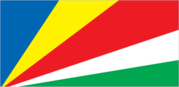
Geography
Seychelles
Area
land
455 sq km
water
0 sq km
total
455 sq km
Climate
tropical marine climate; characterized by humidity; experiences a cooler season during the southeast monsoon from late May to September; encounters a warmer season during the northwest monsoon from March to May
Terrain
The Mahe Group consists of volcanic formations featuring a narrow coastal area and a rugged, hilly landscape; other islands in the group are primarily flat coral atolls or elevated reefs; these islands are situated on the submarine Mascarene Plateau
Land use
other
38% (2023 est.)
forest
58.6% (2023 est.)
agricultural land
3.4% (2023 est.)
agricultural land: arable land
arable land: 0.3% (2023 est.)
agricultural land: permanent crops
permanent crops: 3% (2023 est.)
agricultural land: permanent pasture
permanent pasture: 0% (2022 est.)
Location
A collection of islands located in the Indian Ocean, positioned to the northeast of Madagascar
Coastline
491 km
Elevation
lowest point
Indian Ocean 0 m
highest point
Morne Seychellois 905 m
Irrigated land
3 sq km (2012)
Map references
Africa
Land boundaries
total
0 km
Maritime claims
contiguous zone
24 nm
territorial sea
12 nm
continental shelf
200 nm or to the edge of the continental margin
exclusive economic zone
200 nm
Natural hazards
Situated outside the cyclone zone, thus experiencing infrequent severe storms; however, short droughts can occasionally occur
Geography - note
Recognized as the smallest nation in Africa regarding both land area and population; the constitution of the Republic of Seychelles enumerates 155 islands, comprising 42 granitic and 113 coralline; the largest island is Mahe, which accommodates approximately 90% of the population and is where the capital city, Victoria, is located
Natural resources
primary products include fish, coconuts (copra), and cinnamon trees
Area - comparative
covers an area 2.5 times larger than Washington, D.C.
Geographic coordinates
4 35 S, 55 40 E
Population distribution
over three-quarters of the population resides on the principal island of Mahe; Praslin hosts less than 10% of the population, with an even smaller fraction living on La Digue and the outer islands, as illustrated in this population distribution map